Driving the Vršič Pass: 50 Hairpins, the Best Stops and the New 2026 Rules
How to drive the Vršič Pass, Slovenia's highest road pass: the 50 hairpin bends, when it is open, the new 2026 barriers and free shuttle bus, the Russian Chapel, the source of the Soča, the Great Soča Gorge and where to stop.

Updated · 6 min read
3 facts checkedPrices, hours and booking rules, last verified Checked
| Fact | What we found | Checked |
|---|---|---|
| Vršič Pass, 2026 season | Crossing free. Barriers at both ends from 15 June. No parking at the top for most of summerkranjska-gora.si ↗ | |
| Free shuttle bus Kranjska Gora to Bovec | 1 June to 30 September 2026, more frequent 26 June to 31 Augustkranjska-gora.si ↗ | |
| Kranjska Gora to Trenta over the pass | About 25 km, about 50 minutes without stops |
We re-check every fact in our guides on a schedule and show the date here. Spotted something that changed? Tell us.
Some links in this guide are affiliate links. They cost you nothing extra and help keep the blog free.
The Vršič Pass is the highest road pass in Slovenia, at 1,611 metres, and the most spectacular drive in the country. It links Kranjska Gora in the north with the Trenta valley and the Soča river in the south, climbing through 50 numbered hairpin bends: 24 on the way up from Kranjska Gora and 26 on the way down into Trenta. It is open only in the warmer months, and since 2026 the traffic on it is managed with barriers.
We drove over the pass from Kranjska Gora to the Soča Valley on our 7-day Slovenia road trip, stopping at Lake Jasna on the way and finishing beside the impossibly green Soča river. This guide covers what you need to know before you go, the 2026 rules and the stops worth making.
A short history of the road
The road over Vršič was built during the First World War, when the front line ran along the Soča river and the Austro-Hungarian army needed a supply route over the mountains. It was built by Russian prisoners of war in harsh conditions. In March 1916 an avalanche buried a work camp on the northern side, killing many of them, and the prisoners built a small wooden chapel in their memory. That chapel still stands beside the road today.
When is the Vršič Pass open?
The road is closed in winter, when snow makes it impassable, and usually reopens in late spring. The exact dates depend on the snow each year, so check the state of the road before you set off. In autumn it can close temporarily after an early snowfall, and in bad weather it can close at short notice at any time of year.
The new rules in 2026
The pass became so popular that the councils on both sides changed how it works in 2026:
- Barriers at both ends. From 15 June 2026, barriers count and direct the cars entering the pass road. Crossing is still free, with no toll and no time limit.
- No parking at the top in summer. Parking at the summit was not allowed for most of the 2026 season while new car parks were finished. A managed car park at the top was due to open from 1 September.
- A free shuttle bus. From 1 June to 30 September 2026, a free bus ran over the pass between Kranjska Gora and Bovec in both directions, more often between 26 June and 31 August. If you want to hike from the top, it is now the easiest way up.
Good to know: the rules are still settling and may change again for 2027. Check the Kranjska Gora and Bovec tourist information websites before you drive.
How long does it take?
From Kranjska Gora over the pass to Trenta is about 25 km and takes about 50 minutes without stops. Bovec is another 20 km or so down the valley, so allow about an hour and a quarter in total. With photo stops, a coffee at the top and a short walk at the source of the Soča, plan for half a day.
If you are driving from Bled to Kobarid over the pass, as on our route, plan on about 2 hours 30 minutes of driving.
Is the Vršič Pass difficult to drive?
It is a normal paved road, but it needs care. The hairpins are tight, several of them on the northern side are cobbled, and in summer you share the road with cyclists, motorbikes and the shuttle buses. Each bend has a sign with its number and altitude, which helps you keep track of where you are.
Tips for the drive:
- Go in the morning, before the traffic builds.
- Use a low gear on the way down rather than riding the brakes.
- Let faster drivers pass at the wider bends, and give cyclists plenty of room.
- Fill up before you start. There are no petrol stations on the pass.
- Choose a small car if you can. The hairpins are much easier in one.
- Watch out for sheep on the road near the top.
Where to stop on the way
Lake Jasna
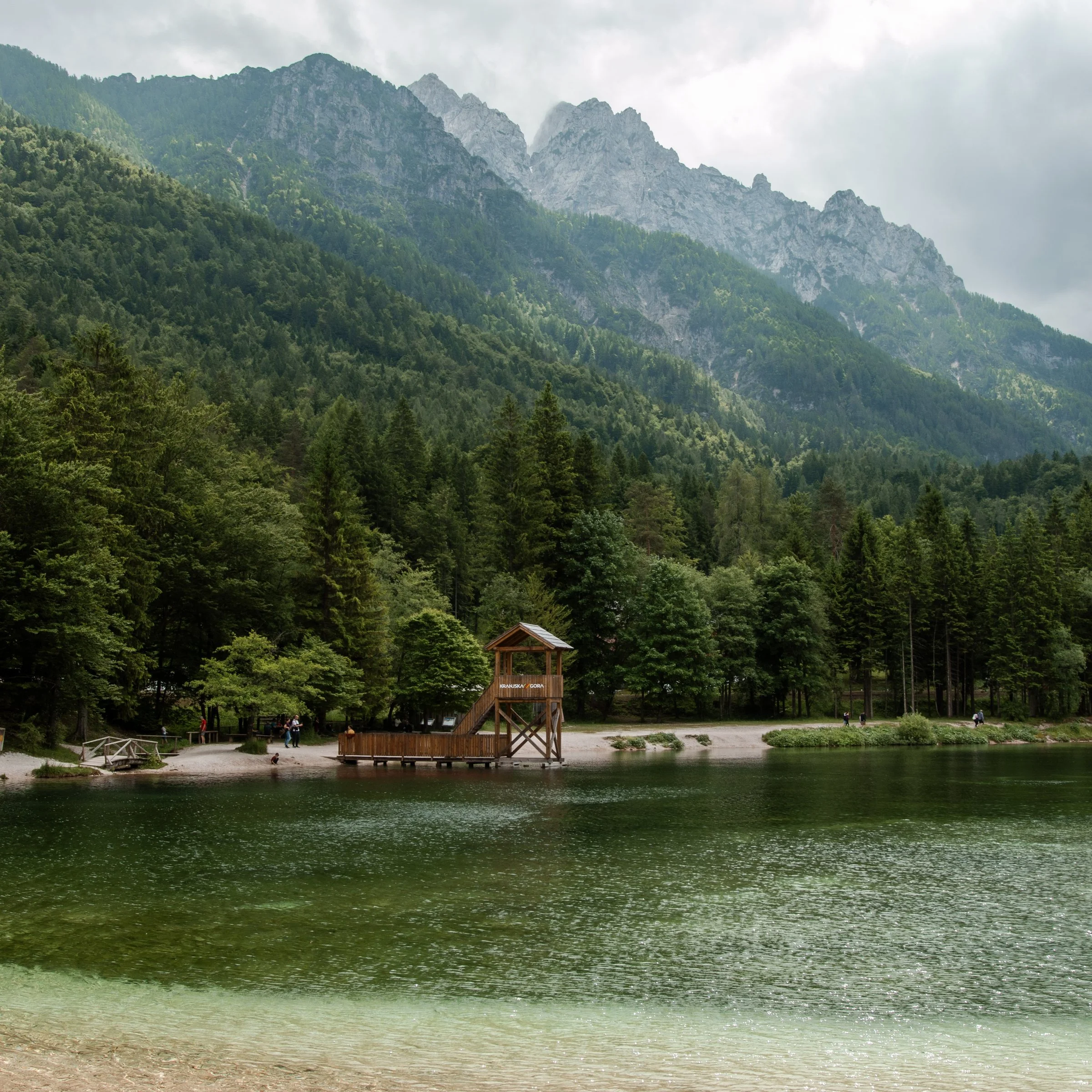
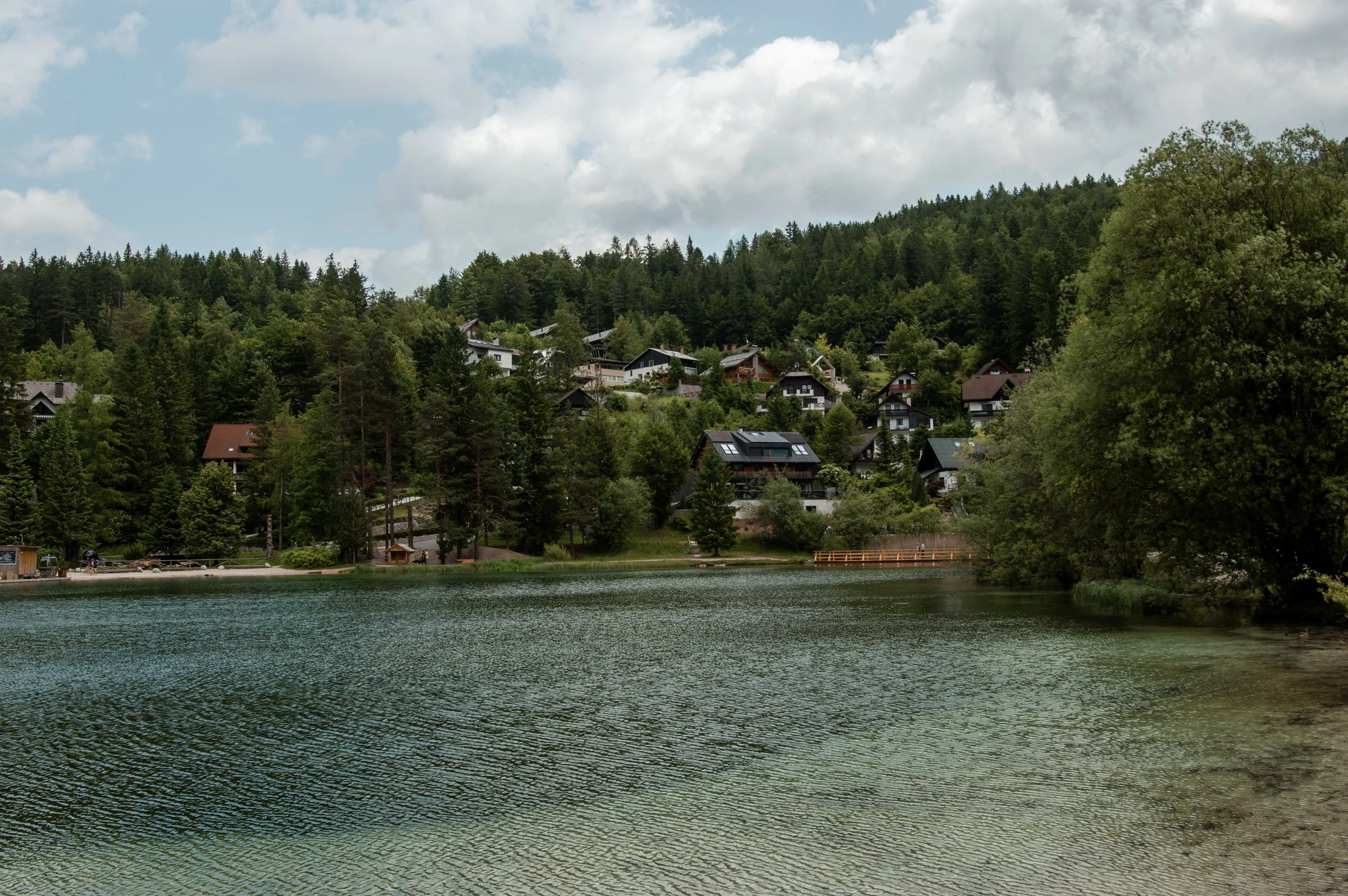
Right at the start of the pass road, a couple of minutes from Kranjska Gora, Lake Jasna is the perfect first stop: two clear, green lakes with the mountains reflected in them and a bronze statue of the Zlatorog, the golden-horned ibex of Slovenian legend, on the shore.
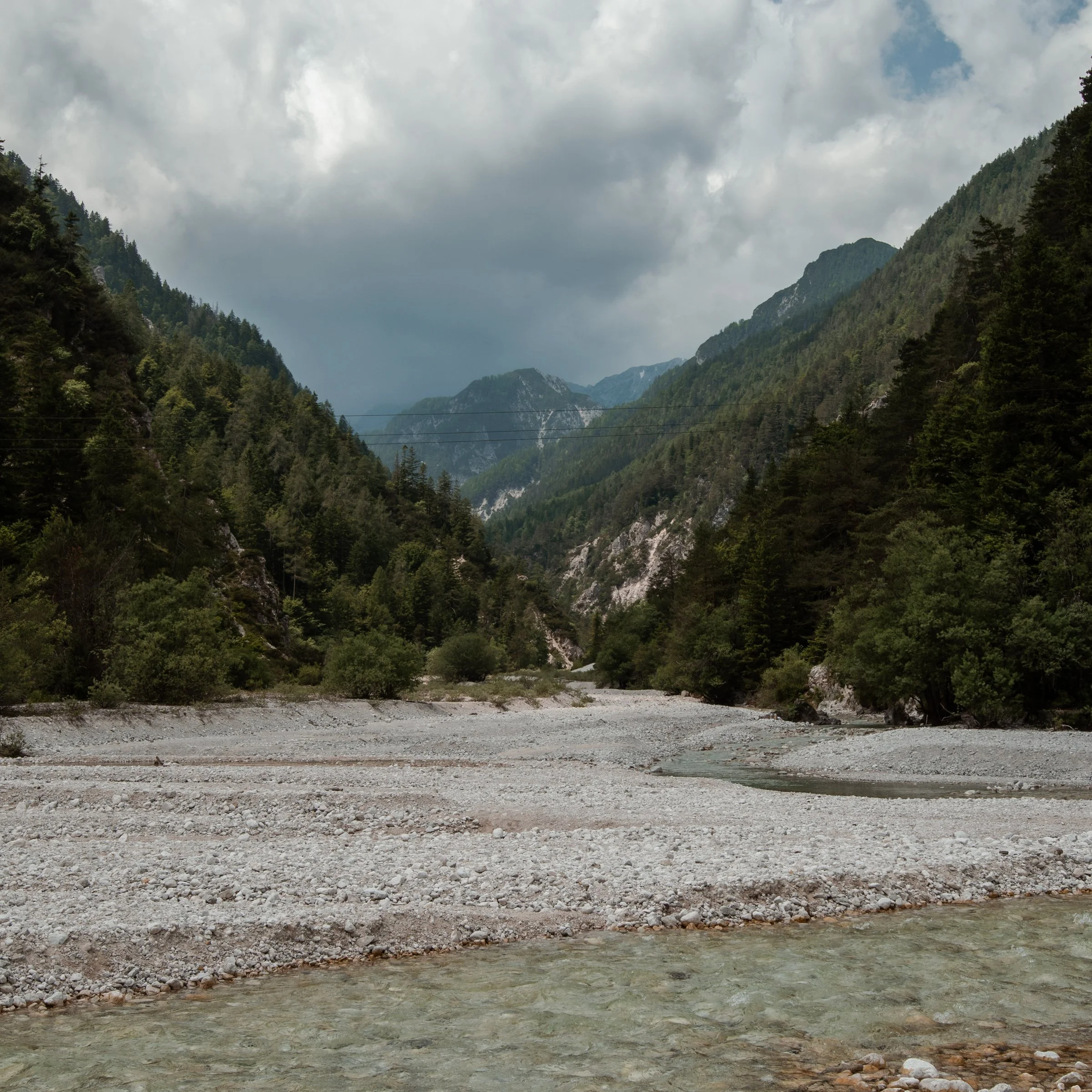
Just behind the lake, the road follows the wide, stony valley of the Velika Pišnica river before the climb begins.
The Russian Chapel
On the northern side, at around bend 8, a small wooden chapel stands in the forest, built by the prisoners who built the road. It is a quiet, moving stop, and only a few minutes’ walk from the parking area.
The top of the pass
At the summit, the view opens over the peaks of the Julian Alps. Mountain huts near the top serve food and drinks, and marked paths lead off towards the surrounding peaks. On the way up, look at the rock wall of Prisojnik for the face of the “Heathen Maiden”, a shape in the rock that, with a little imagination, looks like a woman’s face.
The source of the Soča
On the southern side, a turn-off leads to a mountain hut and a short, steep path to the spring where the Soča river rises from a cave in the rock. The last part is protected with cables, so wear proper shoes.
Trenta and the Kugy monument
Further down, the road follows the young river through the Trenta valley. Stop at the monument to Julius Kugy, the climber and writer who made these mountains famous, and at the alpine botanical garden Juliana in Trenta.
The Great Soča Gorge
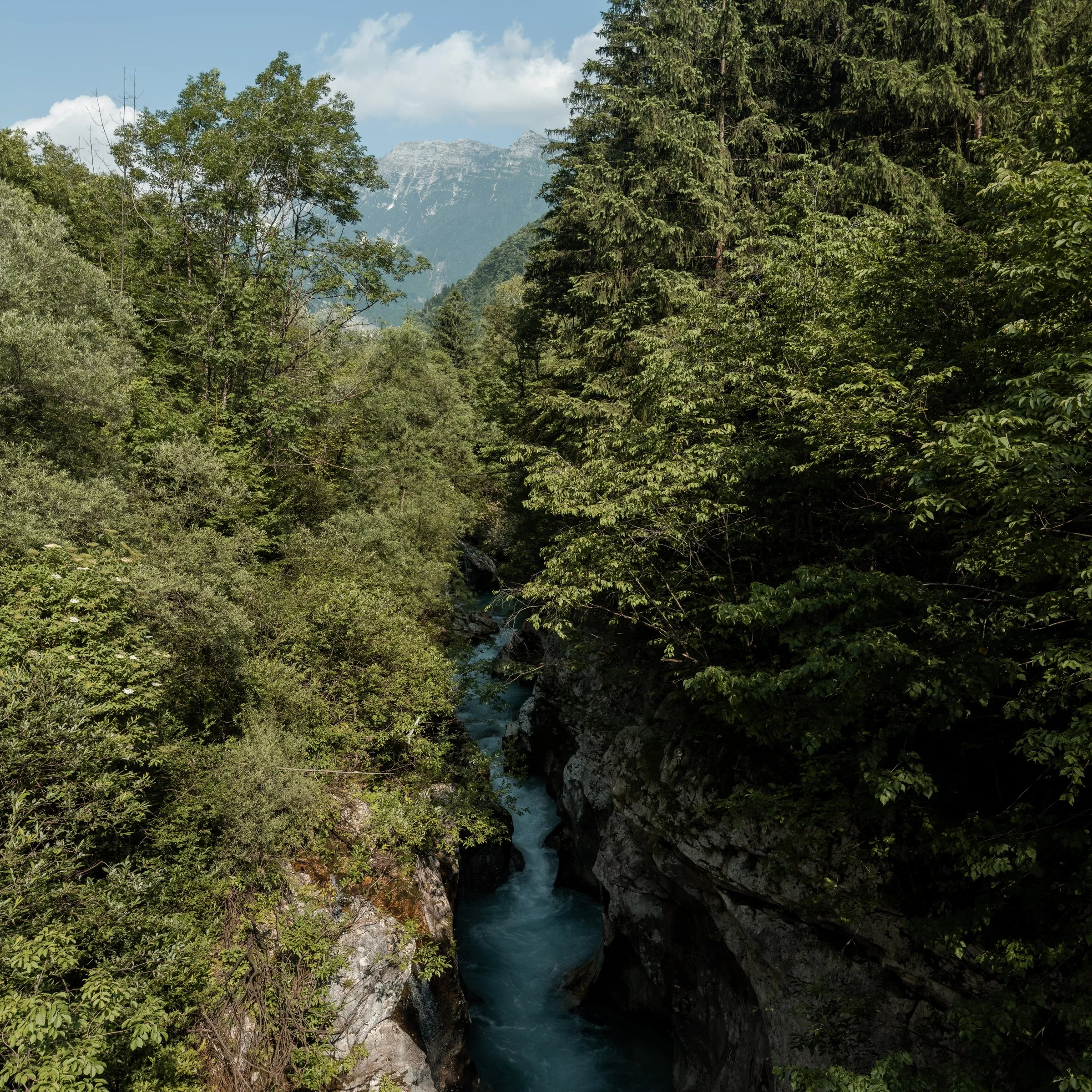
Near the village of Soča, a short walk from the road leads to the Great Soča Gorge, where the river has cut a narrow channel through white rock, about 750 metres long. Entering the gorge itself is not allowed, but the view down into the turquoise water from above is the point.
Our route over the pass
- Morning Lake Jasna
- +20 min Russian Chapel
- +20 min Top of the pass, coffee and the view
- +30 min Source of the Soča
- +30 min Great Soča Gorge
- Afternoon Bovec, then Kobarid
On the other side: the Soča Valley
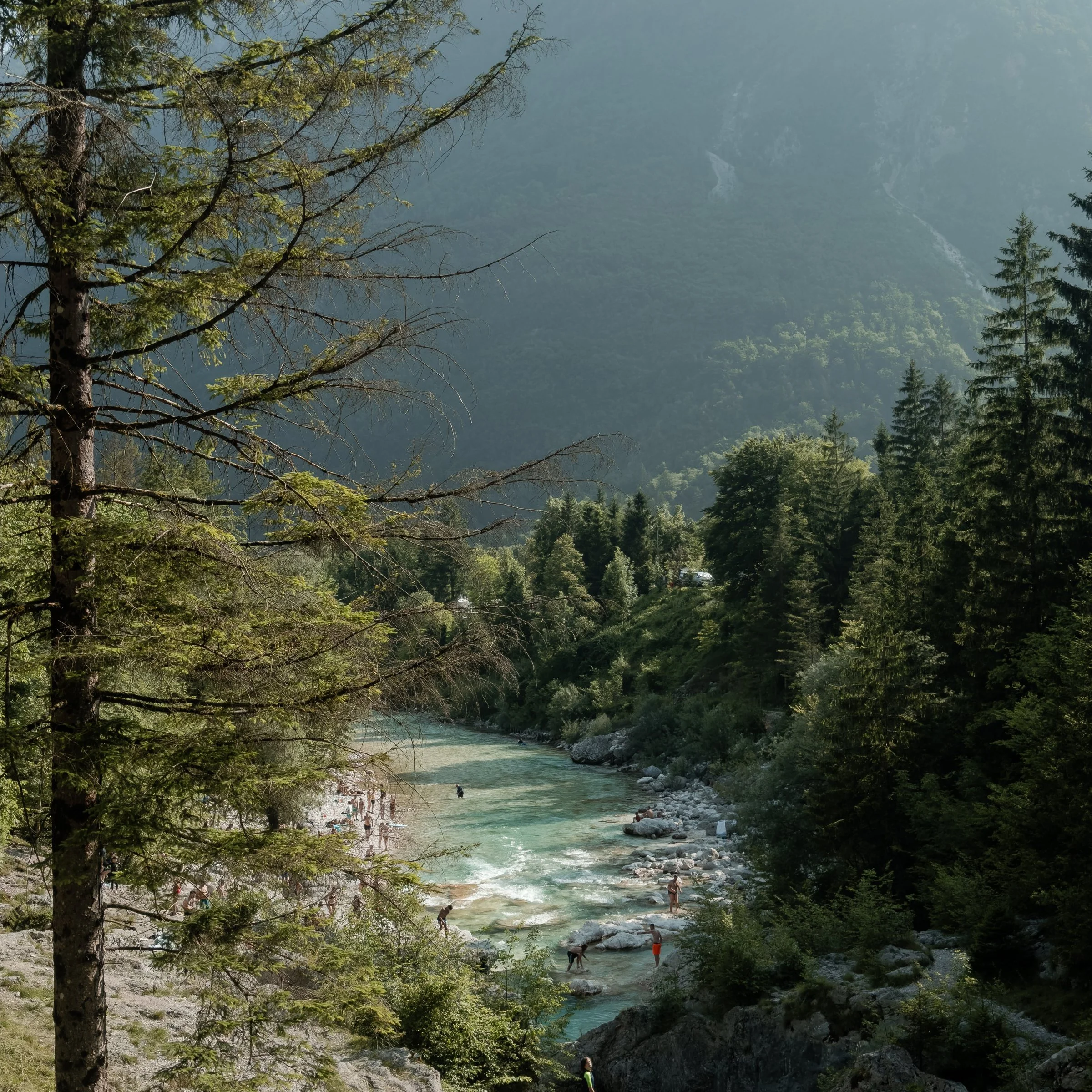
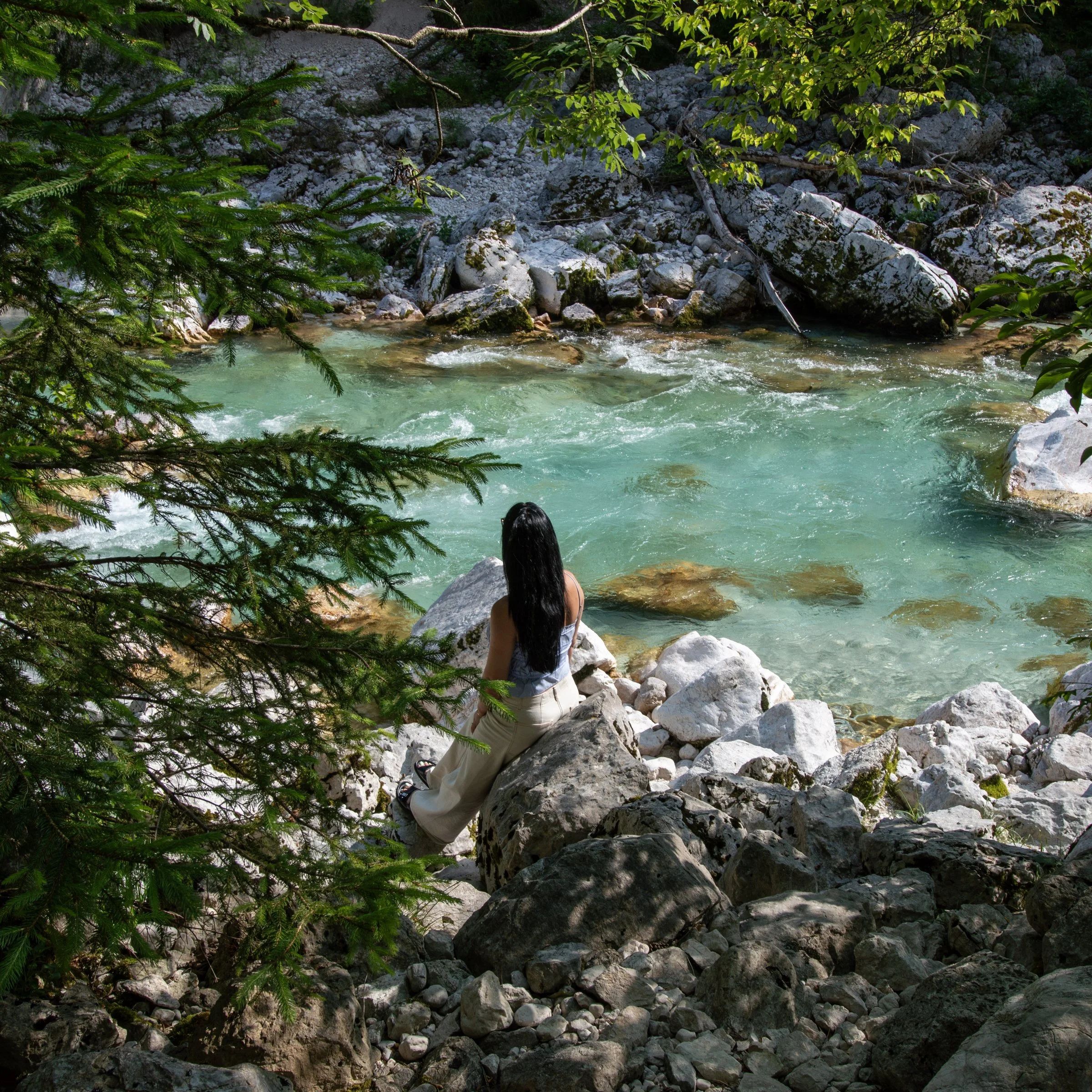
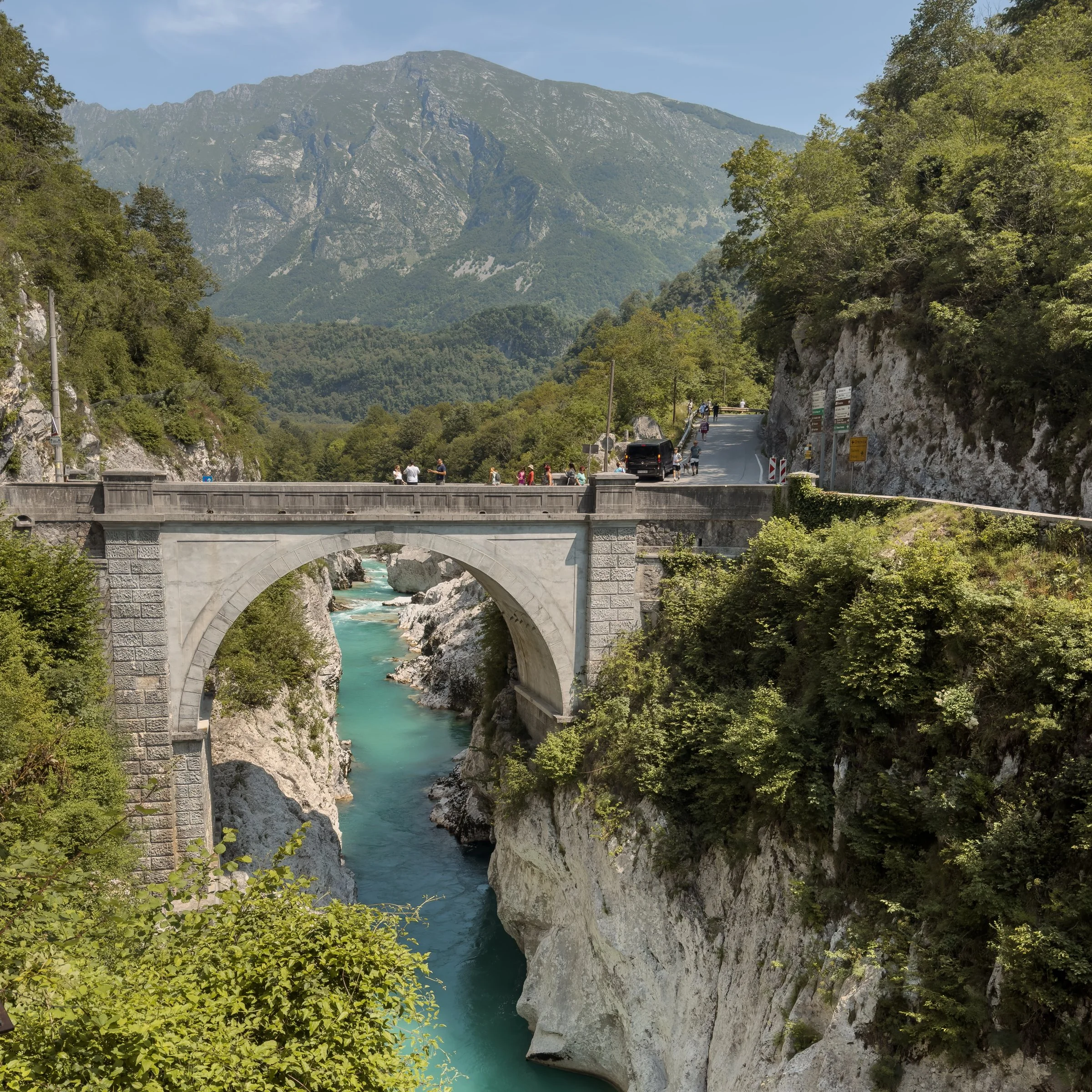
The pass delivers you into the Soča Valley, with Bovec, Kobarid and Tolmin all within an hour. The river is the reason to come: a green-blue colour so bright it barely looks real, with white rocks, rapids and stone bridges.
My Soča Valley guide covers what to do there, from rafting in Bovec to the waterfall walk in Kobarid, and where to stay.
Before the pass: Kranjska Gora
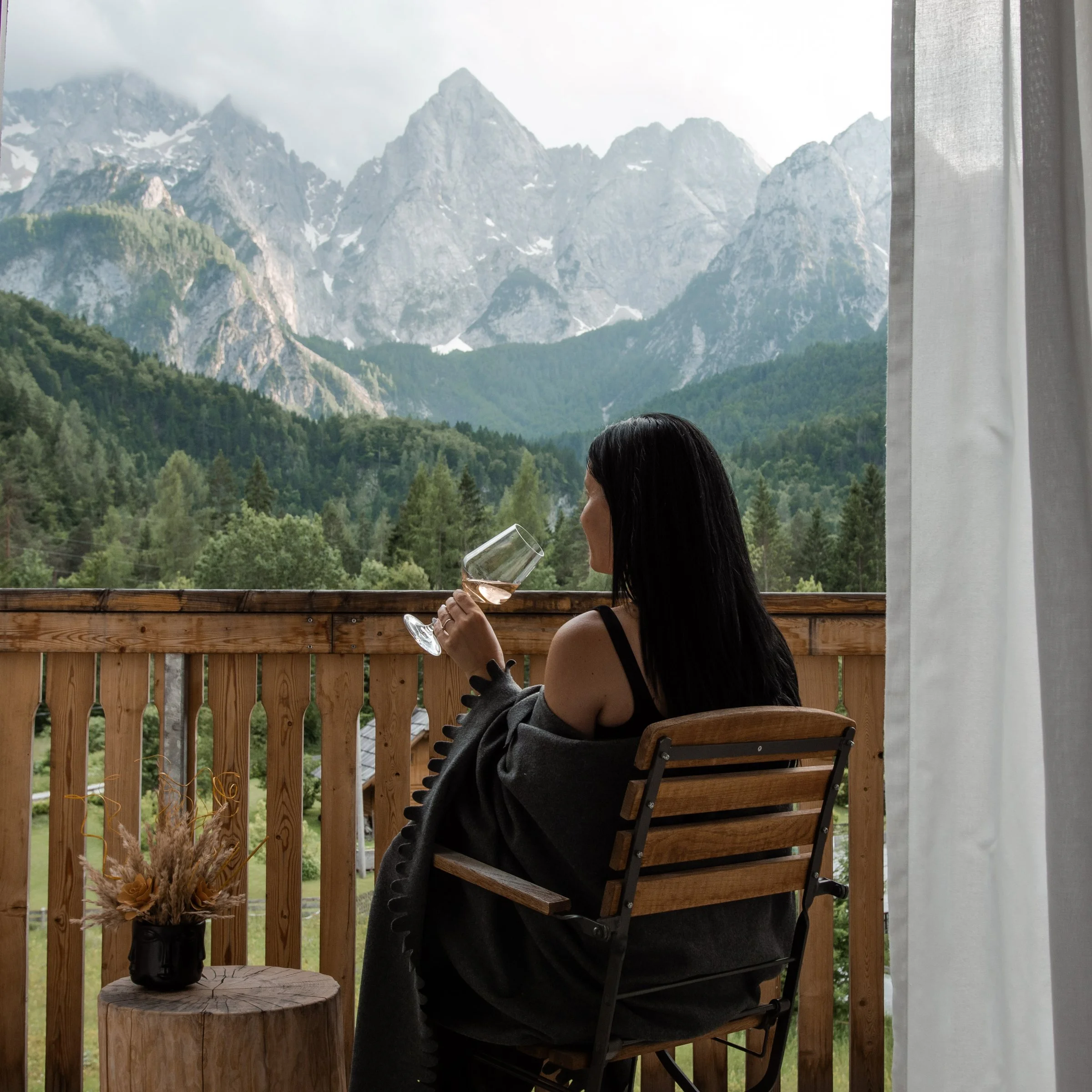
Sleep in Kranjska Gora or Gozd Martuljek the night before, and you can be at Lake Jasna first thing and over the pass before the traffic. The views from the valley are spectacular on their own.
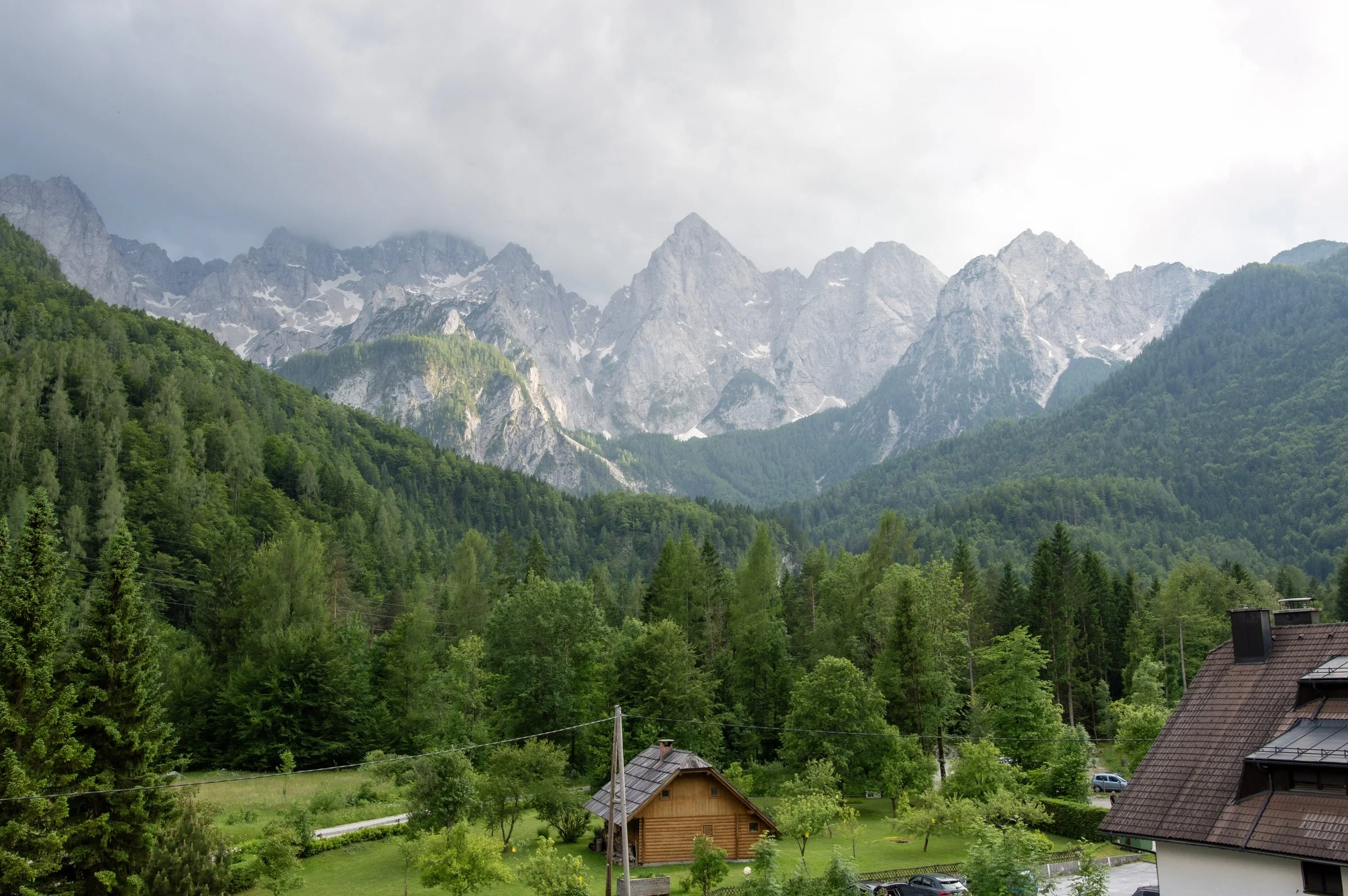
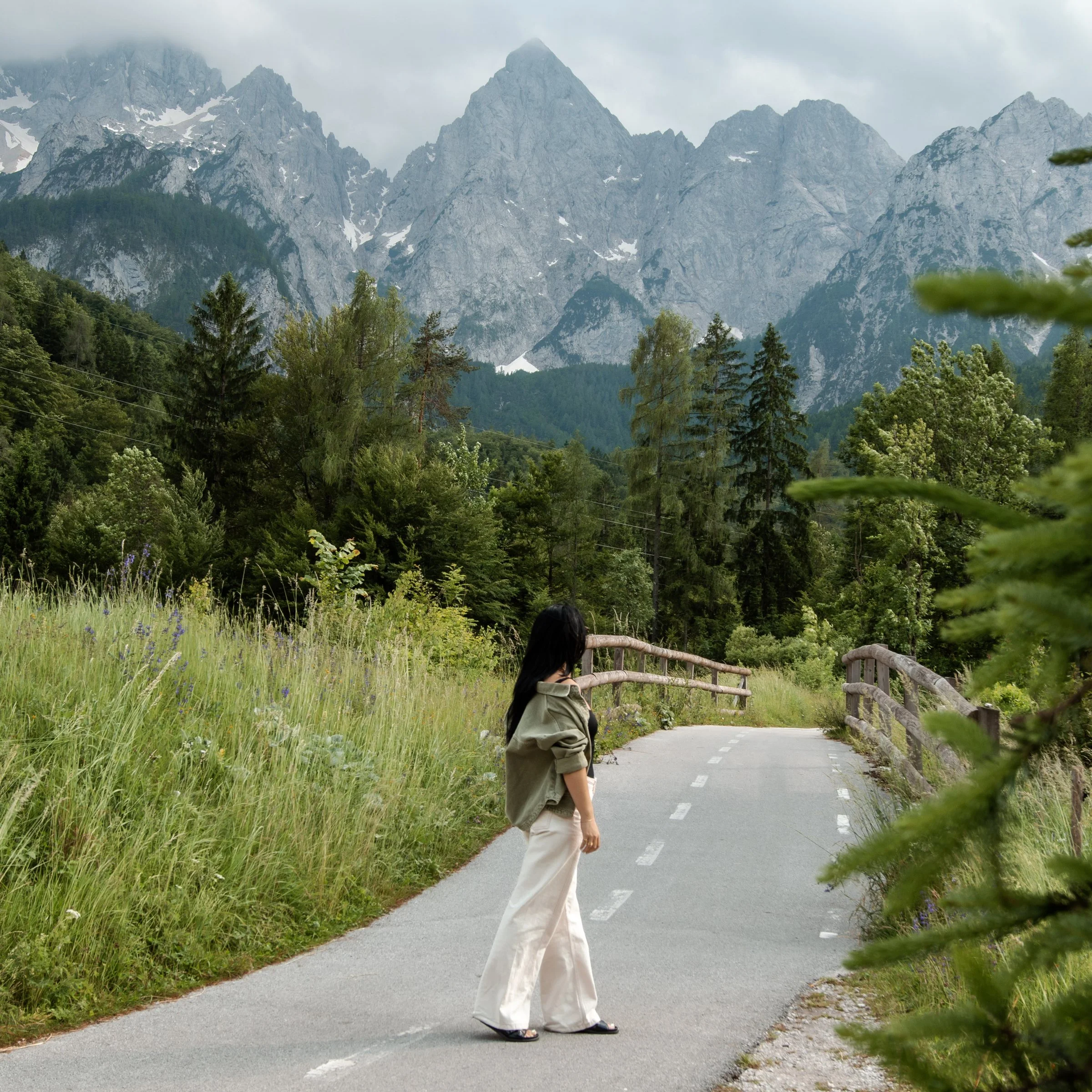
More in my Kranjska Gora guide.
Is the Vršič Pass worth it?
Yes. It is the most beautiful way to cross the Julian Alps, and it turns a simple transfer between Kranjska Gora and the Soča Valley into one of the best days of a Slovenia trip. Go early, take your time and stop often.
How many hairpins does the Vršič Pass have?
50 numbered hairpin bends: 24 on the climb from Kranjska Gora and 26 on the descent into the Trenta valley.
Is the Vršič Pass open all year?
No. It closes in winter because of snow and usually reopens in late spring. Check the road status before you go.
Do you have to pay to drive the Vršič Pass?
No. Crossing is free. Since 2026 barriers at both ends count and direct traffic, and parking at the top is managed.
Is there a bus over the Vršič Pass?
Yes. In 2026 a free shuttle bus ran between Kranjska Gora and Bovec from 1 June to 30 September.
Is the Vršič Pass scary?
It is tight and steep in places, with some cobbled bends, but it is a normal paved road. Drive slowly, use a low gear on the way down and go early to avoid traffic.
How long does it take to drive the Vršič Pass?
About 50 minutes from Kranjska Gora to Trenta and about an hour and a quarter to Bovec, without stops. Allow half a day with stops.
Who built the Vršič Pass road?
Russian prisoners of war, during the First World War. The Russian Chapel on the northern side remembers those who died in an avalanche in 1916.