Slovenia Road Trip: The Perfect 7-Day Itinerary from the Coast to the Alps
A 7-day Slovenia road trip from Trieste: Piran and the coast, Predjama Castle, Kranjska Gora, Lake Bled and Bohinj, the Vršič Pass, the Soča Valley and the Brda wine hills, with costs and driving tips.

Updated · 13 min read
7 facts checkedPrices, hours and booking rules, last verified Checked
| Fact | What we found | Checked |
|---|---|---|
| Weekly e-vignette for a car | €16evinjeta.dars.si ↗ | |
| Fornače garage, Piran | €3.20 per started hour | |
| Lipica Stud Farm | €20, €23 in high summer | |
| Postojna Cave / with Predjama Castle | €34.90 / €58.90 | |
| Bled Island church, bell tower and museum | €12 | |
| Vršič Pass, 2026 season | Crossing free, barriers at both ends, free shuttle bus June to Septemberkranjska-gora.si ↗ | |
| Petrol (Eurosuper 95) in Slovenia | €1.506 per litre from 10 November 2026 |
We re-check every fact in our guides on a schedule and show the date here. Spotted something that changed? Tell us.
Some links in this guide are affiliate links. They cost you nothing extra and help keep the blog free.
Seven days is enough to drive across Slovenia from the Adriatic coast to the Julian Alps and back, without rushing. This route starts and ends at Trieste Airport in Italy and covers Piran, Lipica, Predjama Castle, Kranjska Gora, Lake Bled, Lake Bohinj, Ljubljana, the Vršič Pass, the Soča Valley and the wine hills of Goriška Brda.
We drove it in June 2025 and came home convinced that Slovenia is one of the most underrated countries in Europe. It is small, so the drives are short. It is also remarkably varied: you can have coffee by the sea in the morning and stand beside an alpine lake by the afternoon. There was not a single stop we would leave out.
The route in one line: Trieste, Portorož, Piran, Lipica, Predjama Castle, Kranjska Gora, Bled, Kobarid, Goriška Brda, Trieste.
Before you go: car, vignette and borders
Renting a car
Slovenia is made for a road trip. Public transport reaches the main towns, but the lakes, mountain passes and valleys on this route are far easier with your own car.
We flew into Trieste and rented from Locauto at the airport. If you also collect a car in Italy, check two things before you book:
- Cross-border travel. Make sure the rental company allows the car to be driven into Slovenia, and whether there is a fee for it.
- The vignette. A car rented in Italy will not come with a Slovenian vignette. You have to buy it yourself.
The Slovenian e-vignette
You need a vignette to drive on Slovenian motorways and expressways. It is digital and linked to your number plate, so there is nothing to stick on the windscreen.
- Weekly vignette for a car: €16, valid for seven days from the date you choose.
- Where to buy: online from DARS, the Slovenian motorway company, before you cross the border. You can buy it up to 30 days ahead.
- Fine for driving without one: from €300.
A weekly vignette covers this entire itinerary. Everything else about driving here, from speed limits to the rules for rental cars from Italy, is in my guide to driving in Slovenia.
Good to know
- Currency: euro, the same as Italy.
- Borders: Slovenia and Italy are both in the Schengen area. On this route you cross between them several times, usually without stopping.
- Fuel and tolls: apart from the vignette, there are no motorway tolls for cars on this route in Slovenia. The short stretch of Italian motorway near Trieste Airport is tolled separately.
- Language: Slovenian. English is widely spoken.
Day 1: Trieste to Portorož
Drive: Trieste Airport to Portorož, about an hour.
Collect the car, buy the vignette if you have not already, and drive south across the border to the Slovenian coast. Slovenia has only a short strip of coastline, and Portorož is its main seaside resort, with a long promenade, a beach and plenty of places for a first dinner by the water.
We stayed one night here before starting the trip properly the next morning.
Where to stay: Portorož has the widest choice of hotels on the coast. If you prefer atmosphere over facilities, stay inside Piran’s old town instead and leave the car in the garage outside it. I cover both in my guide to Piran and Portorož.
Day 2: Piran, Lipica and Predjama Castle, then north to the Alps
This is the longest driving day of the trip, so start early.
Morning: Piran
Drive: Portorož to Piran, about 10 minutes.
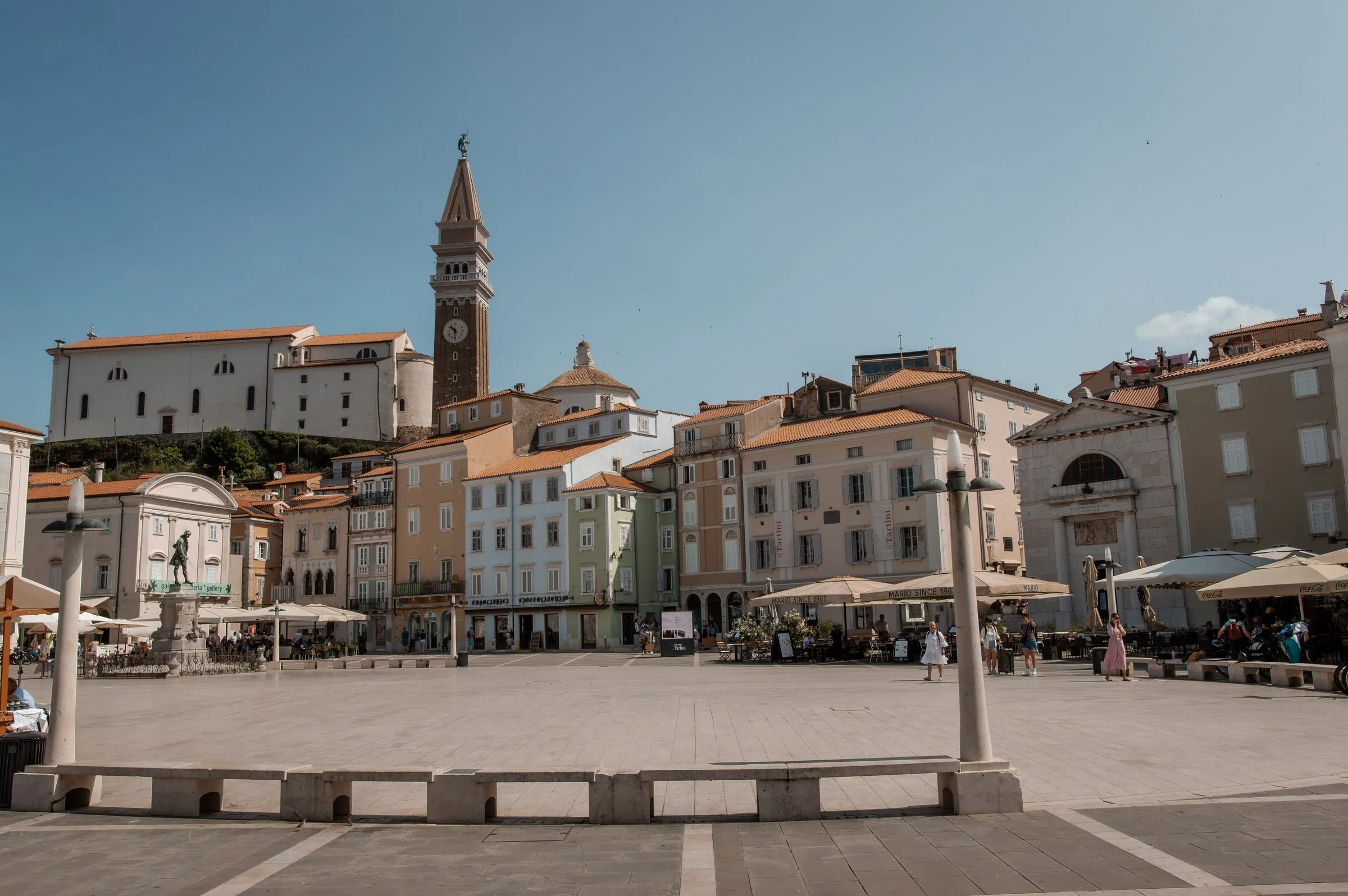
Piran is the prettiest town on the Slovenian coast: a Venetian-style old town on a narrow peninsula, with a marble main square, a bell tower and lanes that all seem to end at the sea.
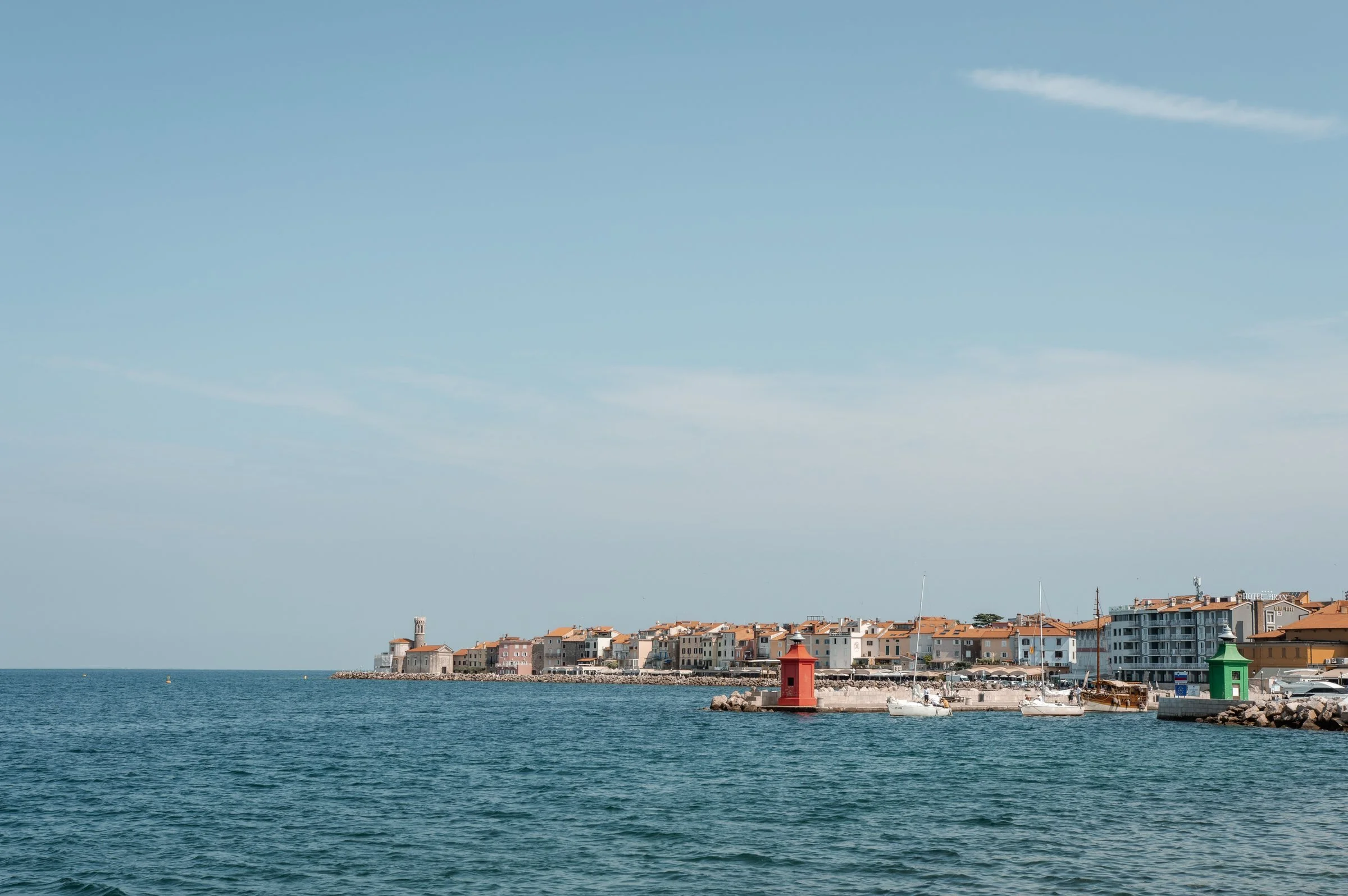
Visitors cannot park in the old town. Leave the car at the Fornače garage at the entrance to Piran, which costs €3.20 per hour, and either walk in along the water or take the shuttle bus to Tartini Square for €1.
Do not miss:
- Tartini Square, the oval main square.
- The Church of St George and its bell tower, for the view over the rooftops.
- The town walls, for the classic photo of the peninsula.
- The seafront, for a coffee before you leave.
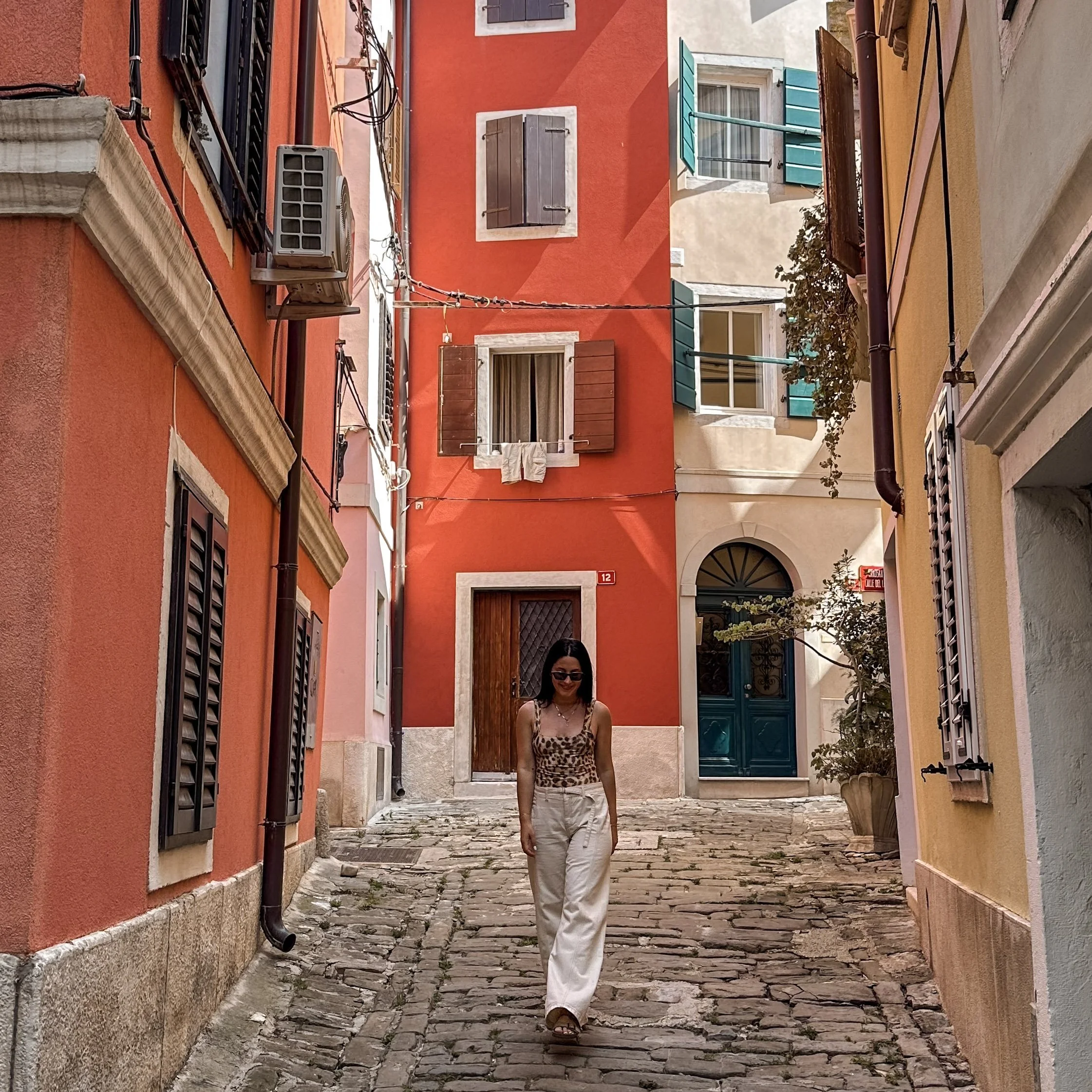
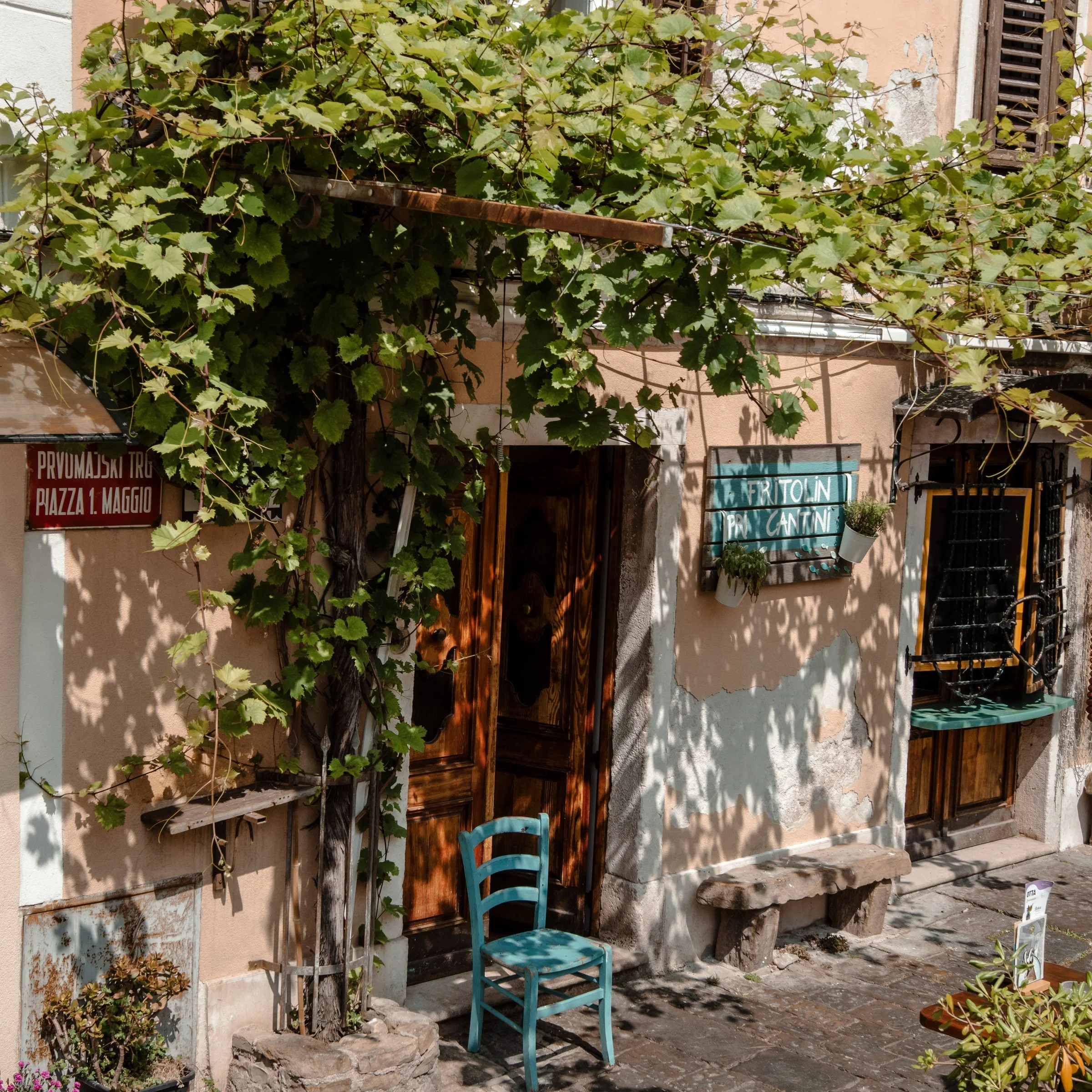
My favourite spot in Piran was one of the benches overlooking the sea. We grabbed takeaway coffee and a little snack and simply sat there, taking in the views and enjoying the moment. I think part of what made it so special was that we visited during a busy period, so finding a quiet spot away from the crowds made it even more enjoyable.
Midday: Lipica Stud Farm
Drive: Piran to Lipica, about 45 minutes.
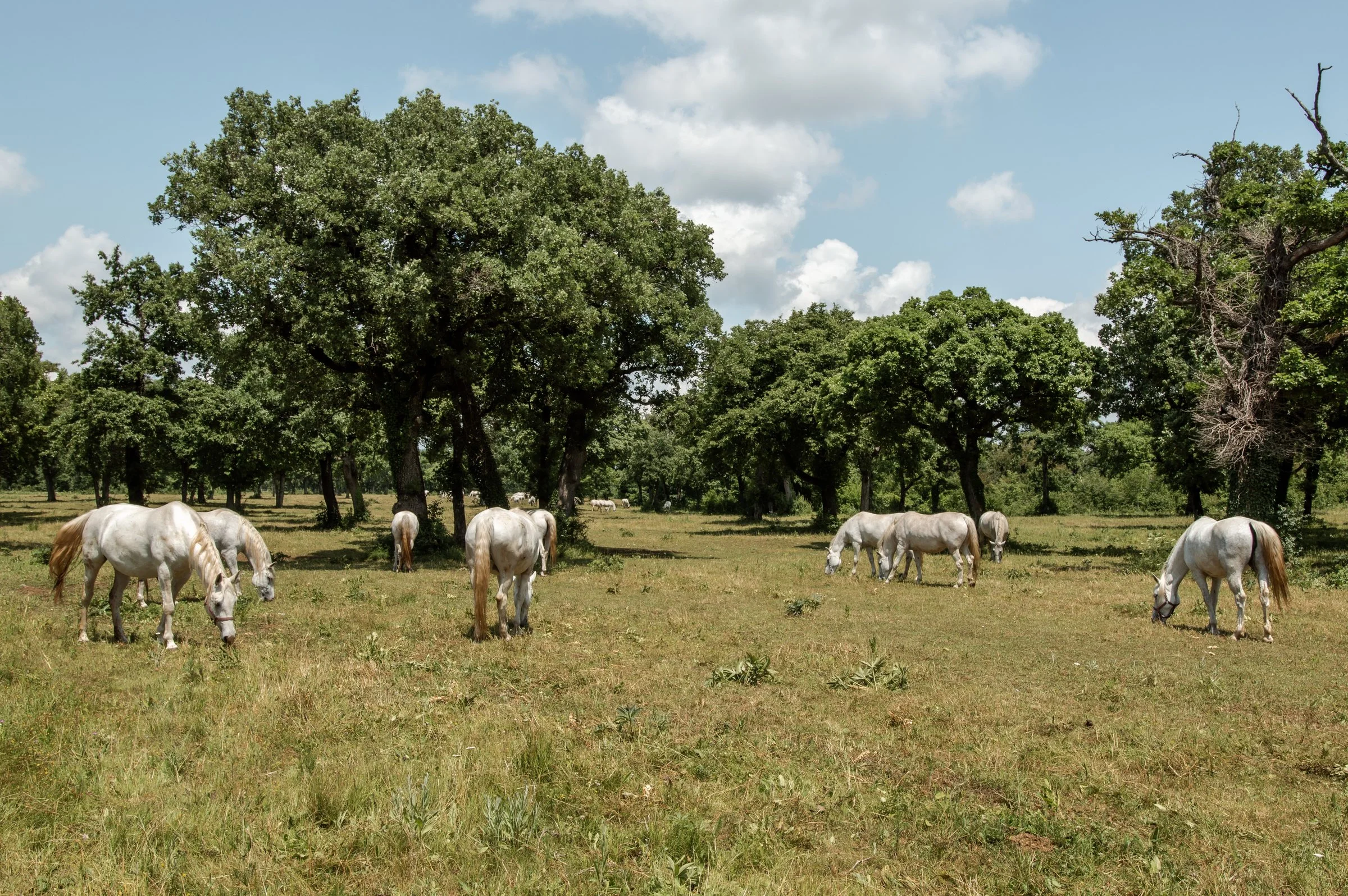
Lipica is the original home of the Lipizzaner, the white horses made famous by the Spanish Riding School in Vienna. The stud farm has been breeding them since 1580, and you can walk the estate, visit the stables and museum, and watch the herd in the paddocks.
- Tickets: €20 for adults from April to late June and in September and October, €23 in high summer.
- Guided tours: at 10:00, 12:00, 14:00 and 16:00 from April to October.
Afternoon: Predjama Castle and Postojna Cave
Drive: Lipica to Predjama, about 45 minutes.
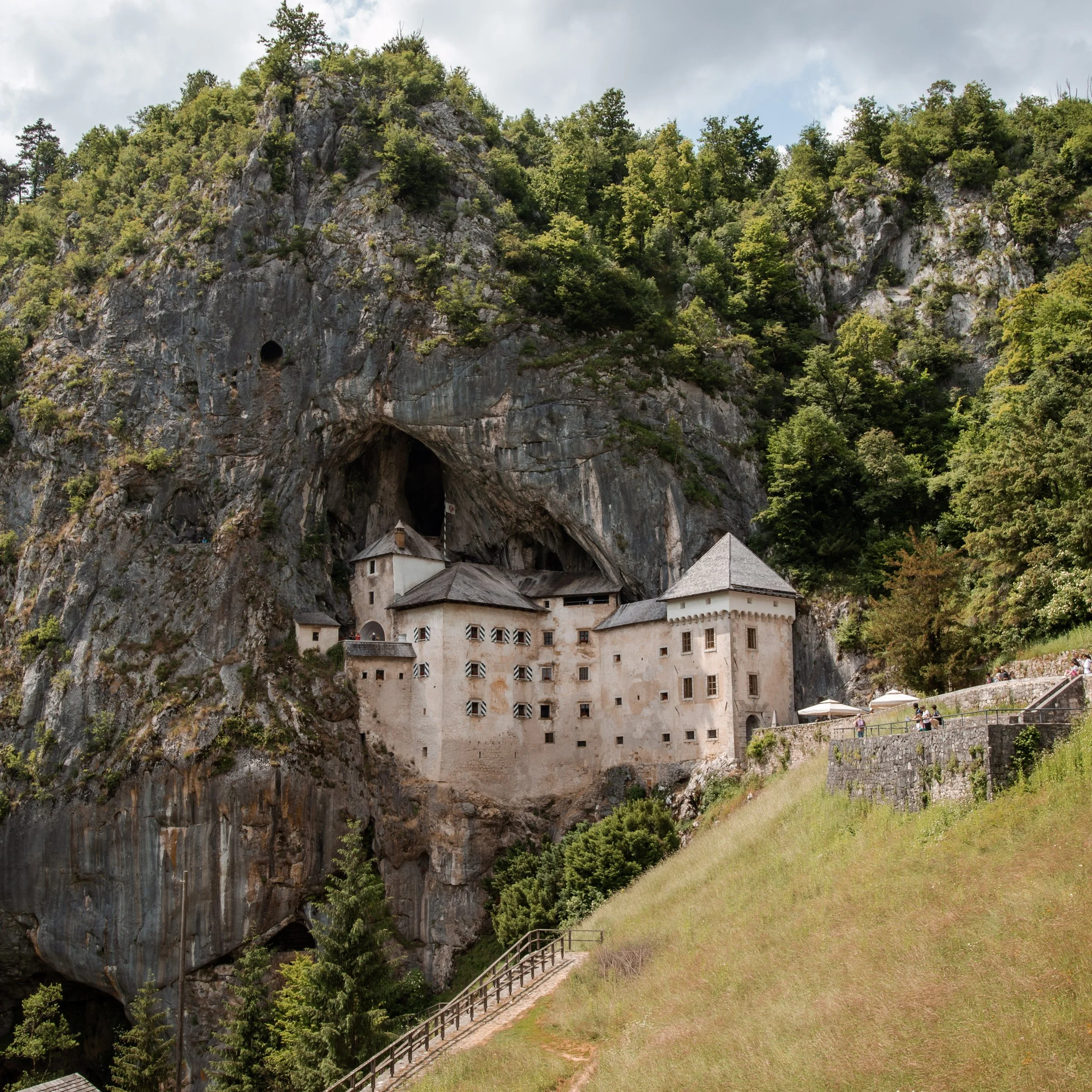
Predjama Castle is built into the mouth of a cave halfway up a cliff, and it looks exactly as improbable in real life as it does in photos. It is about 9 km from Postojna Cave, one of the largest show caves in Europe, where part of the visit is by underground train.
We only passed by on this trip and did not go inside either, but they are two of the most visited sights in the country, so make room for them if you can. Allow at least half a day for the pair.
- Postojna Cave: €34.90.
- Postojna Cave and Predjama Castle together: €58.90.
- Bring a jacket. The cave is cold all year.
Evening: drive to Kranjska Gora
Drive: Predjama to Kranjska Gora, about 1 hour 30 minutes.
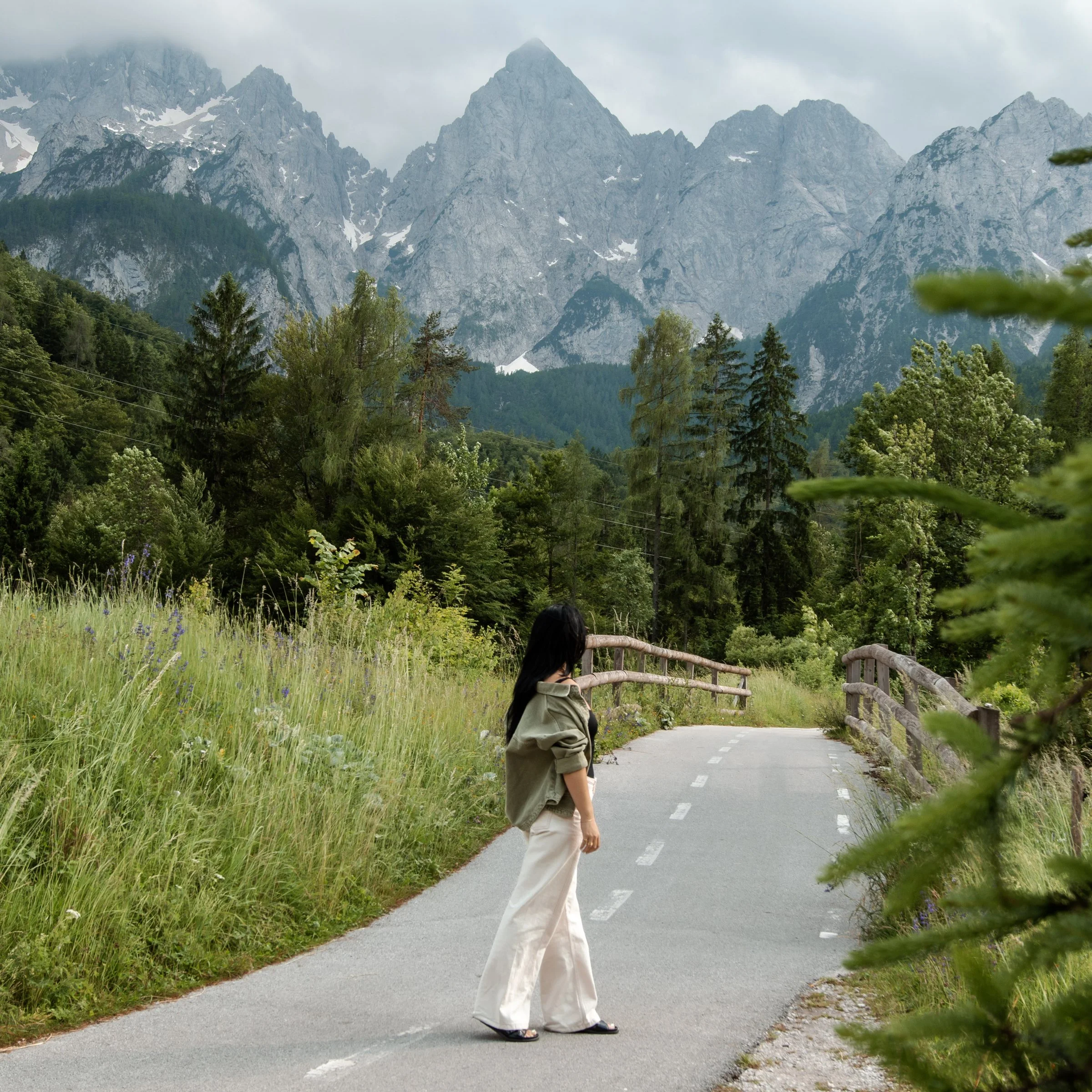
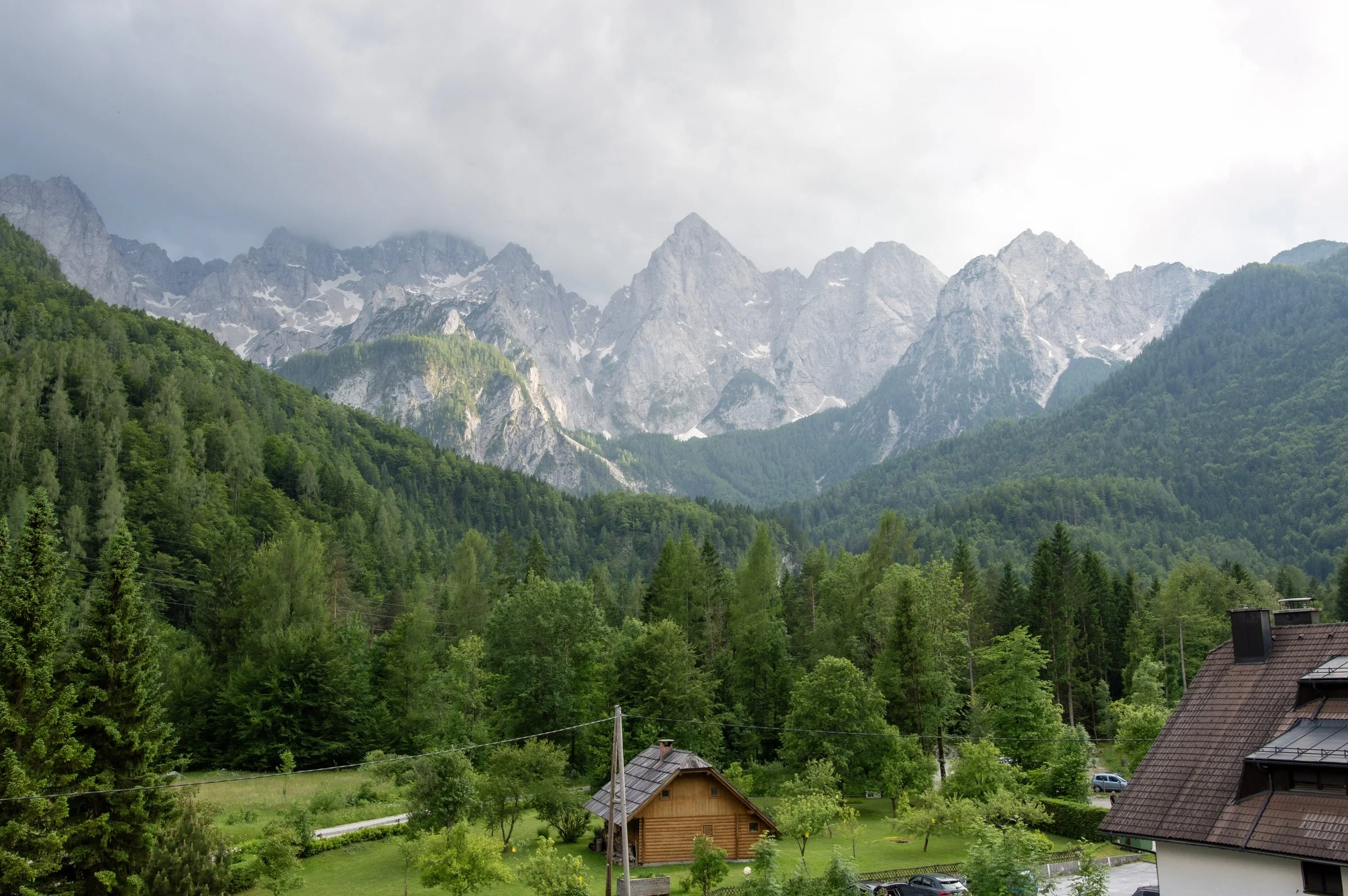
From the karst you drive north on the motorway, past Ljubljana, and into the Julian Alps. Kranjska Gora sits in the far north-west corner of the country, a few minutes from both Italy and Austria.
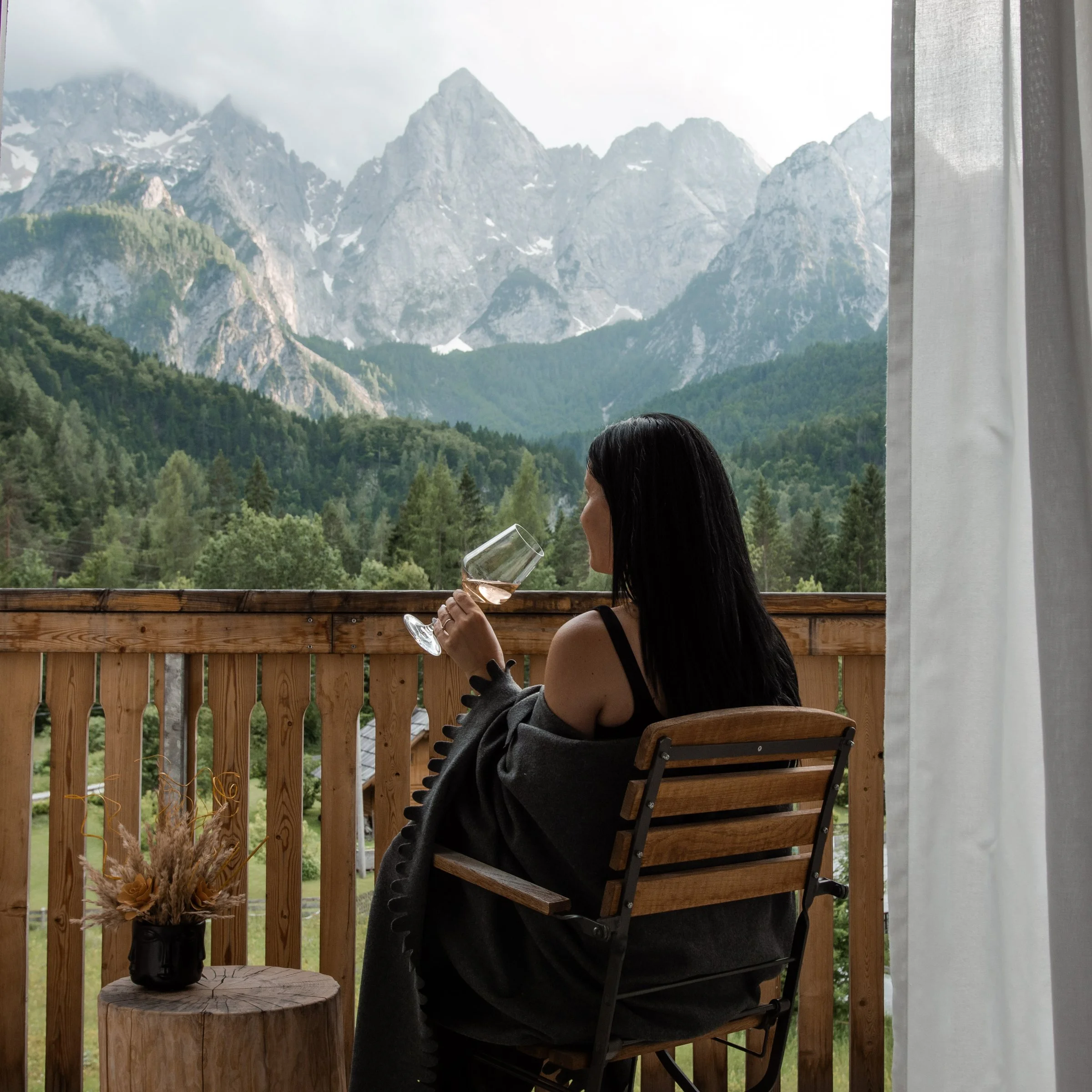
Where we stayed: Triangel Boutique Hotel in Gozd Martuljek, just outside Kranjska Gora, for two nights.
The hotel’s location is simply idyllic, with breathtaking views of the Julian Alps. One of my favourite things was waking up in the morning and enjoying breakfast on our balcony while taking in the scenery. The restaurant was another highlight, serving a great selection of local dishes with a gourmet twist. It’s one of those places where you can easily switch off from the outside world, slow down and simply enjoy the moment.
Day 3: Kranjska Gora, Lake Jasna, Planica and the Fusine Lakes
A slow day with almost no driving. Everything is within 20 minutes of Kranjska Gora. I wrote a separate guide to Kranjska Gora, Lake Jasna, Planica and the Fusine Lakes with more detail.
Lake Jasna
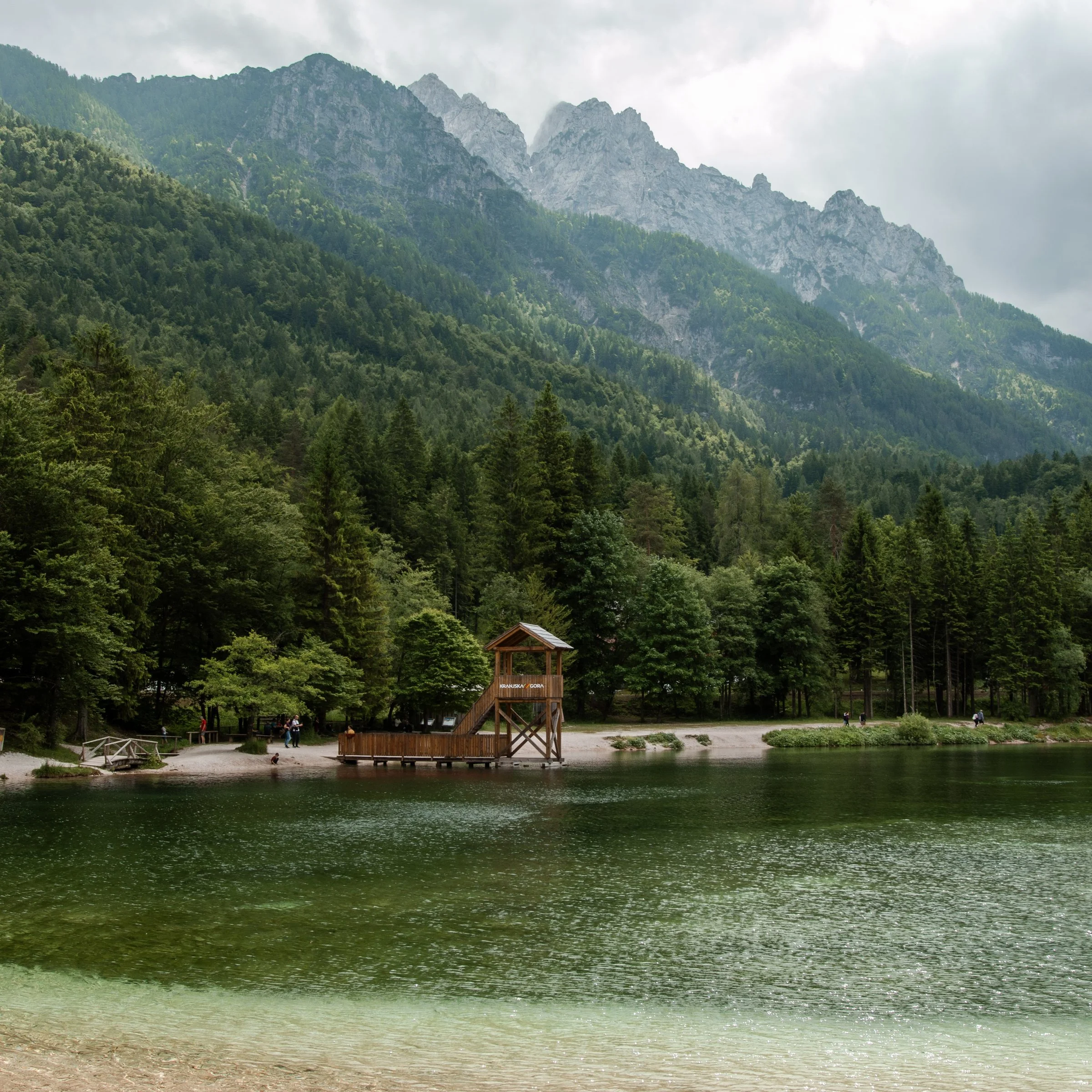
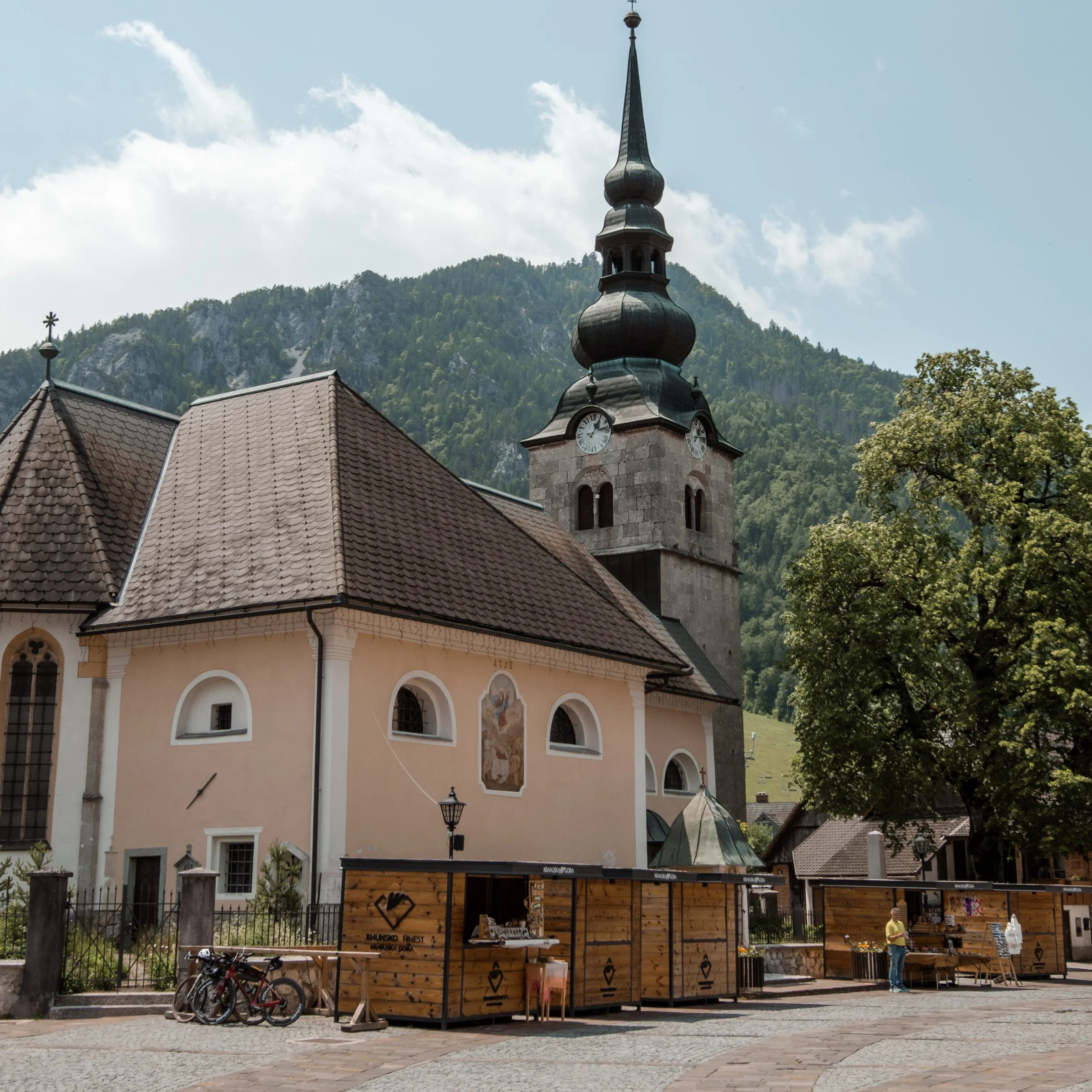
Two small, clear lakes at the foot of the Vršič Pass road, with the Julian Alps reflected in the water and a statue of an ibex on the shore. There is a car park beside the lake. Come early, before the day visitors arrive.
Planica
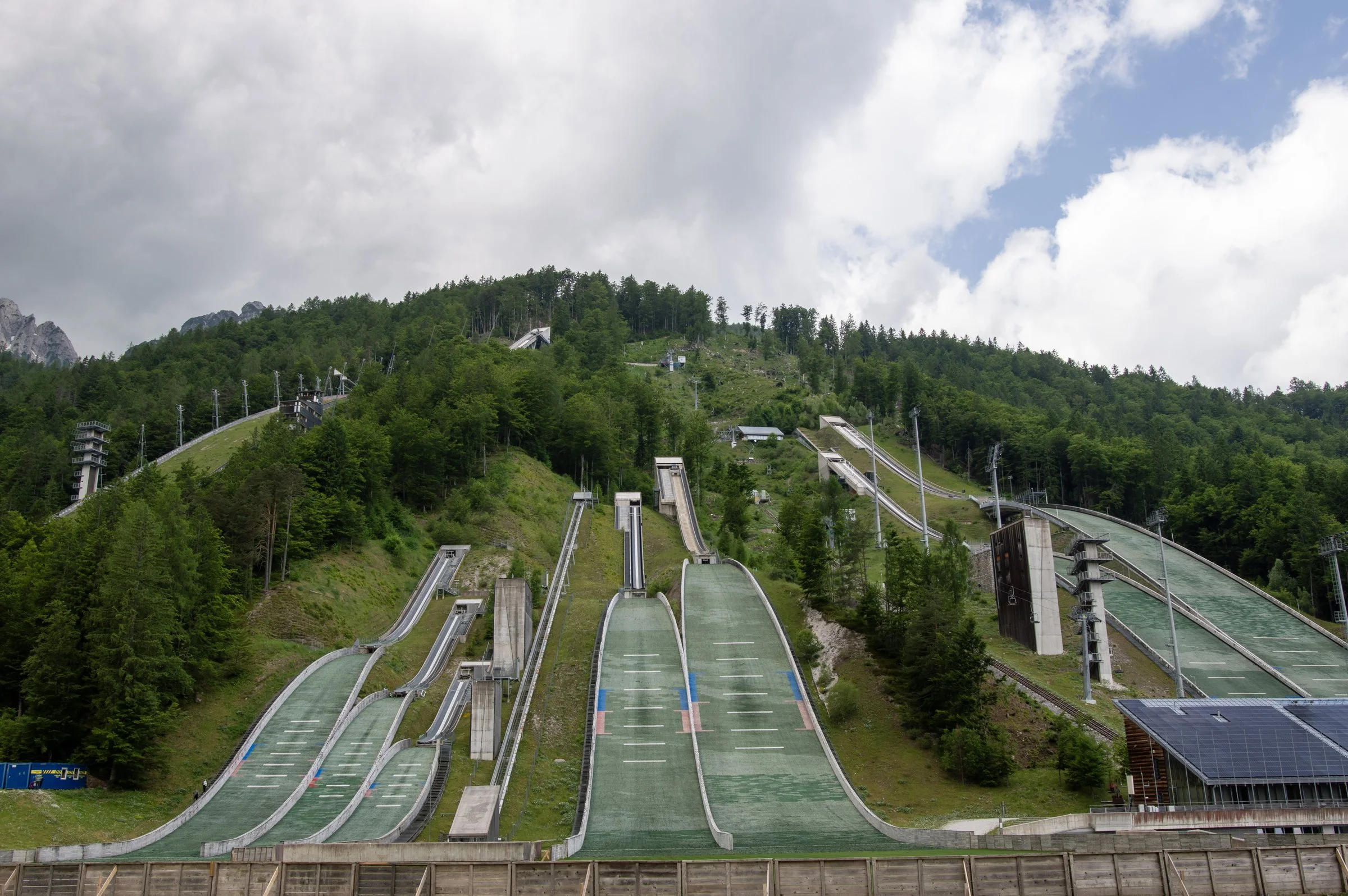
Planica is the home of ski flying, with one of the largest ski jumping hills in the world. Even without snow it is worth seeing the scale of the jumps from below, and the Nordic Centre at the foot of the hills is open to visitors.
I’ve never been skiing and I’m not particularly fond of winter sports (or the cold, for that matter… oops!), but even I couldn’t help but be impressed by the sheer scale of Planica.
Laghi di Fusine, Italy
Drive: Kranjska Gora to the Fusine Lakes, about 20 minutes.
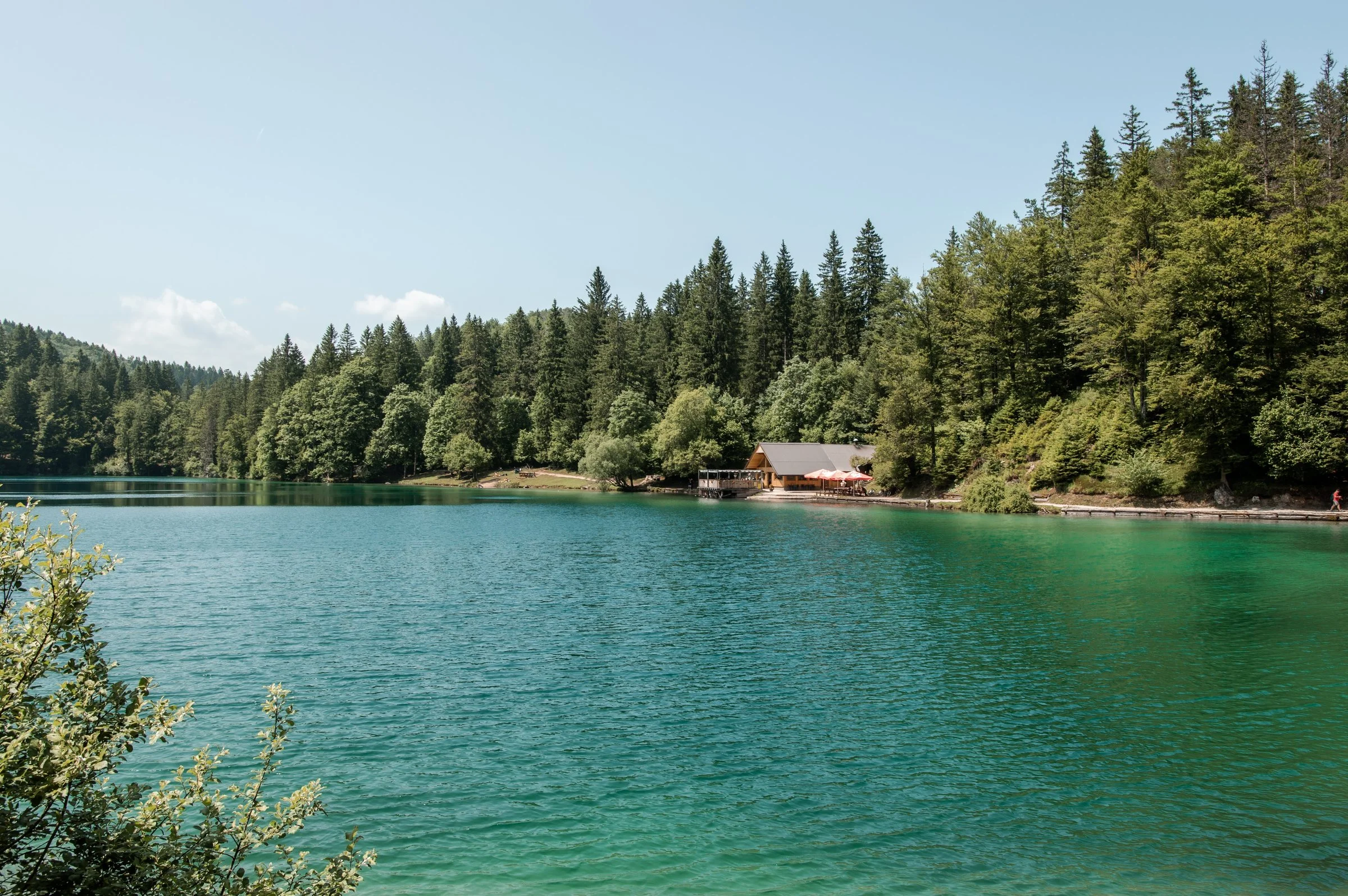
Cross the border at Rateče and you are in Italy within minutes. The Laghi di Fusine are two glacial lakes below the Mangart massif, connected by a forest path. We crossed over in the middle of the day between stops, and it is an easy detour to add.
Day 4: Lake Bled
Drive: Kranjska Gora to Bled, about 40 minutes.
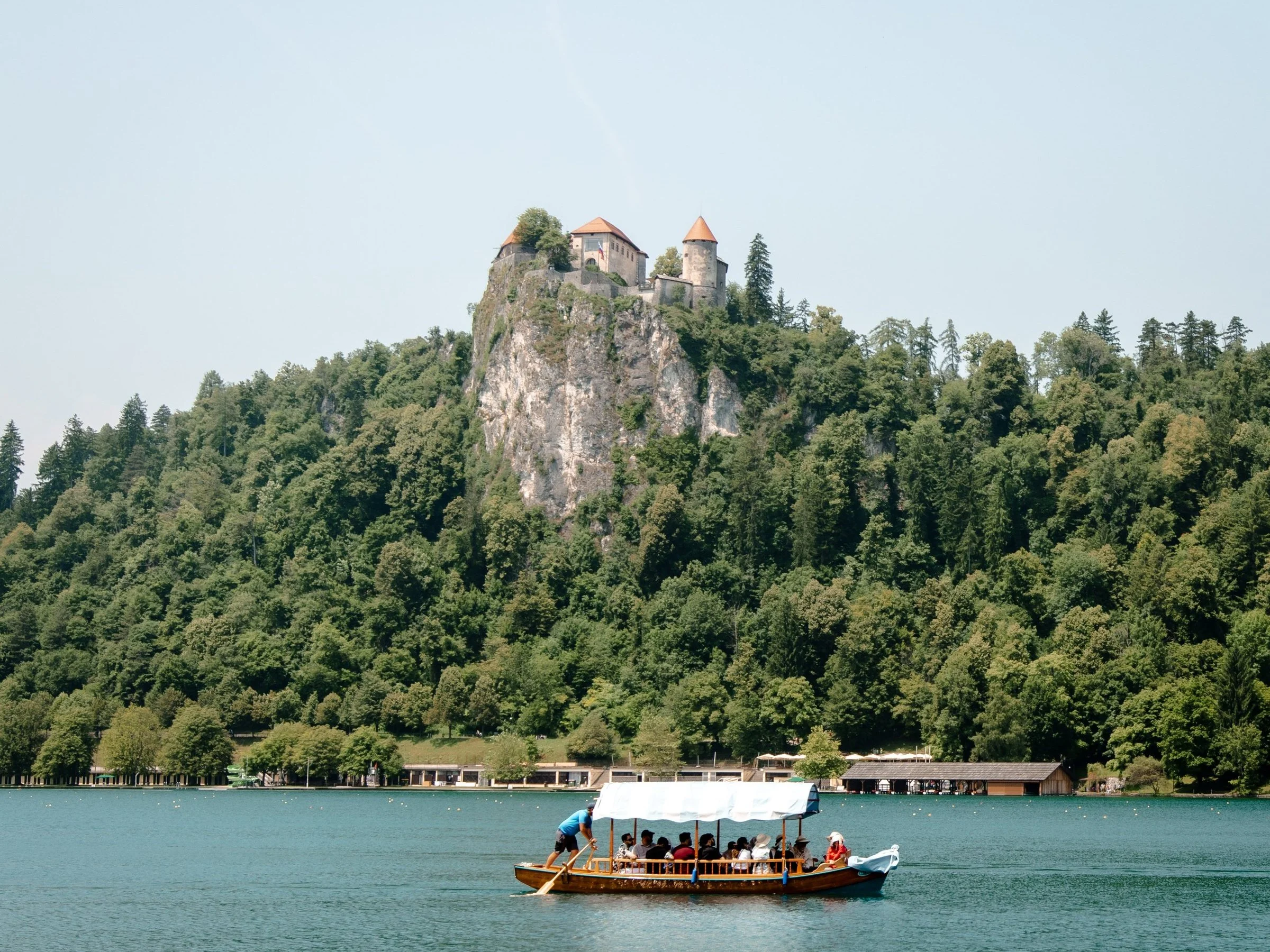
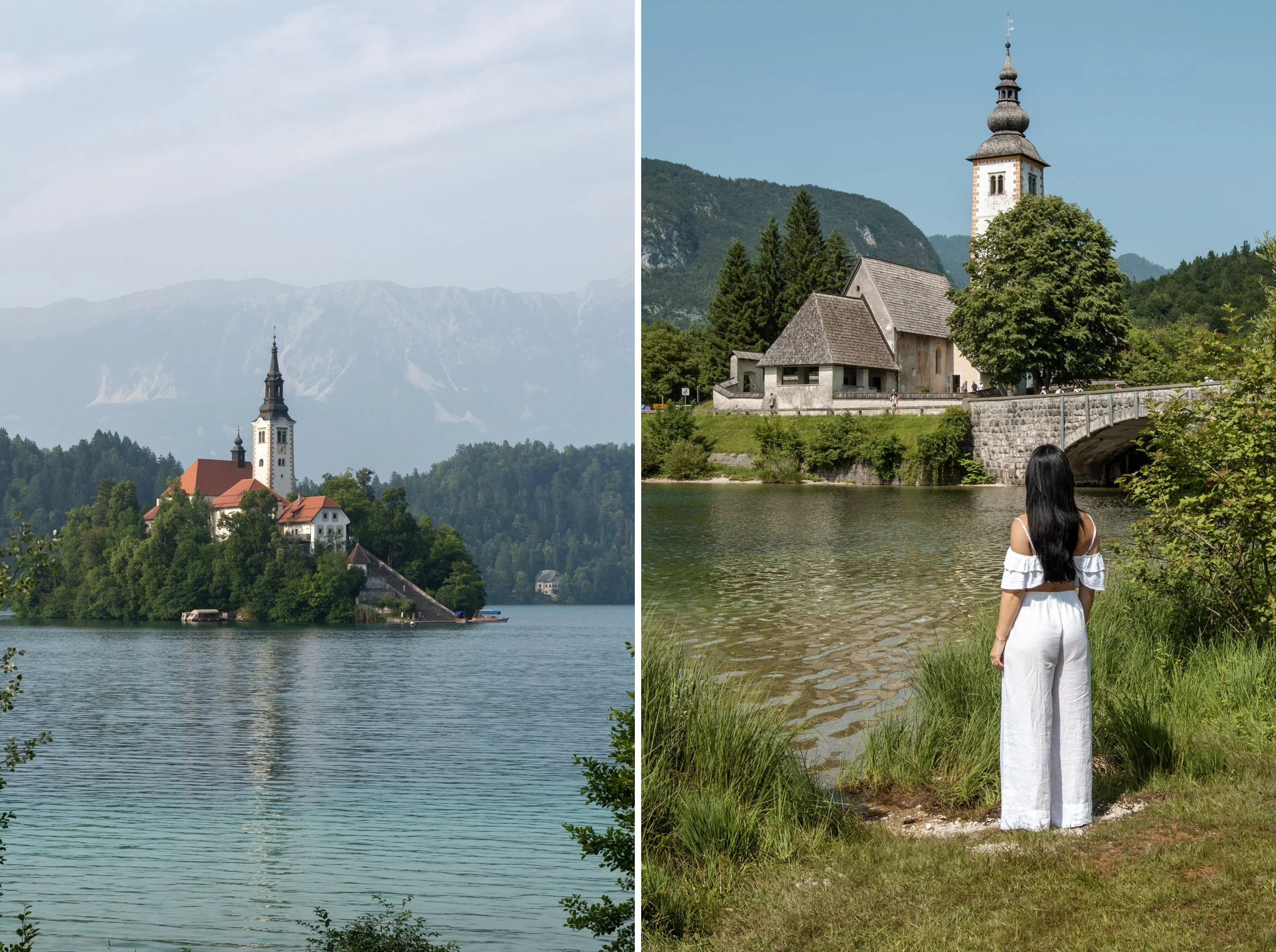
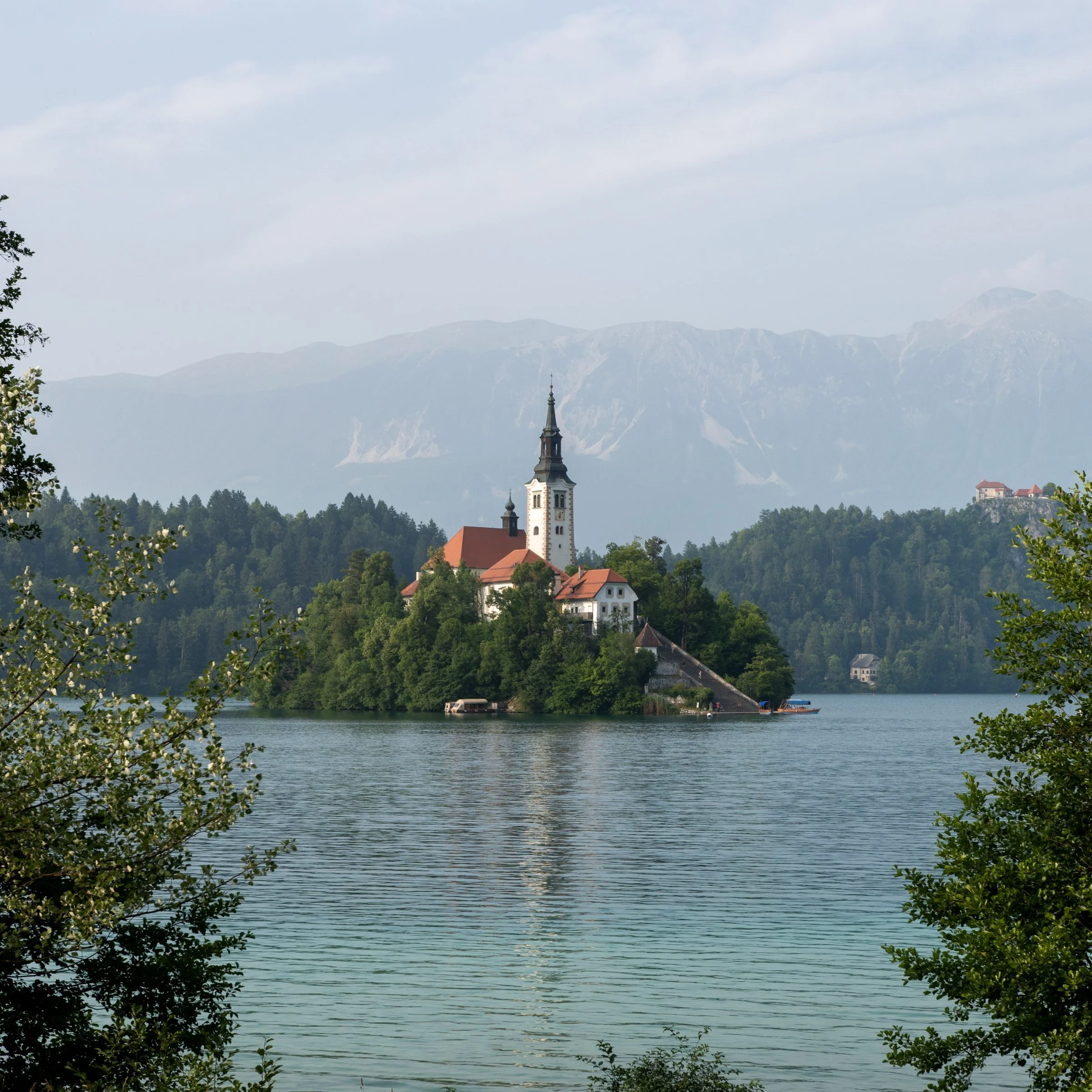
Lake Bled is the image most people have of Slovenia: a church on an island, a castle on a cliff and mountains behind. It deserves more than a day trip. We stayed three nights and used it as a base for Bohinj and Ljubljana.
Where we stayed: Penzion Pibernik in Bled, for three nights.
Penzion Pibernik was surrounded by nature and lush greenery, with a beautiful, spacious garden at the front of the property. There were even fire pits that practically begged for an evening of marshmallow roasting! Sadly, we never got around to it, as we kept putting off buying marshmallows and were too busy spending our days out and about exploring. We loved the place so much that we actually ended up extending our stay by an extra night!
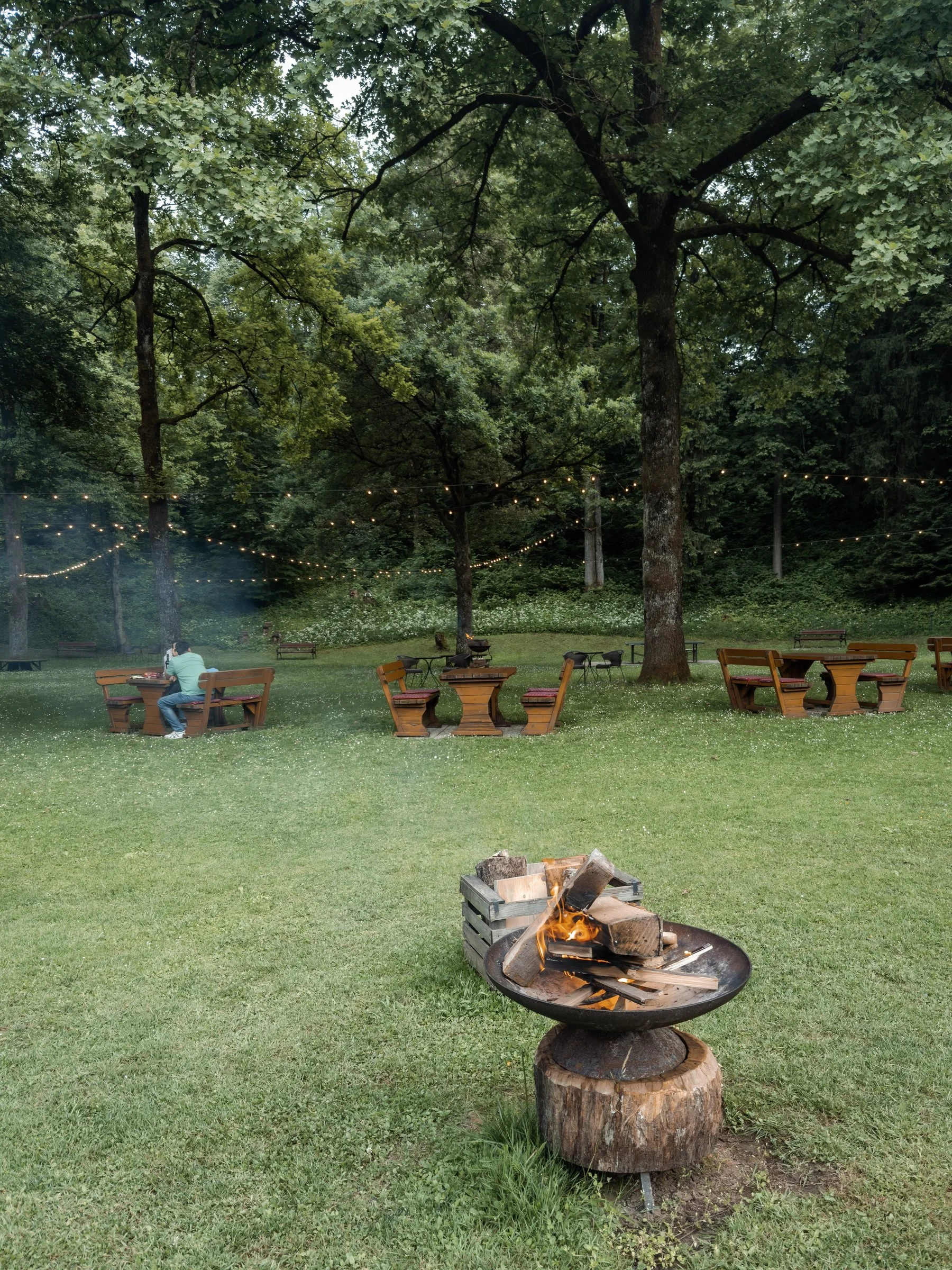
What to do at Lake Bled:
- Walk around the lake. The path is flat and about 6 km long.
- Go out to Bled Island. Traditional wooden pletna boats row across. Entry to the church, bell tower and museum is €12, and 99 stone steps lead up from the landing.
- Visit Bled Castle, on the cliff above the lake, for the view.
- Climb to a viewpoint. Ojstrica and Mala Osojnica, at the western end of the lake, give the postcard view of the island.
- Try the Bled cream cake, kremšnita.
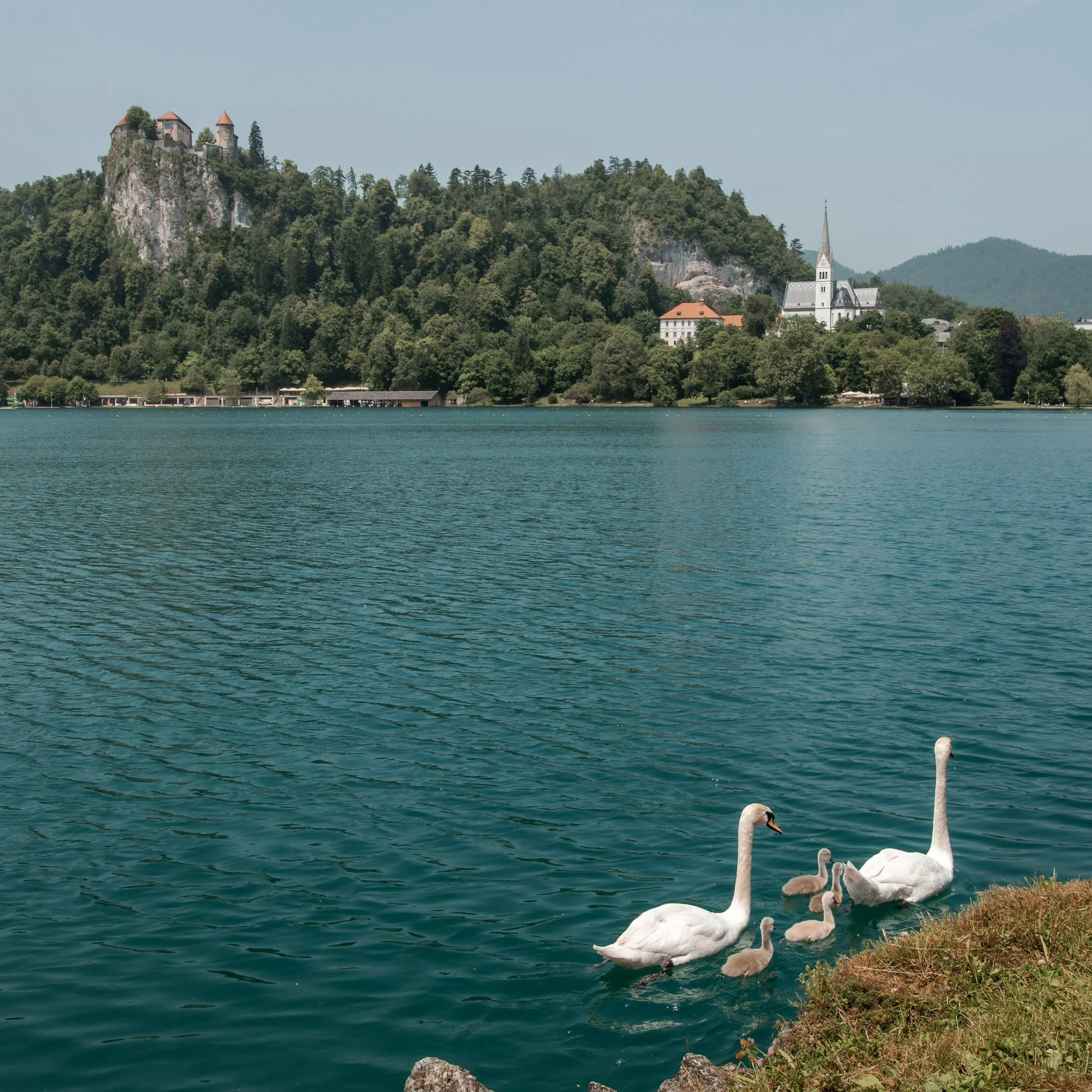
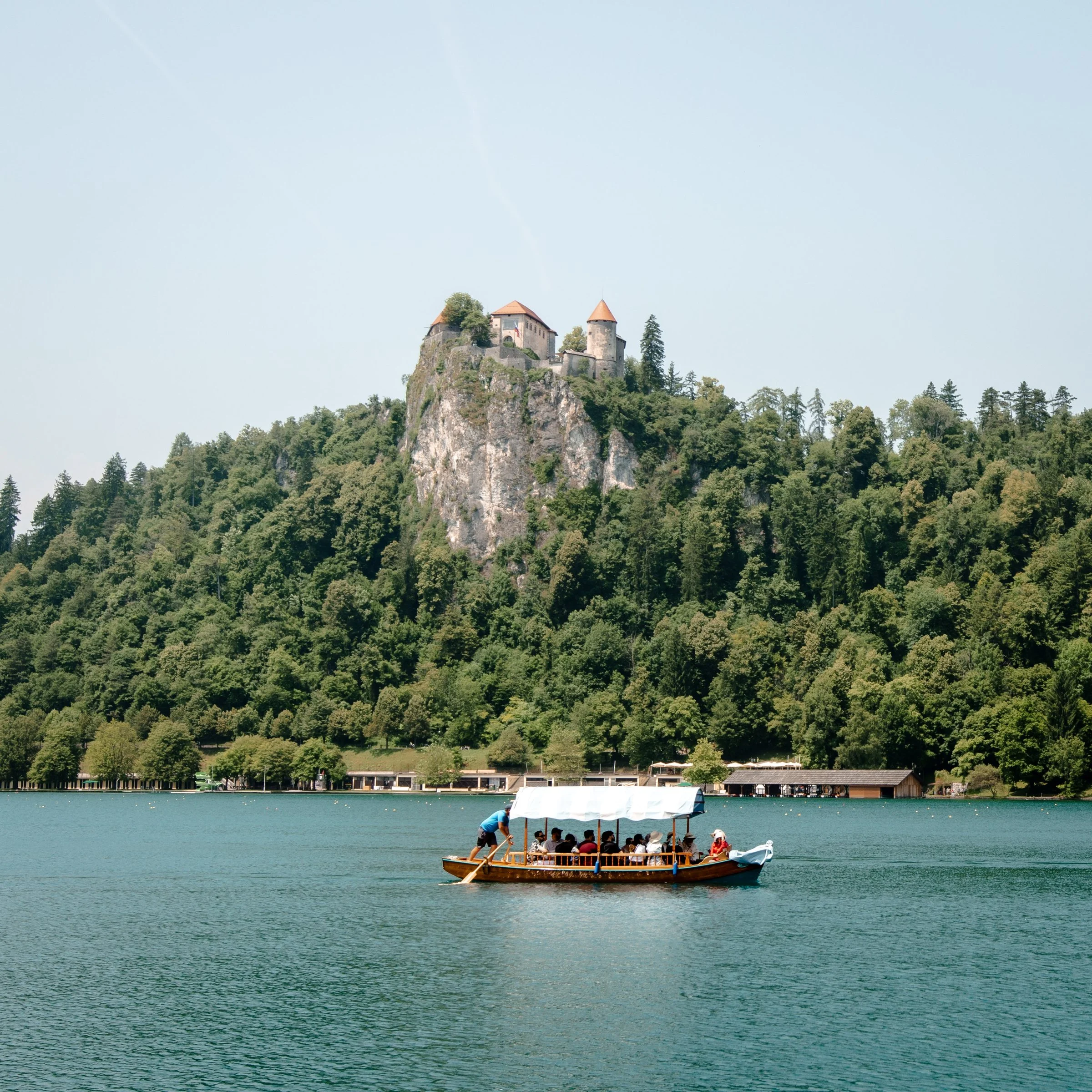
Everything you need for the lake, including how many days to give it, is in my Lake Bled guide.
Day 5: Lake Bohinj
Drive: Bled to Bohinj, about 30 minutes.
Bohinj is the larger, quieter lake, inside Triglav National Park. Where Bled is polished, Bohinj is wild: there are no buildings crowding the shore, only water, forest and mountains.
- The Church of St John the Baptist and the stone bridge, at the eastern end of the lake.
- Savica Waterfall, a short hike from the western end.
- The Vogel cable car, for a view over the whole lake and the Julian Alps.
I loved both Lake Bled and Lake Bohinj, as each had its own charm. Bled was incredibly picturesque, almost like something out of a postcard, while Bohinj felt a little more rugged and untouched. I also loved the small cafés dotted along the main road, just a short walk from the lake. Despite attracting plenty of visitors, Bohinj felt noticeably quieter and more laid-back than Bled, which made it all the more special.
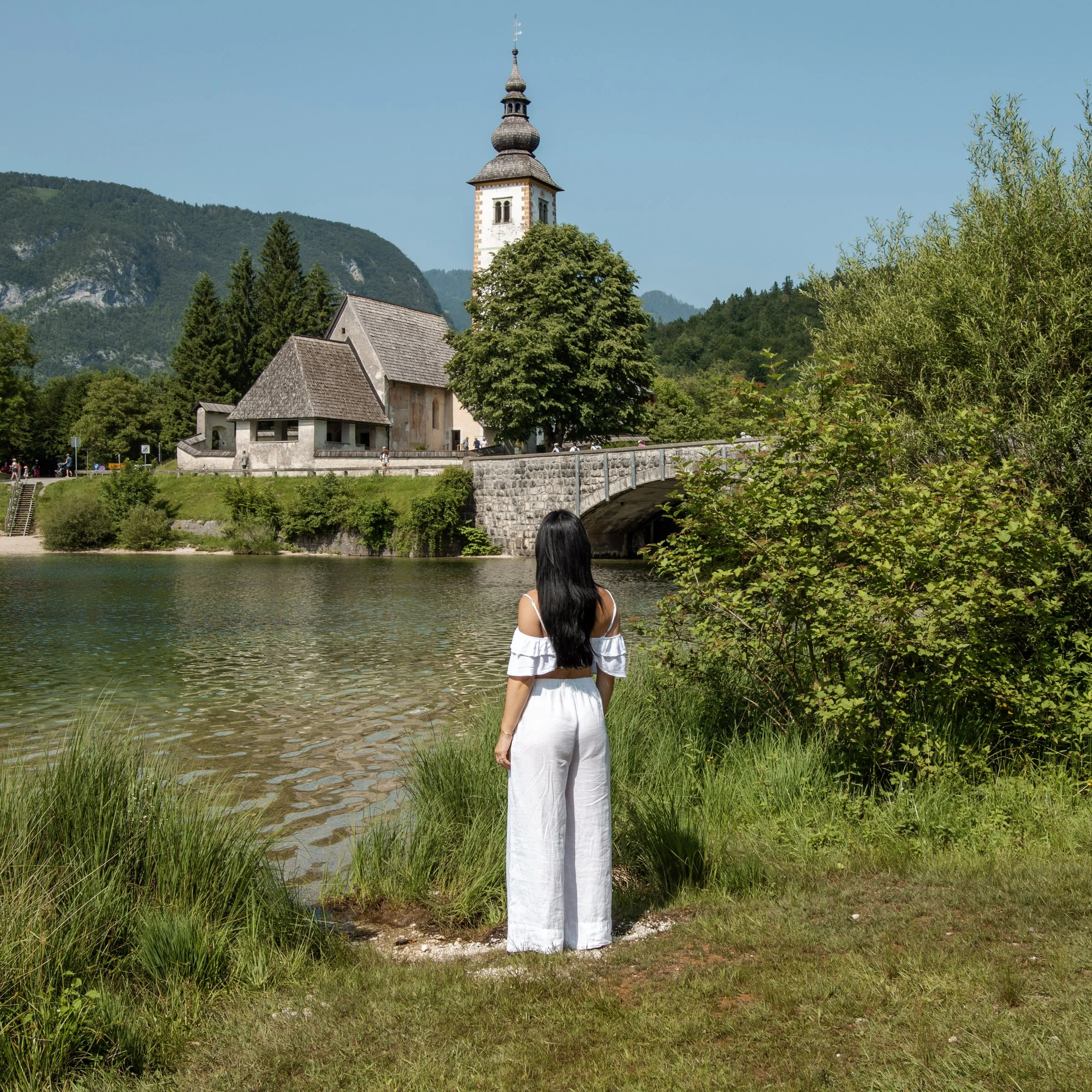
Torn between the two? I compare them side by side in Lake Bled or Lake Bohinj.
Day 6: Ljubljana, or the Vršič Pass to the Soča Valley
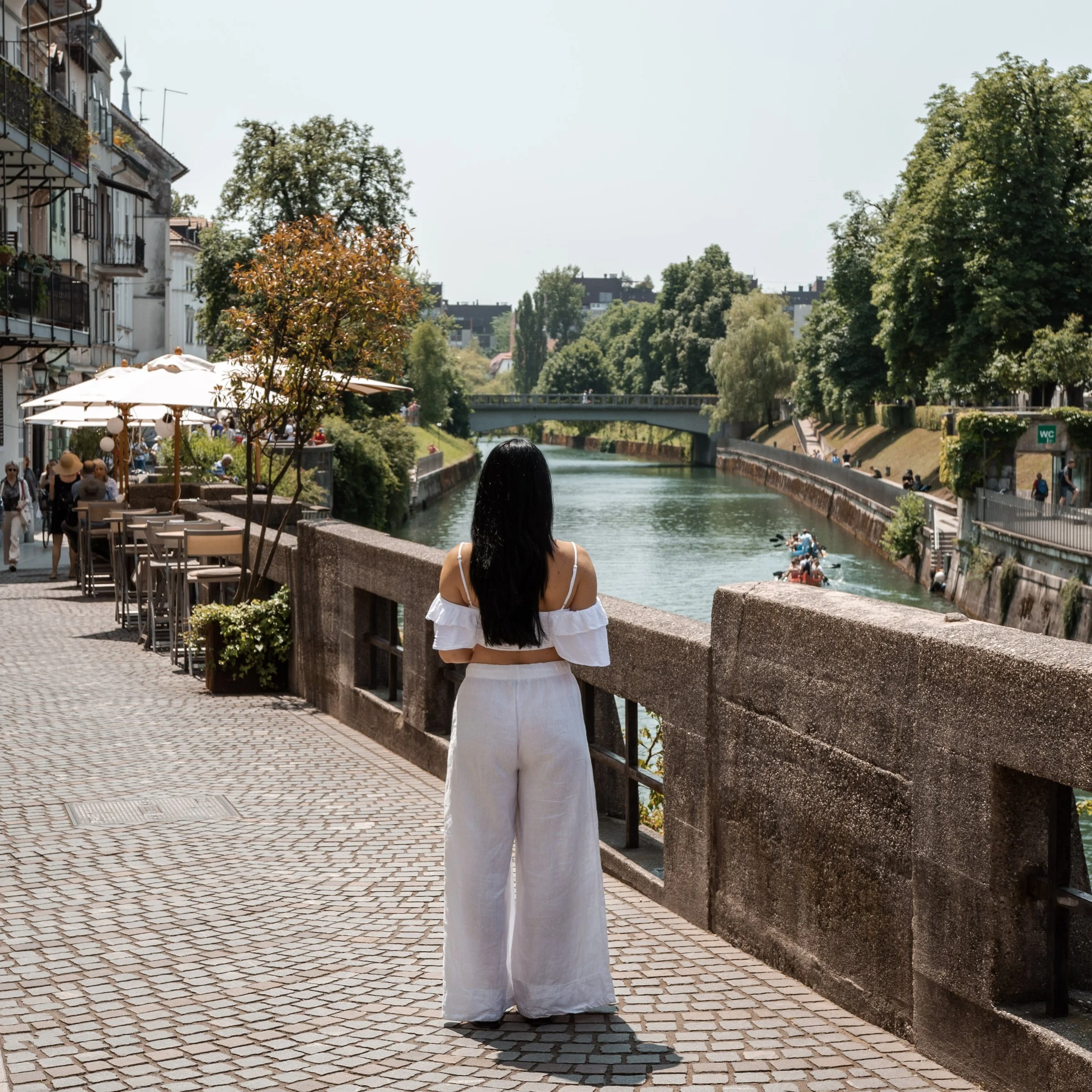
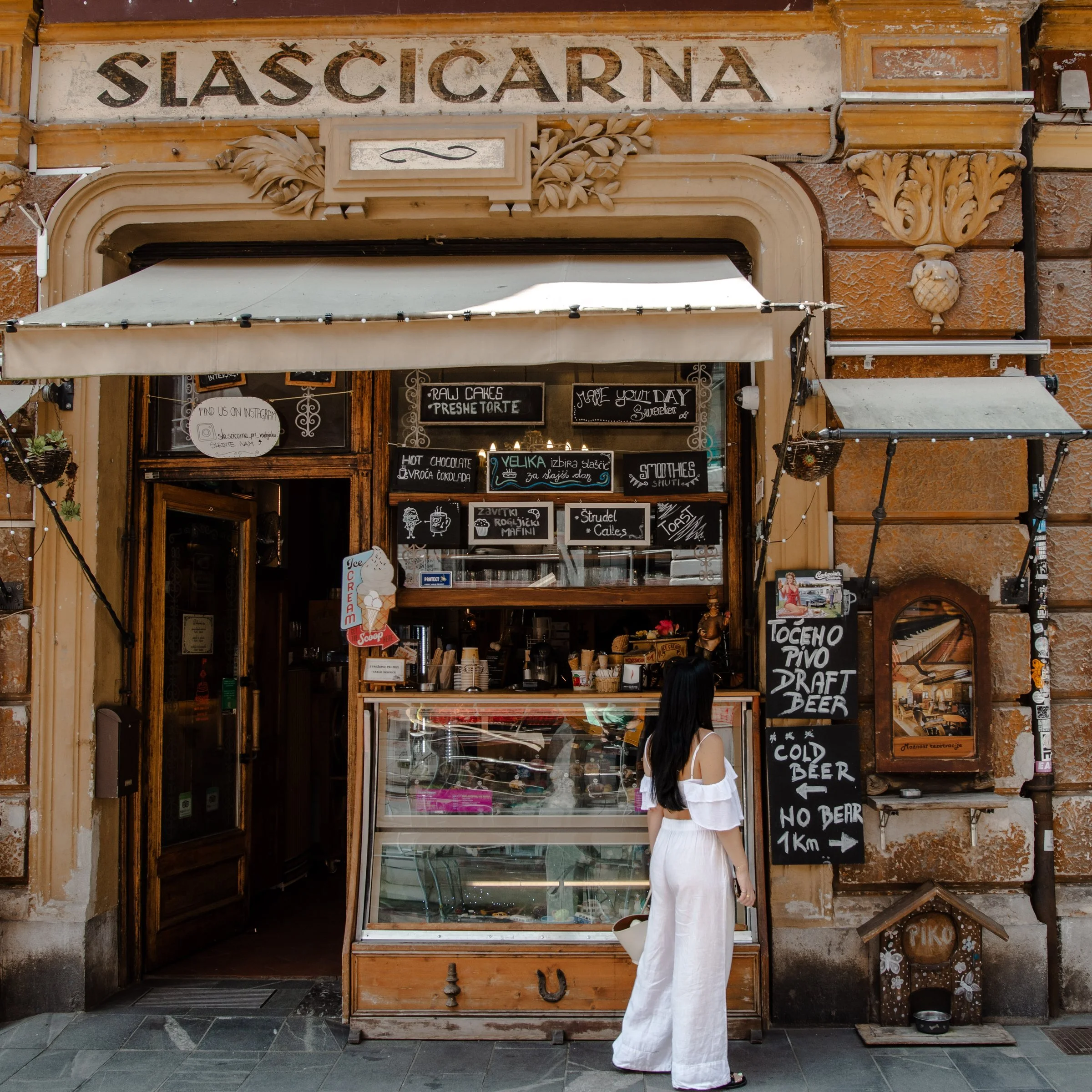
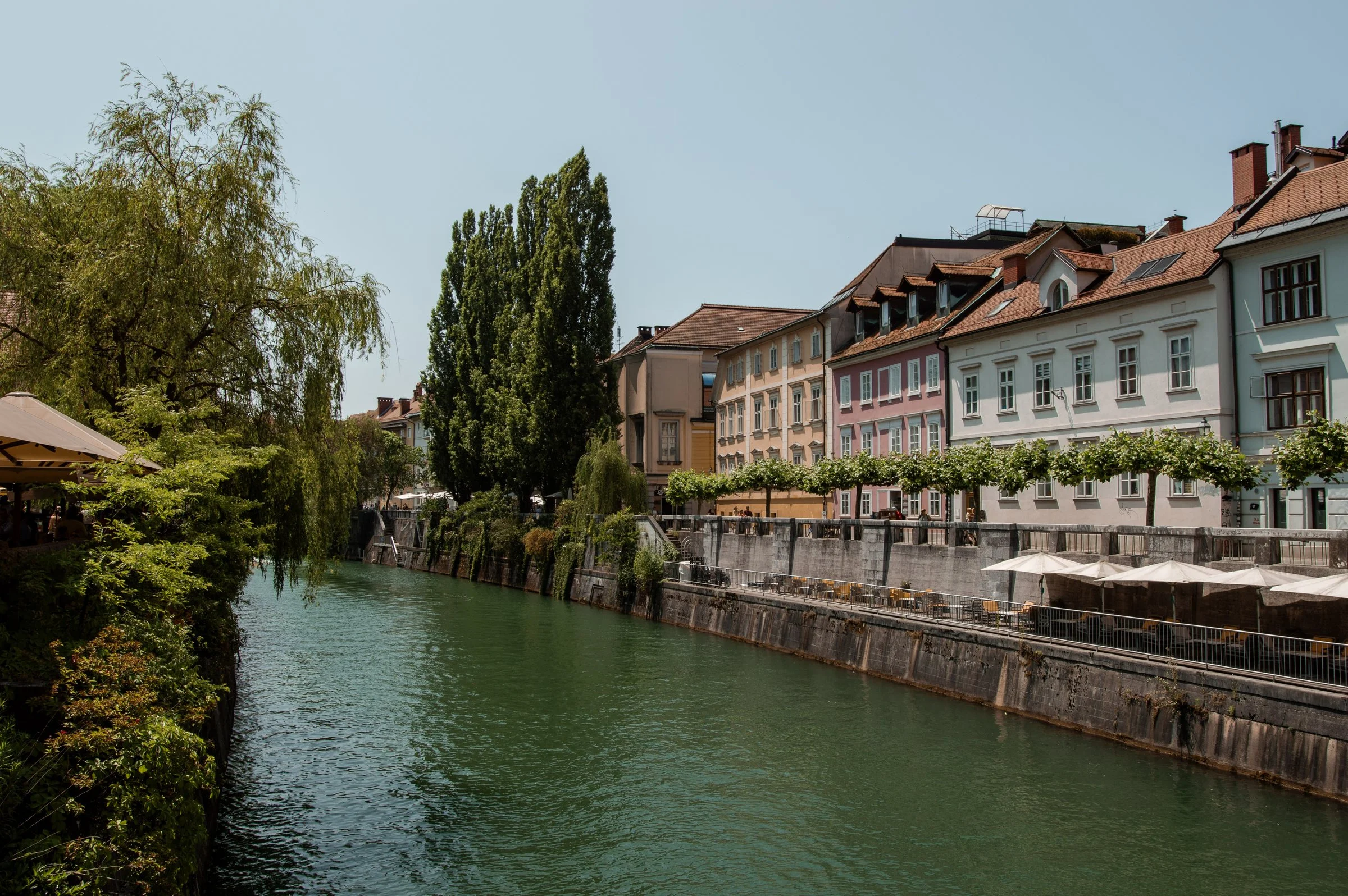
We spent part of our time in Bled on a day trip to Ljubljana, about 45 minutes away by car. The capital is small and easy to see in a few hours: a car-free old town along the river, the Triple Bridge and Dragon Bridge, and a castle on the hill above.
I was surprised by just how small Ljubljana is, but that’s also part of its charm. It’s the kind of city that makes you want to explore every little nook, cobbled alley, and hidden corner along the way. As the sun began to set, the riverside restaurants and bars looked very romantic, with their outdoor tables and warm lights reflecting on the water. We couldn’t resist stopping for one last drink by the river before saying goodbye to this lovely little city.
The Vršič Pass
Drive: Bled to Kobarid over the Vršič Pass, about 2 hours 30 minutes without stops.
The most scenic way from Bled to the Soča Valley goes back through Kranjska Gora and over the Vršič Pass, the highest road pass in Slovenia at 1,611 metres. The road climbs through 50 numbered hairpin bends, 24 on the way up and 26 on the way down into the Trenta valley.
- It closes in winter. The pass is normally open from late spring to autumn. Check before you go.
- New in 2026: barriers now control traffic at both ends of the pass road. Crossing is still free, but parking at the top was suspended for most of the summer, and a free shuttle bus runs between Kranjska Gora and Bovec from June to September.
- Take your time. There are places to stop on the way up, including the wooden Russian Chapel.
The full driving guide, with the 2026 rules and the best stops, is in Driving the Vršič Pass.
The Soča Valley: Bovec, Kobarid and Tolmin
On the other side of the pass the road follows the Soča, a river so green it barely looks real.
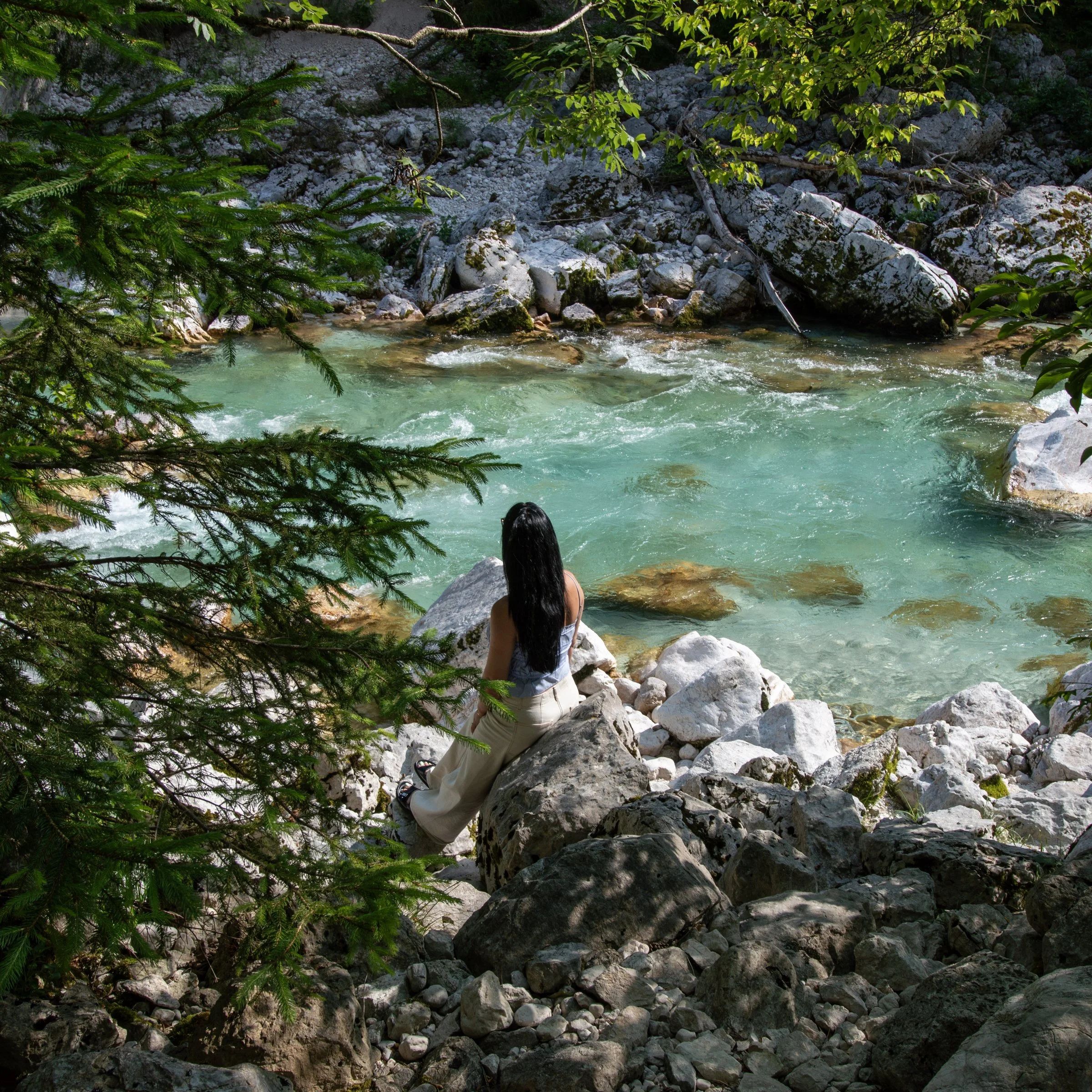
- Bovec is the adventure capital of the valley, and the place to go rafting on the Soča.
- Kobarid is known for its First World War museum, the Napoleon Bridge over the river and the walk to Kozjak Waterfall.
- Tolmin Gorges, just outside Tolmin, are the lowest entry point to Triglav National Park. Tickets cost €12 from June to September and €8 in spring and autumn.
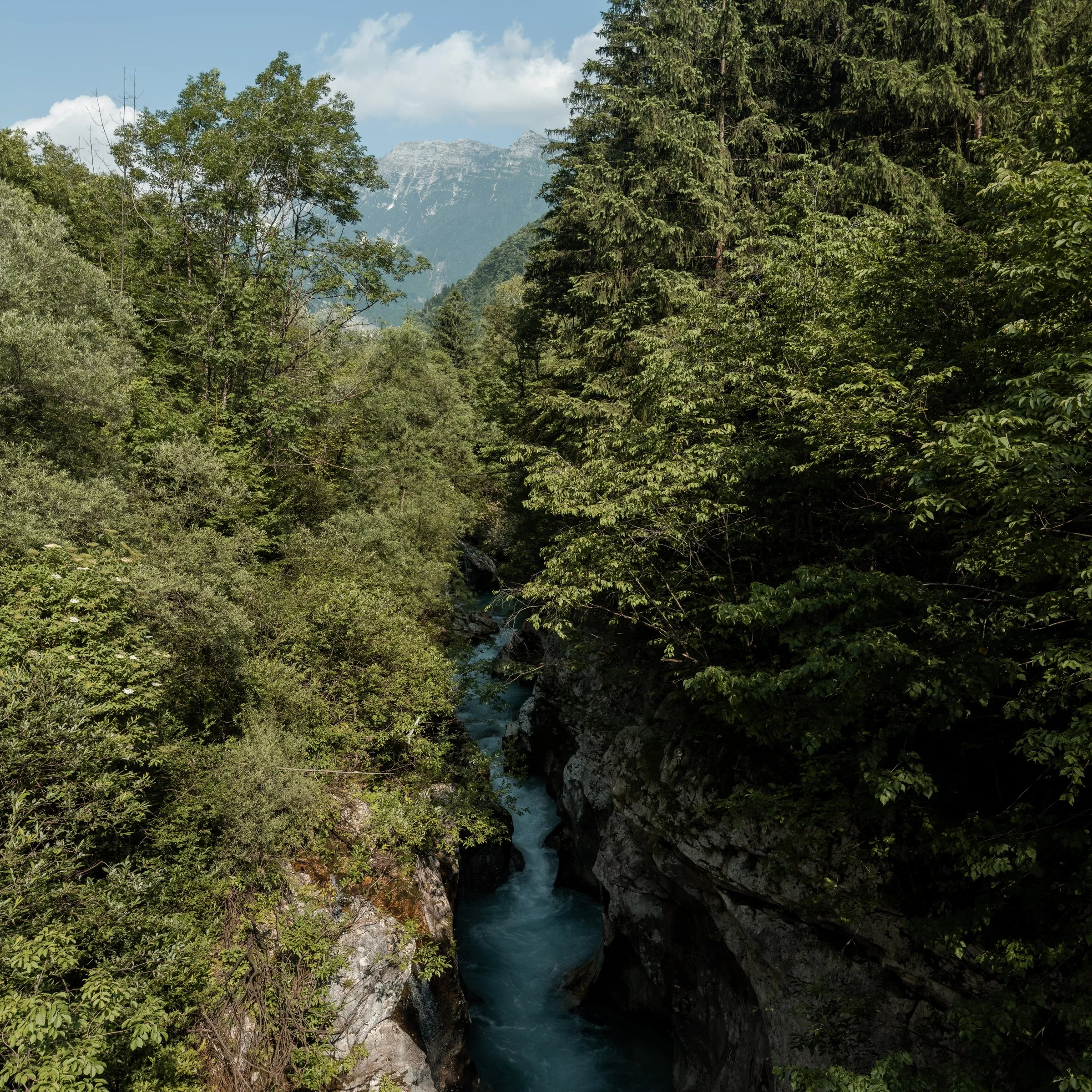
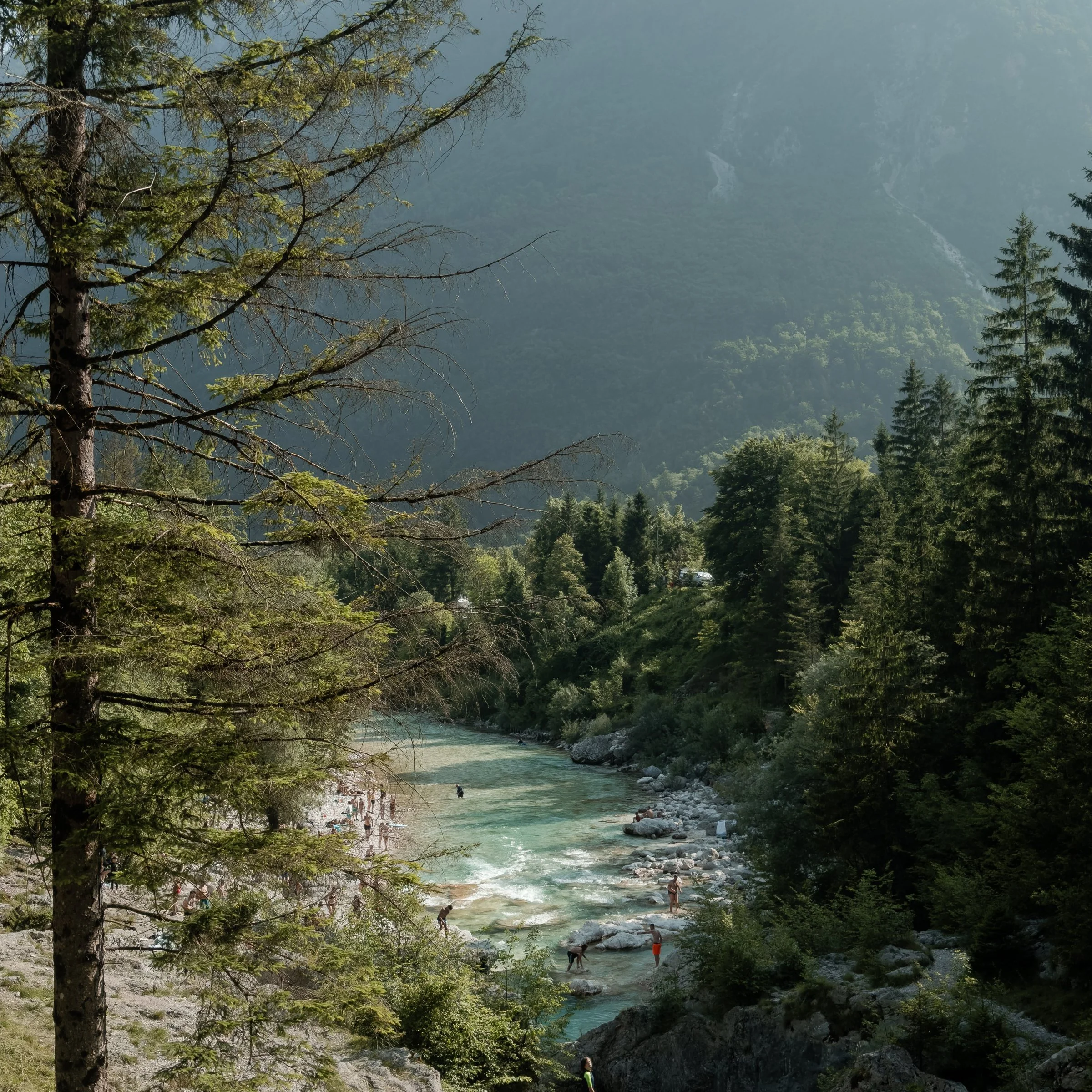
We stayed one night in Kobarid and ate traditional Slovenian food there.
We ordered a meat platter to share, thinking it would be enough for two, but when it arrived, we realised it could easily feed a family of five! It was absolutely delicious, though, and the quality of the food was excellent, so we had no regrets. Luckily, we were able to take the leftovers away with us. We also really enjoyed sitting outdoors, and the service was just as good as the food. Overall, we had a great experience and would definitely recommend it!
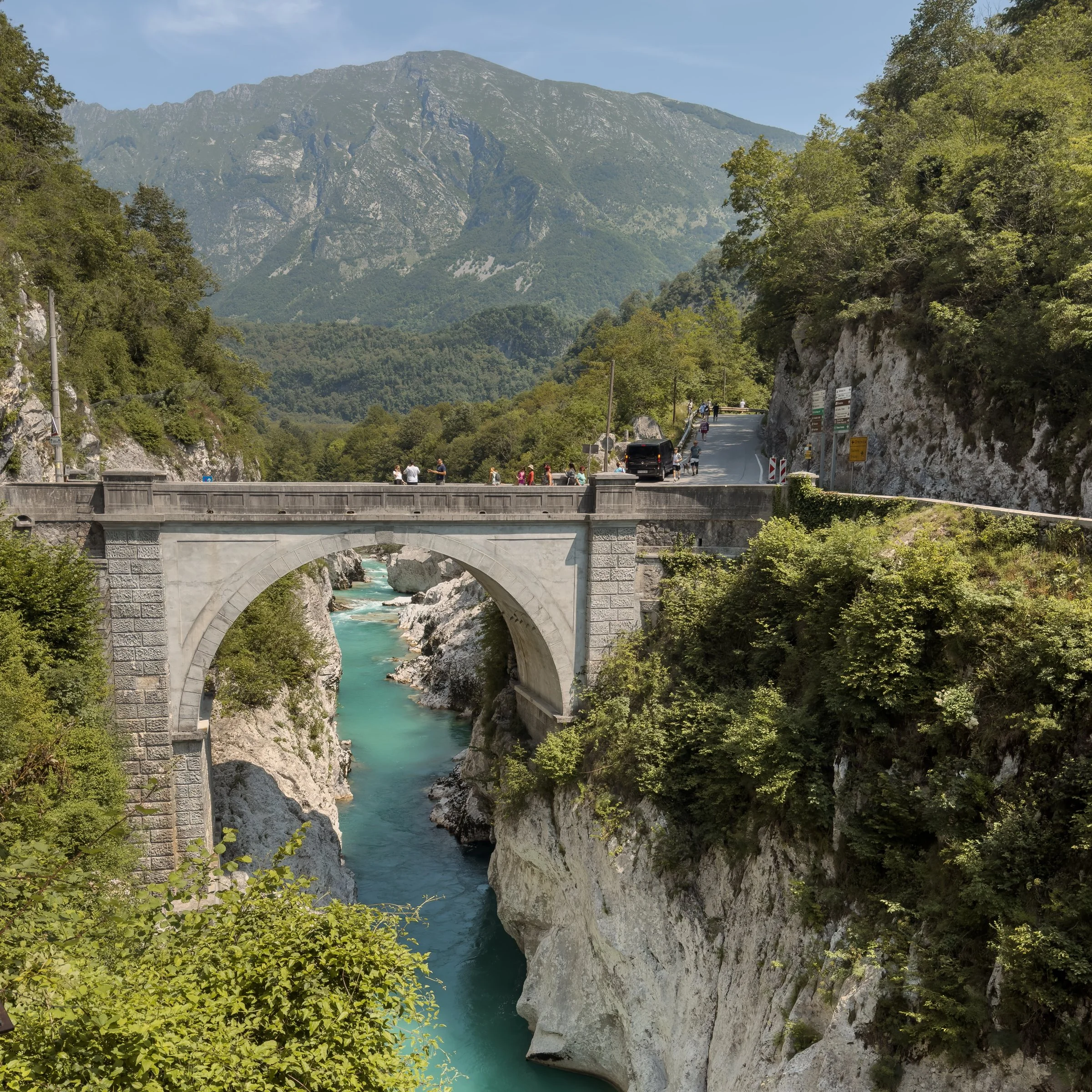
More on the valley in my Soča Valley guide.
Day 7: Goriška Brda and back to Trieste
Drive: Kobarid to Šmartno, about 50 minutes. Šmartno to Trieste Airport, about 45 minutes.
Leave the last morning for Goriška Brda, the wine region on the Italian border that Slovenians compare to Tuscany: rolling hills, vineyards, cherry orchards and villages on the ridges.
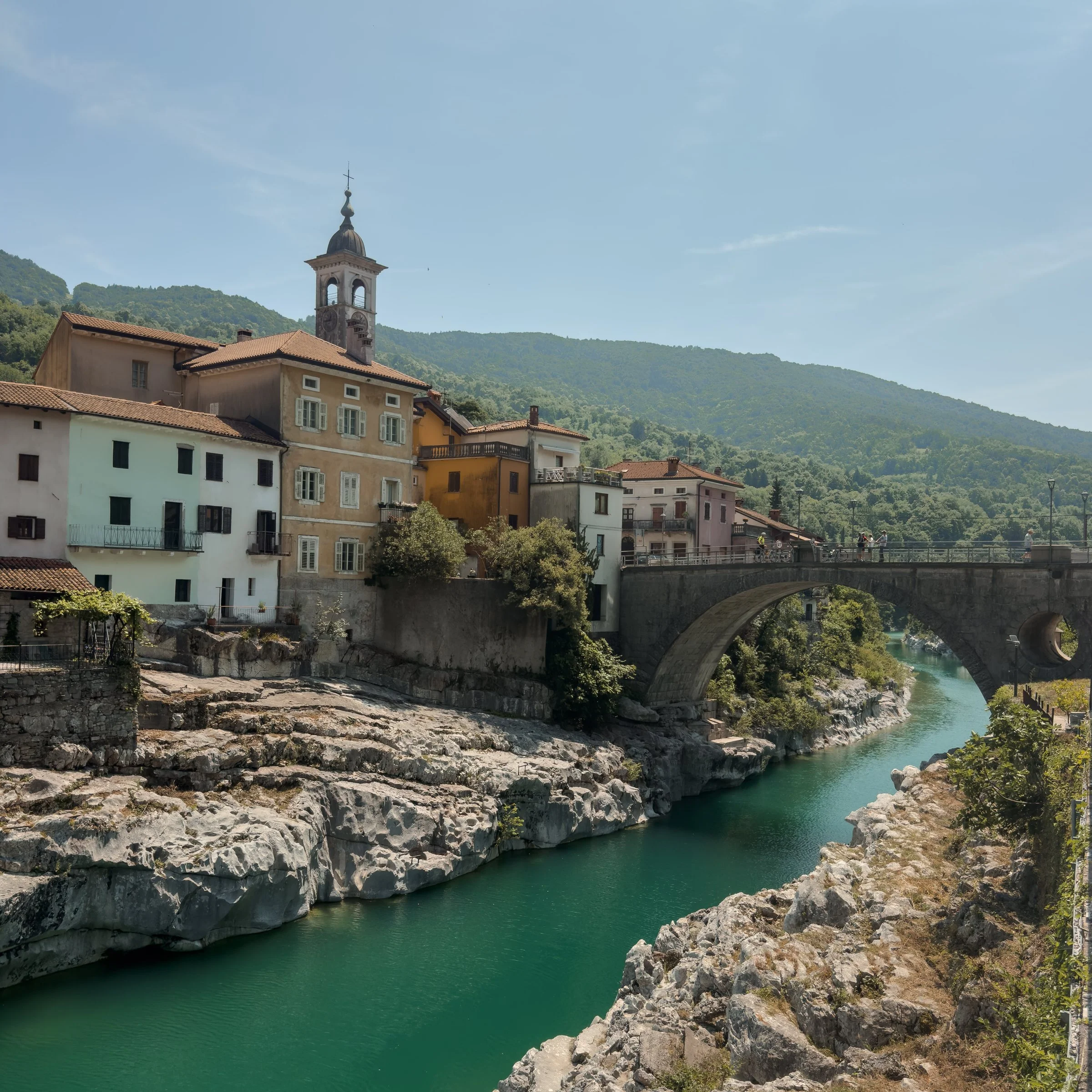
- Šmartno is a tiny walled medieval village, restored house by house, with a handful of restaurants and wine bars.
- Dobrovo has a Renaissance castle and a wine cellar where you can taste rebula, the local white.
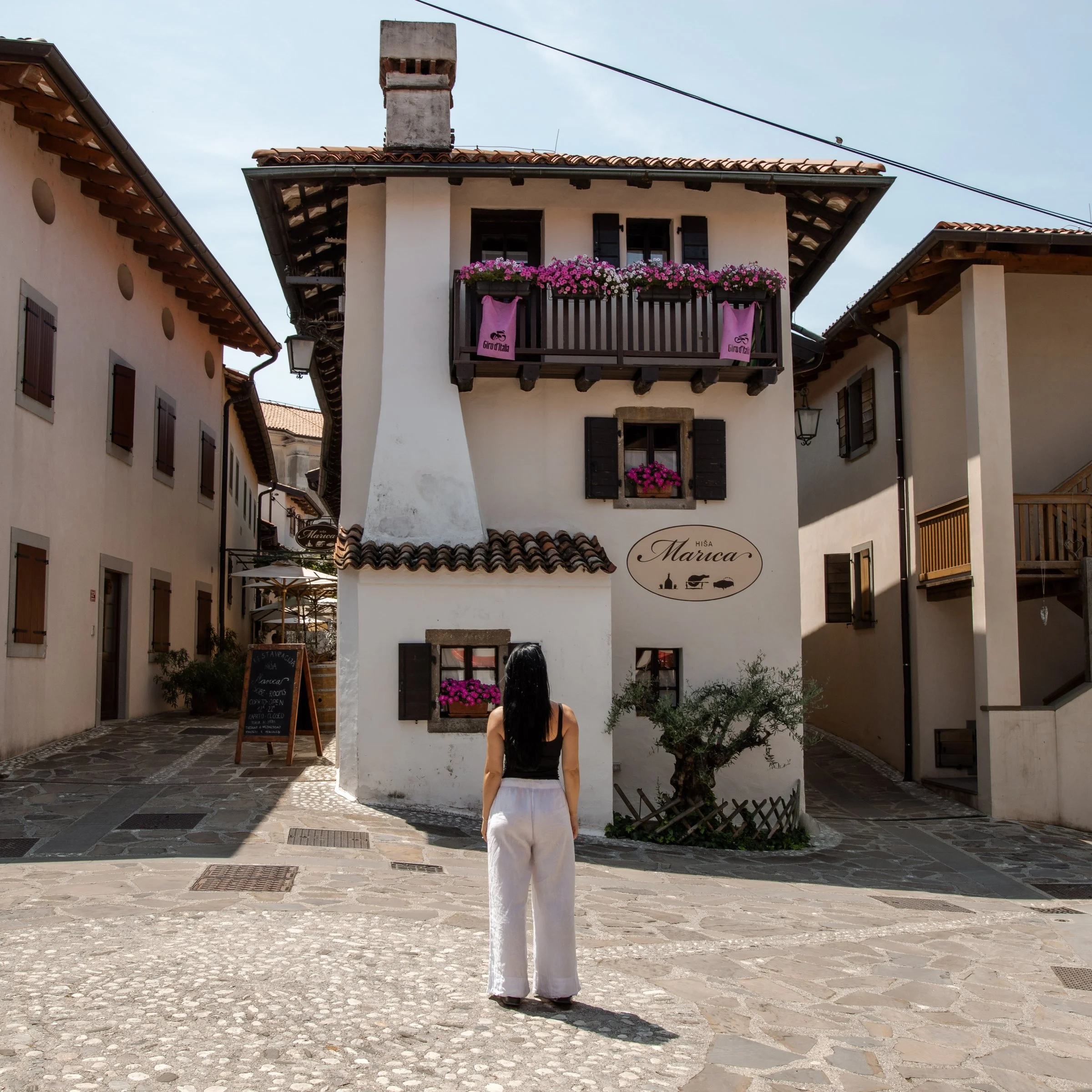
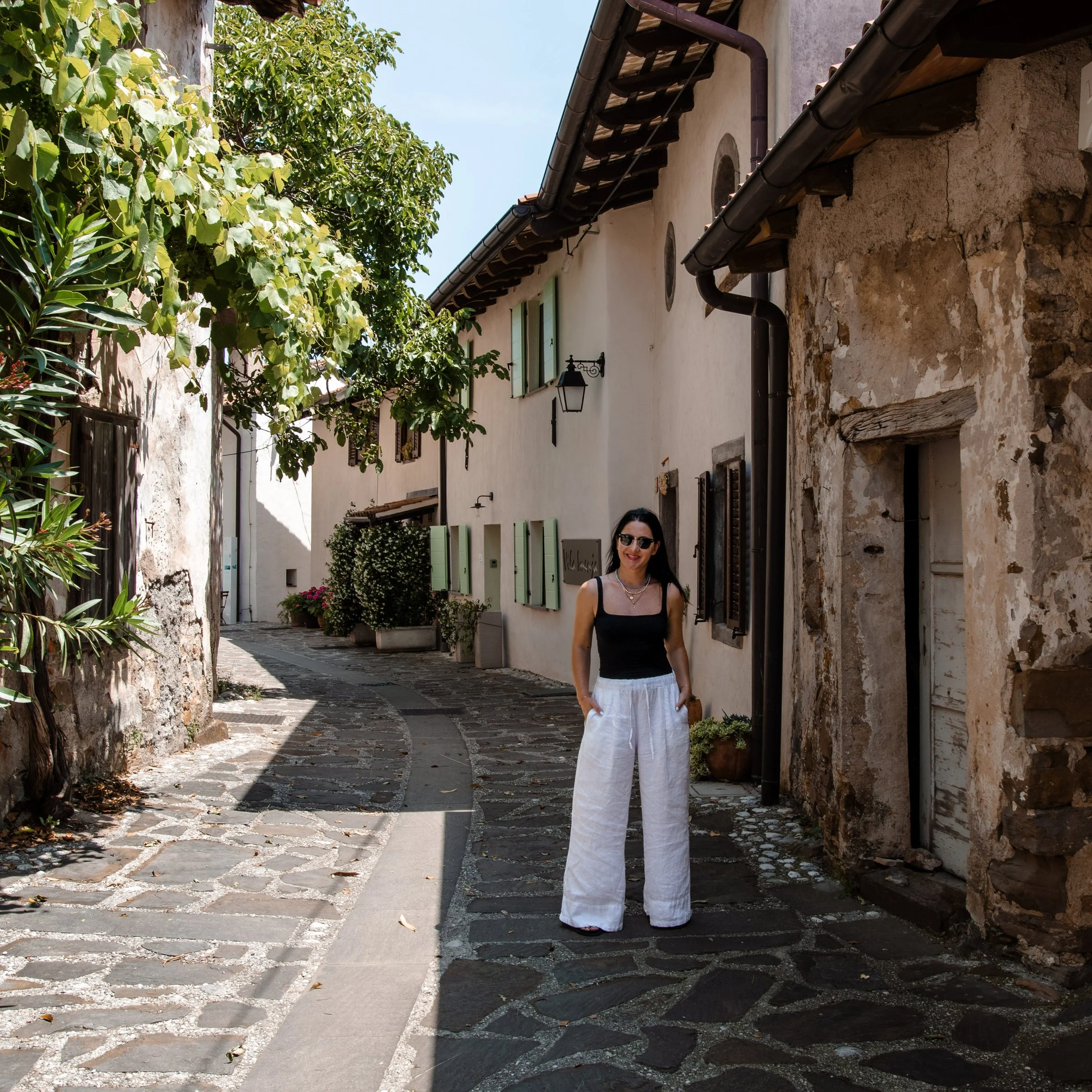
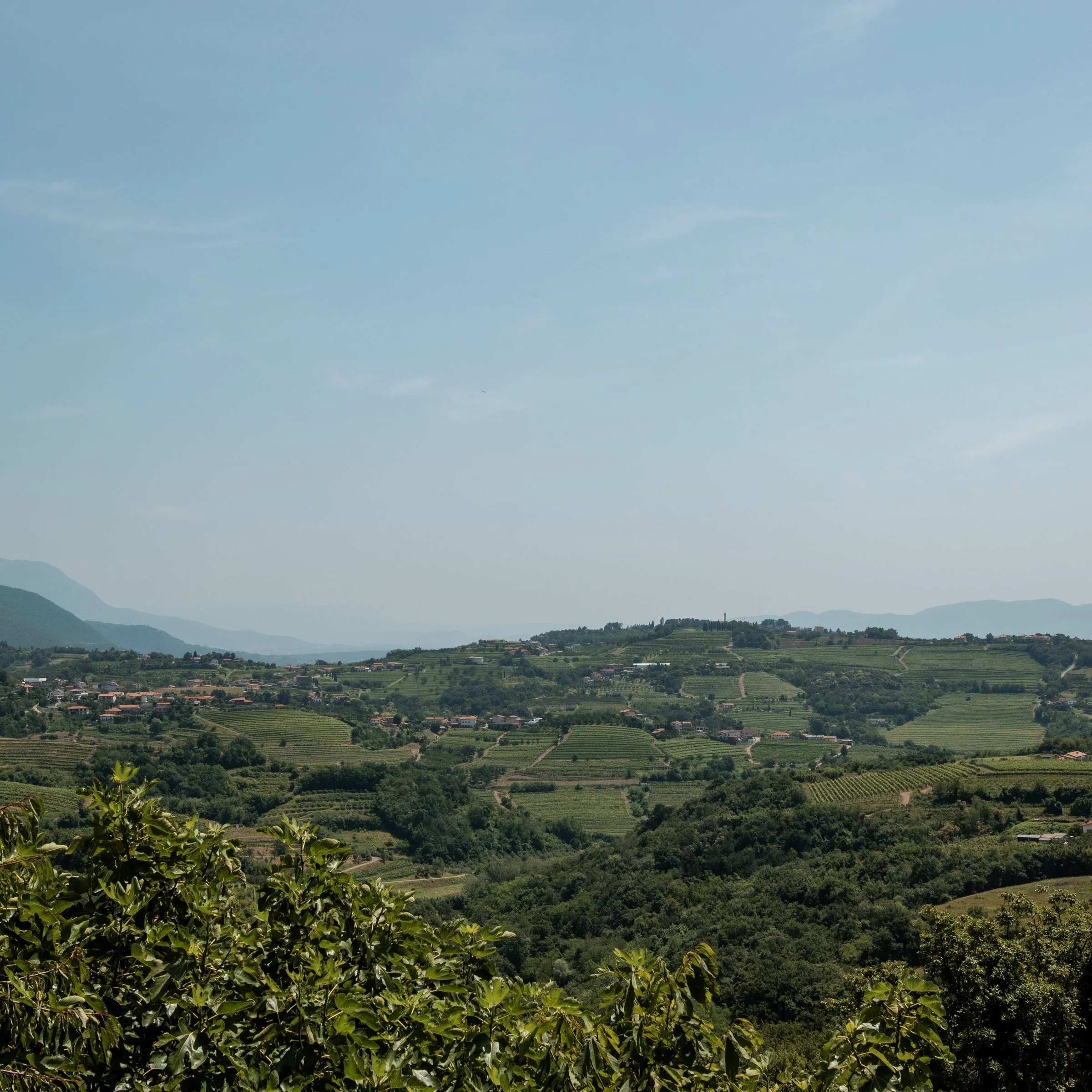
From here it is a short drive back across the border to Trieste Airport. If you have longer, Brda deserves a night of its own: see my guide to Goriška Brda.
What a week in Slovenia costs
Prices checked in November 2026. Car hire is the biggest cost and swings hugely by season, so compare prices for your exact dates. The full route, including the day trips to Bohinj and Ljubljana, is about 800 km. In a small petrol car that is roughly 50 to 55 litres of fuel, or about €80 at November 2026 prices.
Prices as of November 2026. Check before you go.
When to go
May to September suits this route best. The Vršič Pass is open, the lakes are warm enough to swim in and the days are long. We travelled in the second week of June.
The weather in June was perfect. During the day, it was warm enough to comfortably wear just a T-shirt, while the evenings got a little cooler but never cold enough to need more than a light cardigan. We even saw quite a few people sunbathing in some spots, which gives you an idea of how pleasant the temperatures were!
With more or less time
- 5 days: skip the coast and Lipica. Start with Predjama, then Bled, the Vršič Pass and the Soča Valley.
- 10 days: add a night in Ljubljana, a second night in the Soča Valley and a full day at Postojna Cave.
Is 7 days enough for Slovenia?
Yes. Slovenia is small, and seven days covers the coast, the caves, the Julian Alps, Lake Bled and the Soča Valley at a comfortable pace.
Do you need a car in Slovenia?
For this route, yes. Buses and trains link the main towns, but the lakes, passes and valleys are much easier to reach by car.
Do you need a vignette in Slovenia?
Yes, to drive on motorways and expressways. A weekly e-vignette for a car costs €16 and is bought online, linked to your number plate.
Can you drive a rental car from Italy into Slovenia?
Usually, but check with the rental company before booking. Some charge a cross-border fee, and the Slovenian vignette is not included.
Is the Vršič Pass difficult to drive?
It has 50 hairpin bends and climbs to 1,611 metres, so it needs care, but it is a normal paved road. It is closed in winter.
Lake Bled or Lake Bohinj?
Both. Bled has the island, the castle and more places to stay. Bohinj is larger, quieter and wilder. They are 30 minutes apart.
What is the best month for a Slovenia road trip?
May, June and September, for open mountain roads, good weather and fewer visitors than July and August.