Driving in Slovenia: Vignette, Car Hire from Trieste, Borders and Road Rules
Everything you need to drive in Slovenia in 2026: the e-vignette and what it costs, renting a car in Trieste and crossing the border, speed limits, winter tyres, fuel prices, parking and mountain roads.

Updated · 5 min read
6 facts checkedPrices, hours and booking rules, last verified Checked
| Fact | What we found | Checked |
|---|---|---|
| E-vignette for a car | €16 for 7 days, €32 for a month, €117.50 for a yearevinjeta.dars.si ↗ | |
| Fine for driving without a vignette | €300 | |
| Karavanke tunnel to Austria | €9 per passage, not covered by the vignette | |
| Speed limits for cars | 50 km/h in towns, 90 outside, 110 on expressways, 130 on motorwayseuropa.eu ↗ | |
| Winter tyres | Required 15 November to 15 March, and in wintry conditionseuropa.eu ↗ | |
| Petrol (Eurosuper 95), regulated price | €1.506 per litre from 10 November 2026 |
We re-check every fact in our guides on a schedule and show the date here. Spotted something that changed? Tell us.
Some links in this guide are affiliate links. They cost you nothing extra and help keep the blog free.
Slovenia is one of the easiest countries in Europe to explore by car. Distances are short, the roads are in good condition and the scenery changes every hour, from the Adriatic to the Julian Alps. You need three things: a car that is allowed to cross the border if you rent it abroad, a digital vignette for the motorways, and a little patience on the mountain roads.
We rented a car at Trieste Airport in Italy and drove a 7-day loop around Slovenia in June 2025. This is everything I would want to know before doing it again.
Do you need a car in Slovenia?
For the cities, no. Trains and buses link Ljubljana, the coast and Bled. For the lakes, mountain passes and valleys, yes. Places like the Vršič Pass, the Soča Valley, Lake Jasna and the wine hills of Brda are far easier, and often only practical, with your own car.
The Slovenian e-vignette
To drive on any Slovenian motorway or expressway, even for a few hundred metres, your car needs a vignette. Since 2022 it has been digital: you register your number plate online and there is nothing to stick on the windscreen.
| Vignette for a car | Price in 2026 |
|---|---|
| 7 days | €16 |
| 1 month | €32 |
| 1 year | €117.50 |
- Where to buy: on the official DARS e-vignette website, or at petrol stations near the border. Avoid other websites, which often charge a big commission.
- When: before you join the motorway. You can choose a start date up to 30 days ahead.
- The number plate must match exactly, including the country. A typo means the vignette is not valid.
- Fine: €300 for driving without one.
- Exceptions: the Karavanke tunnel to Austria has a separate toll of €9 per passage. Since 1 January 2026, the short coastal expressways near Koper do not need a vignette for cars, a measure DARS describes as temporary.
A 7-day vignette covers a typical one-week road trip.
Renting a car in Trieste and crossing into Slovenia
Trieste Airport, in Italy, is often cheaper to fly into than Ljubljana, and it is only about an hour from the Slovenian coast. We rented from Locauto at the airport. If you do the same, check before you book:
- Cross-border permission. Most companies allow Slovenia, but some charge a cross-border fee. It must be on your contract.
- The vignette. A car rented in Italy will not have a Slovenian vignette. Buy it online with the rental car’s number plate as soon as you collect the car.
- Italian tolls. The short motorway stretch from the airport towards the border is tolled separately, at the toll booths.
Renting in Slovenia instead usually means the vignette is already included. Compare both, as prices swing a lot by season.
Borders
Slovenia, Italy, Austria and Croatia are all in the Schengen area. On a typical road trip you cross between Slovenia and Italy several times, usually without stopping. Carry your passport or ID card anyway, as spot checks do happen.
Road rules
- Drive on the right.
- Speed limits for cars: 50 km/h in towns, 90 km/h on other roads, 110 km/h on expressways and 130 km/h on motorways, unless signs say otherwise.
- Lights on: dipped headlights or daytime running lights at all times, day and night.
- Alcohol: the limit is 0.5 g per litre of blood. For new and professional drivers it is zero.
- Phones: hands-free only.
- Winter tyres: required from 15 November to 15 March, and whenever there is snow or ice. Rental cars in winter should come with them, but check.
- Equipment: a warning triangle, first aid kit, spare bulbs and a reflective vest should be in the car.
- Emergency number: 112.
Fuel
Slovenia regulates fuel prices at ordinary petrol stations, and updates them every week. From 10 November 2026, petrol (Eurosuper 95) cost €1.506 per litre and diesel €1.848. Stations on the motorways are not regulated and are usually more expensive, so fill up in towns. Prices in Slovenia are often lower than in Italy, which is worth knowing if you rent a car in Trieste.
Parking
- Blue zones in towns allow short stays with a parking disc or ticket. Read the signs.
- Popular sights like Lake Bled, Lake Jasna and Bohinj have paid car parks in summer that fill up by late morning.
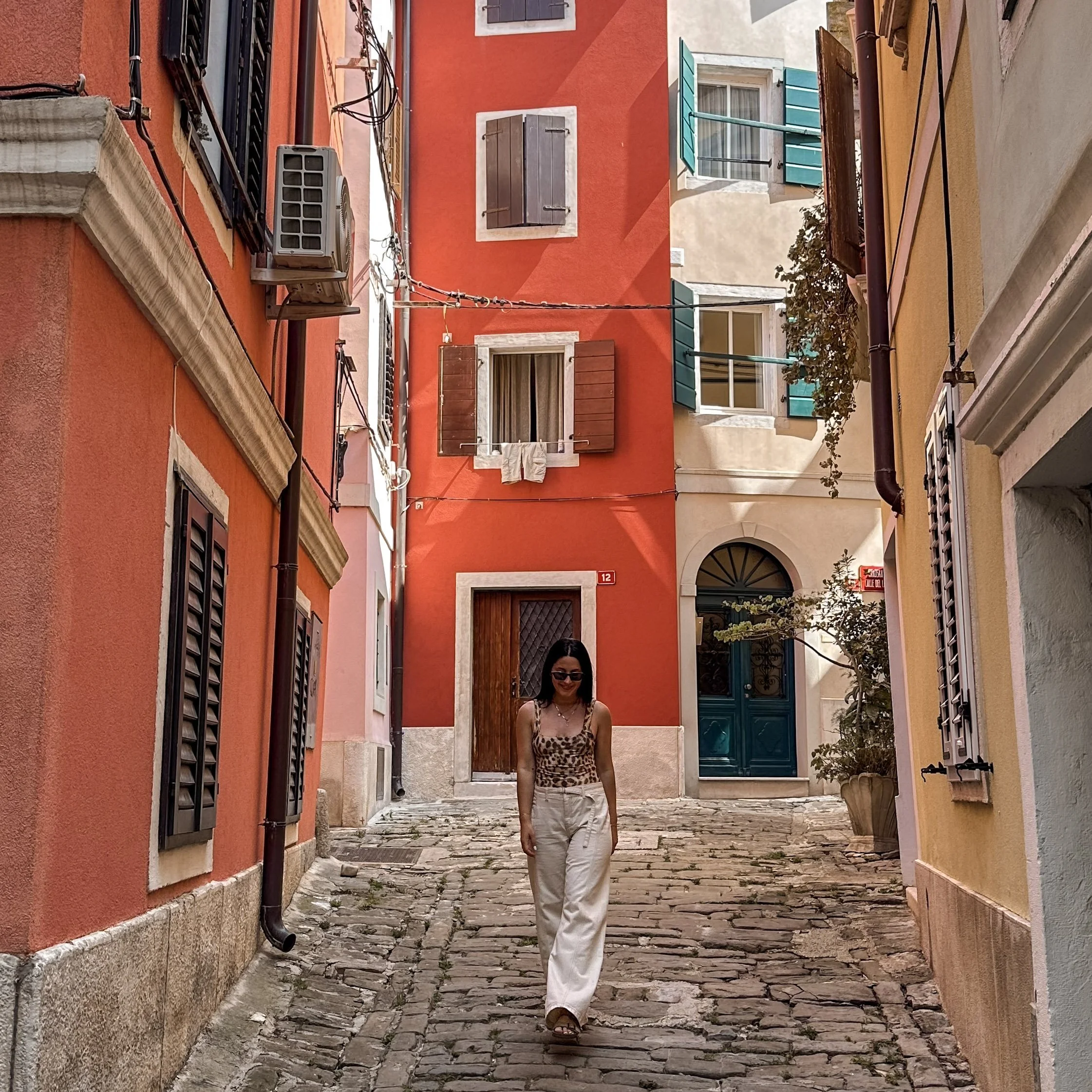
- Piran has no parking in the old town. Use the garages at the edge of town. My Piran guide has the prices.
The best drives in Slovenia
The real reason to rent a car here is the drives themselves. These are the five we would do again.
The Vršič Pass
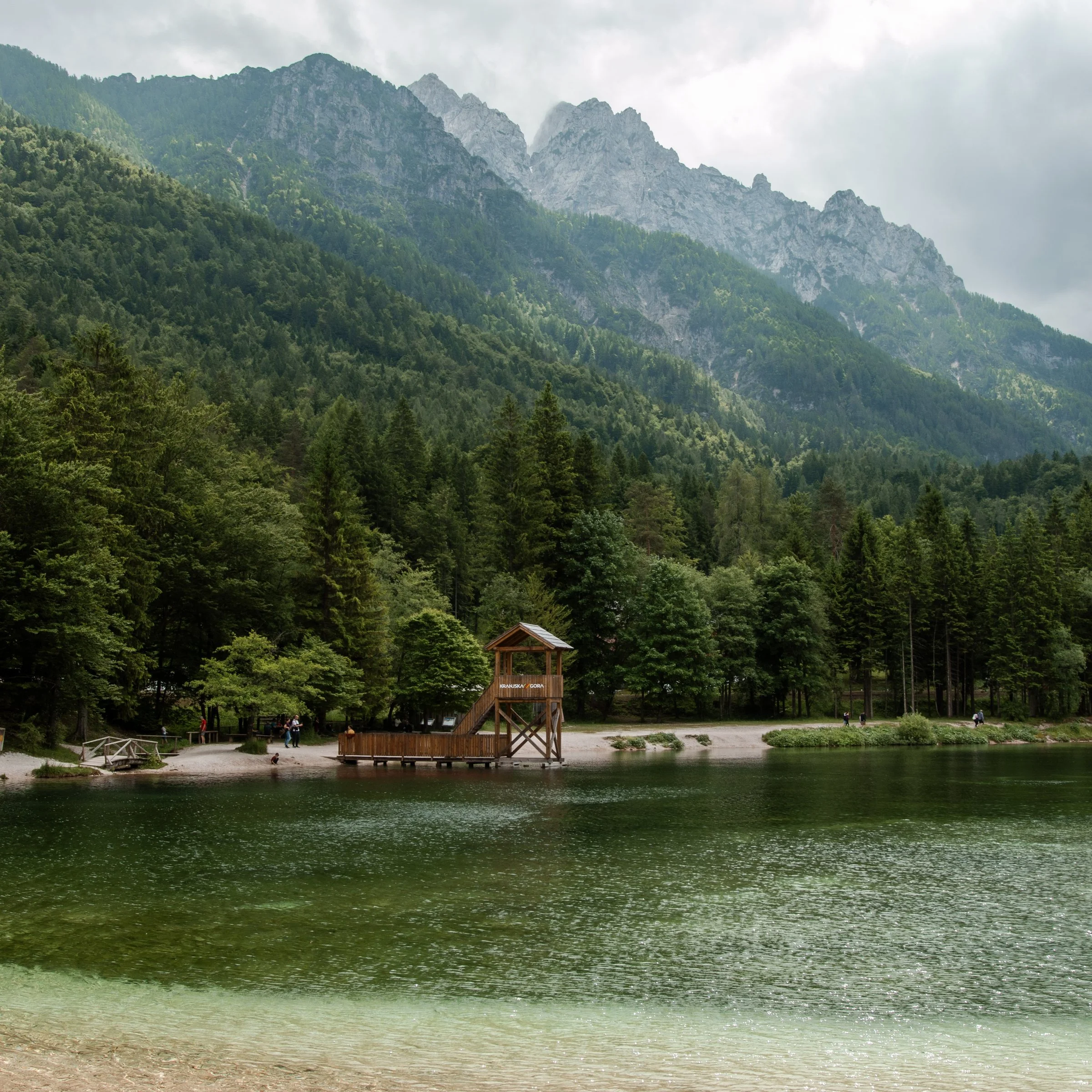
The highest road pass in the country, with 50 hairpins between Kranjska Gora and the Trenta valley. It starts at Lake Jasna and ends beside the Soča river. Open late spring to autumn.
Down the Soča Valley
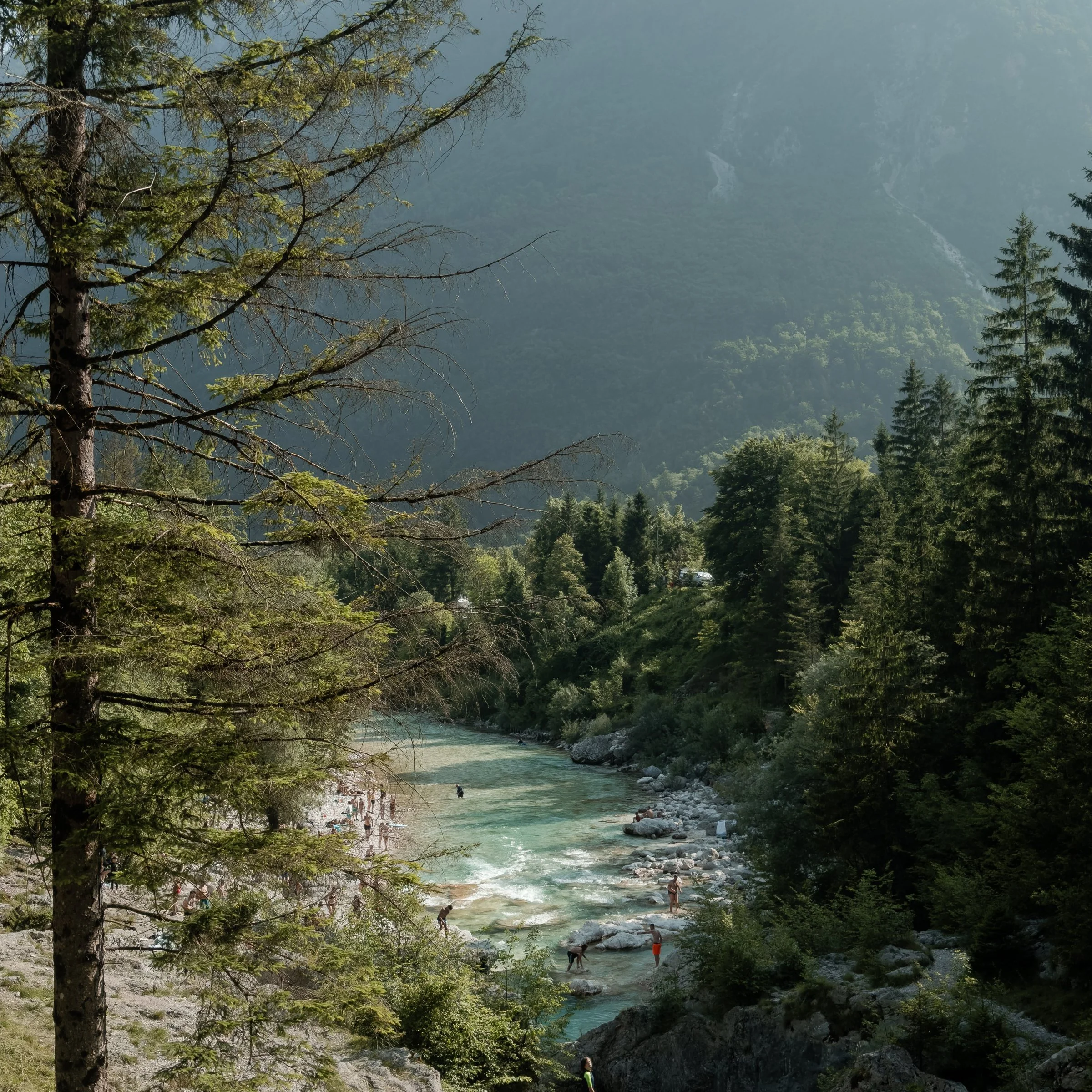
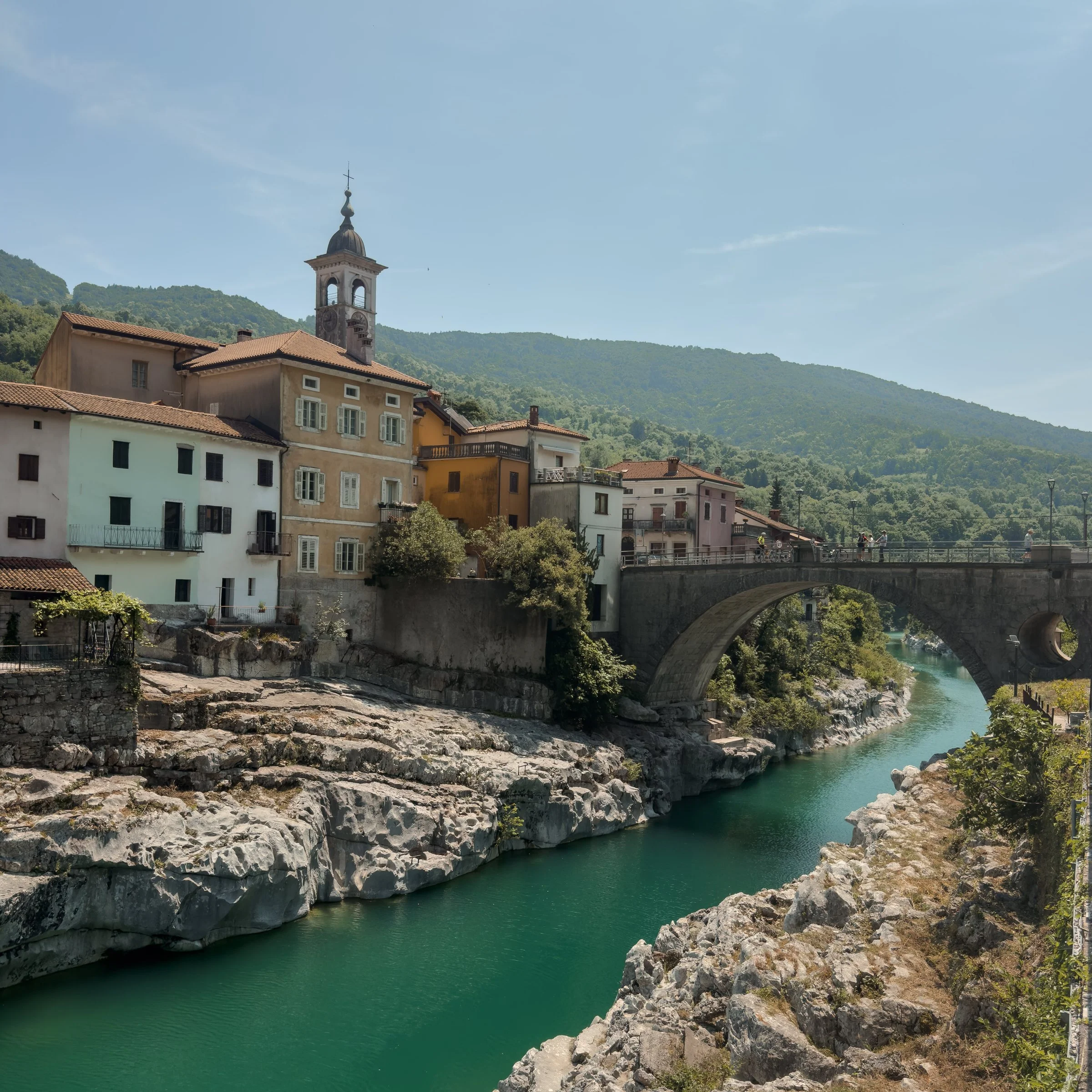
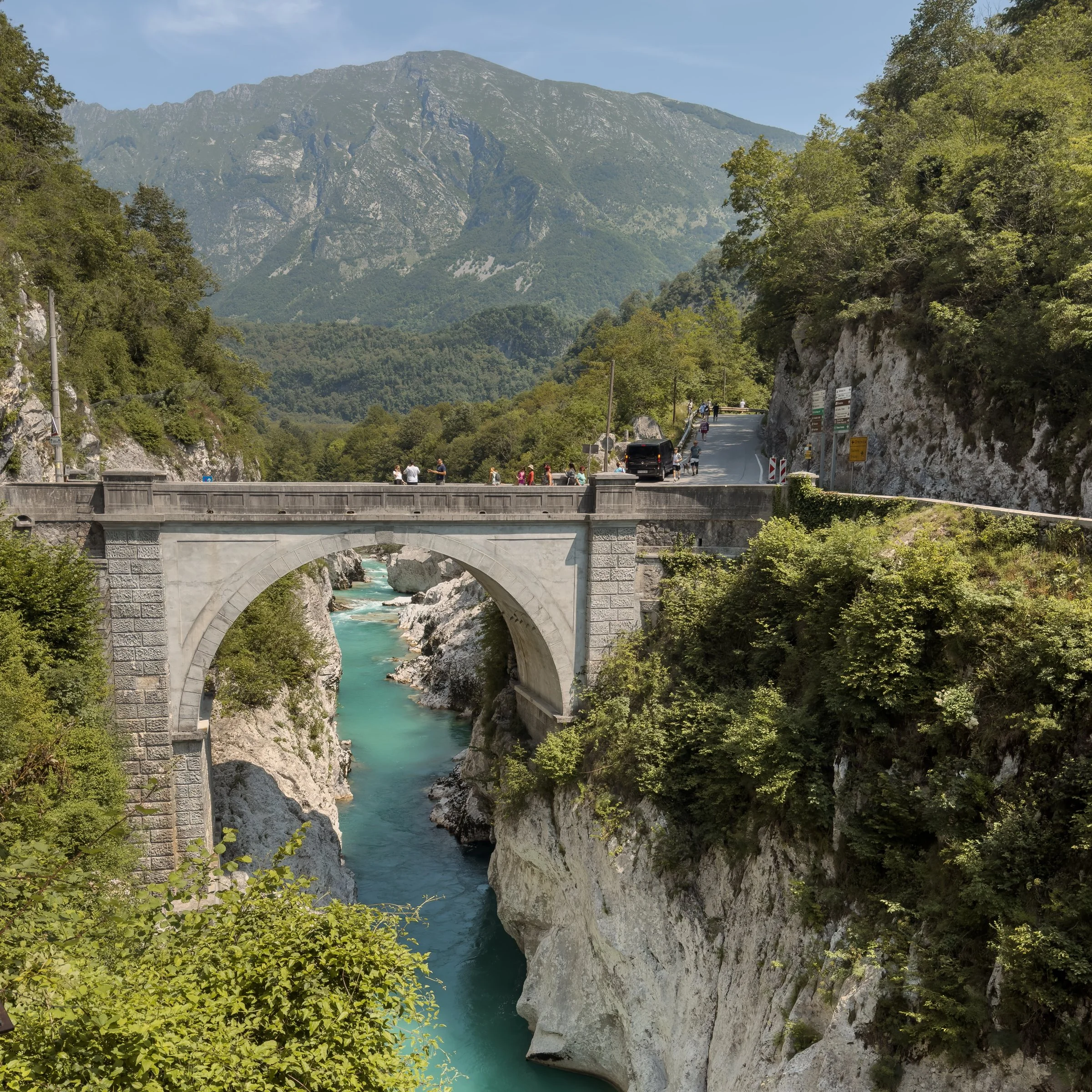
From Bovec to Kobarid, Tolmin and Kanal, the road follows the emerald river the whole way, with stone bridges and gorges to stop at.
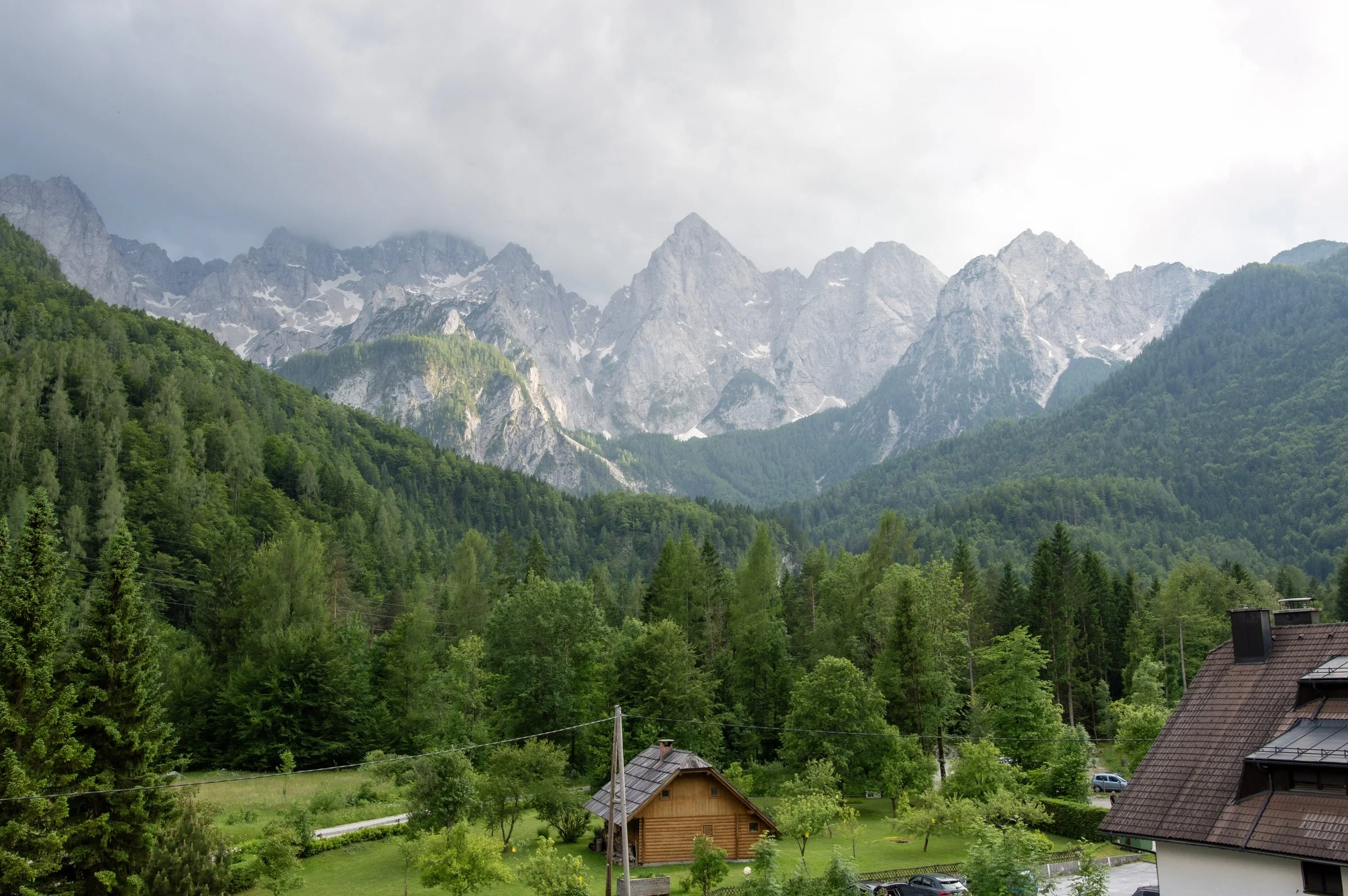
The Julian Alps valley
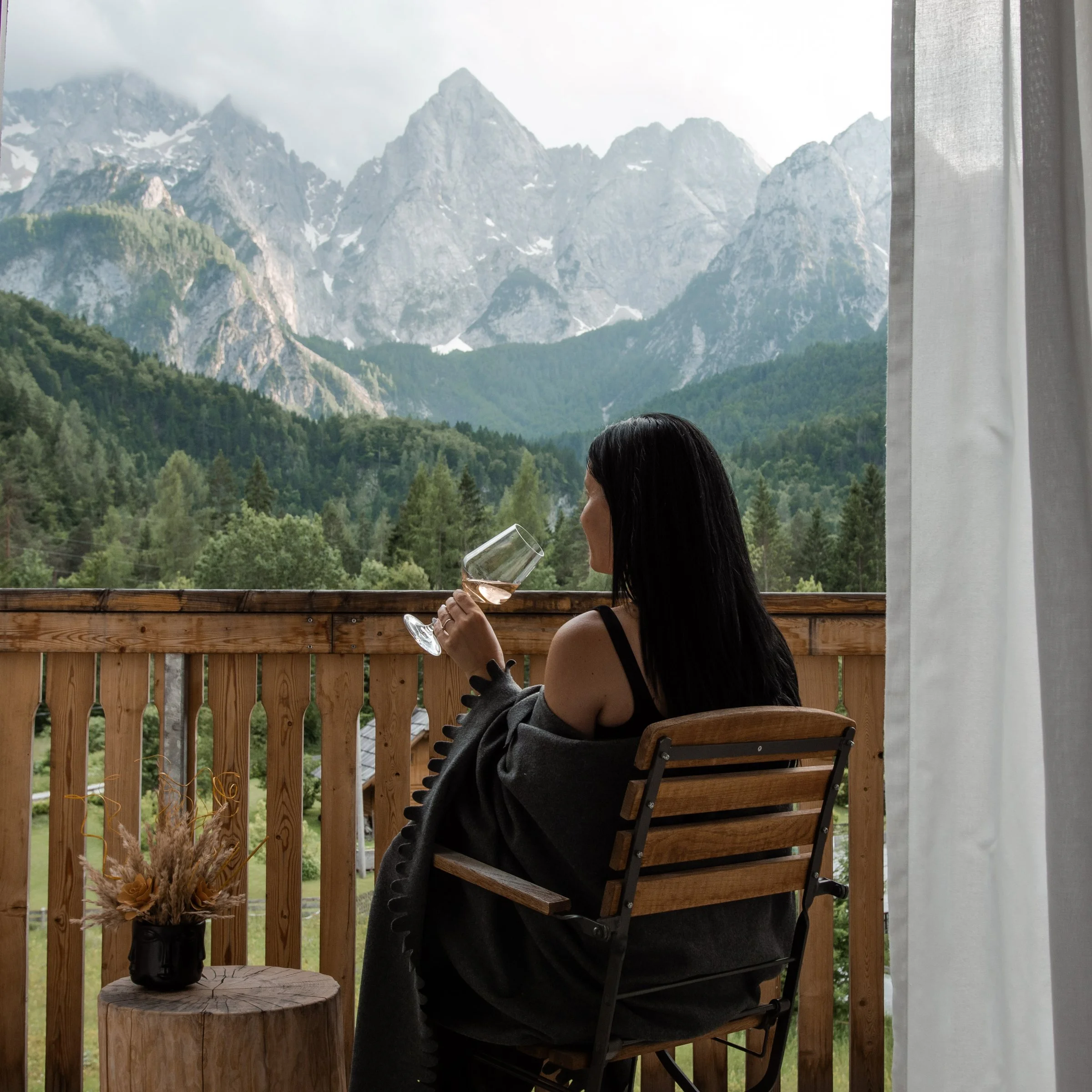
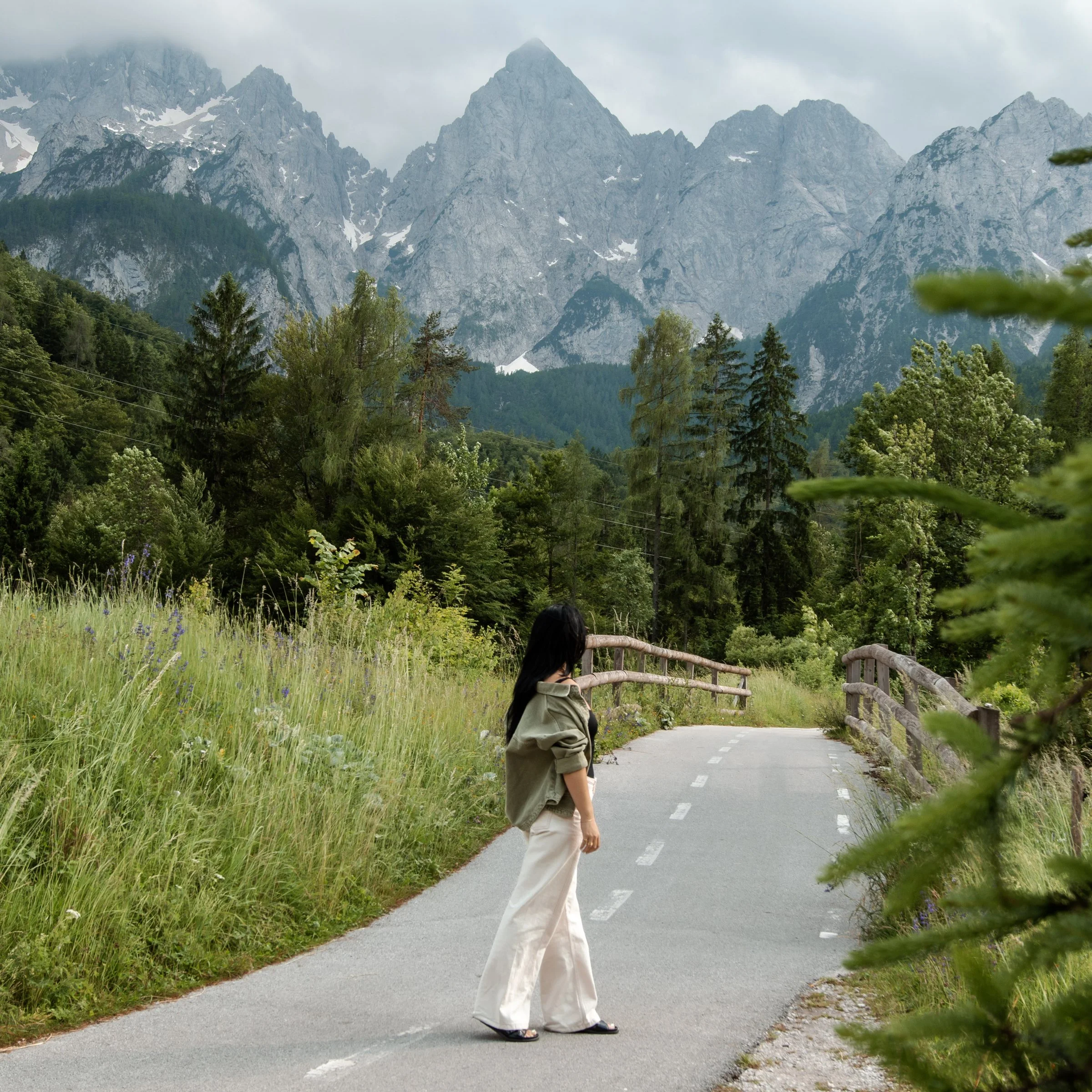
From Bled to Kranjska Gora, the valley road runs below the peaks of the Julian Alps, with the jagged Martuljek group rising straight above Gozd Martuljek.
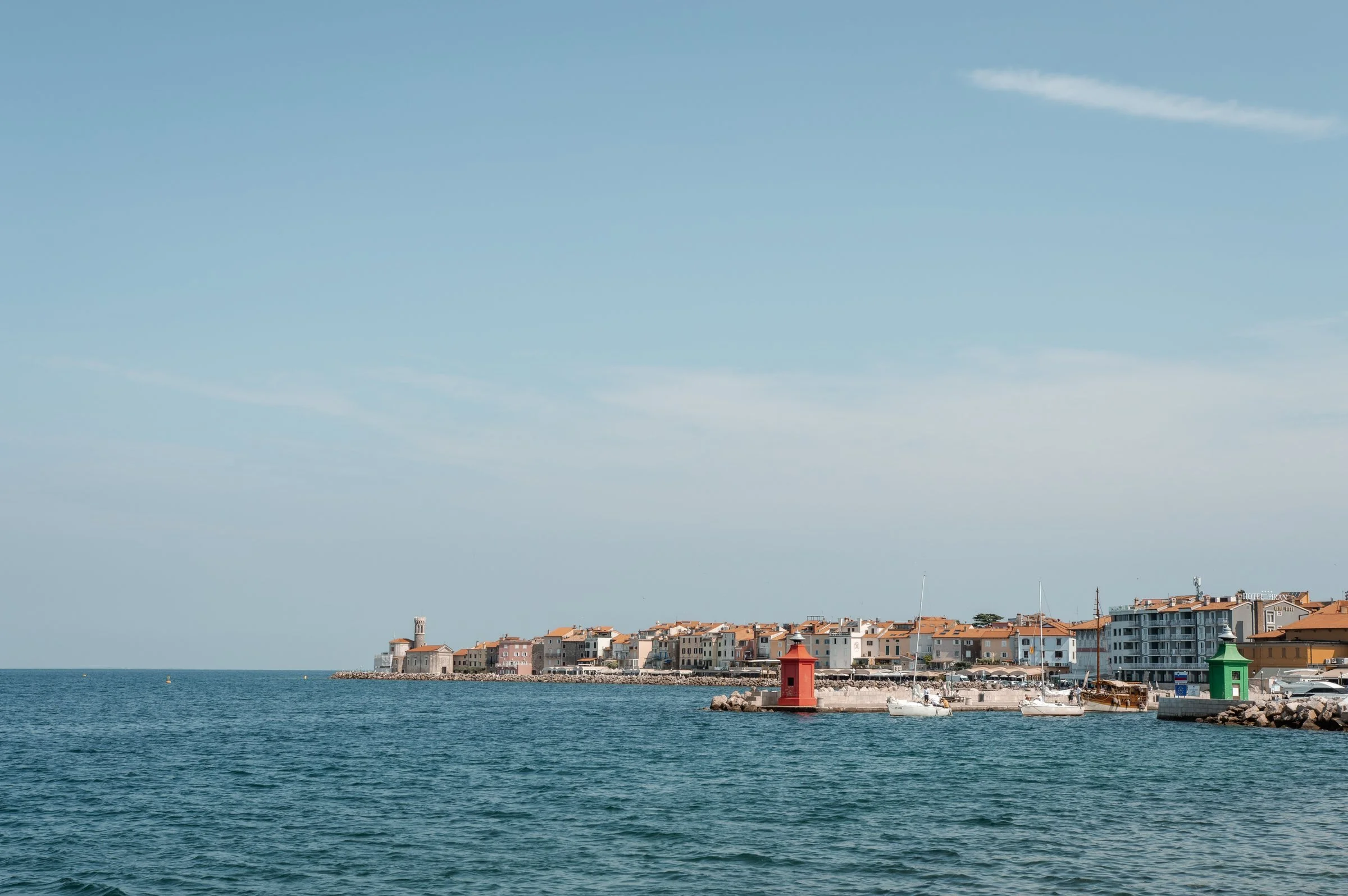
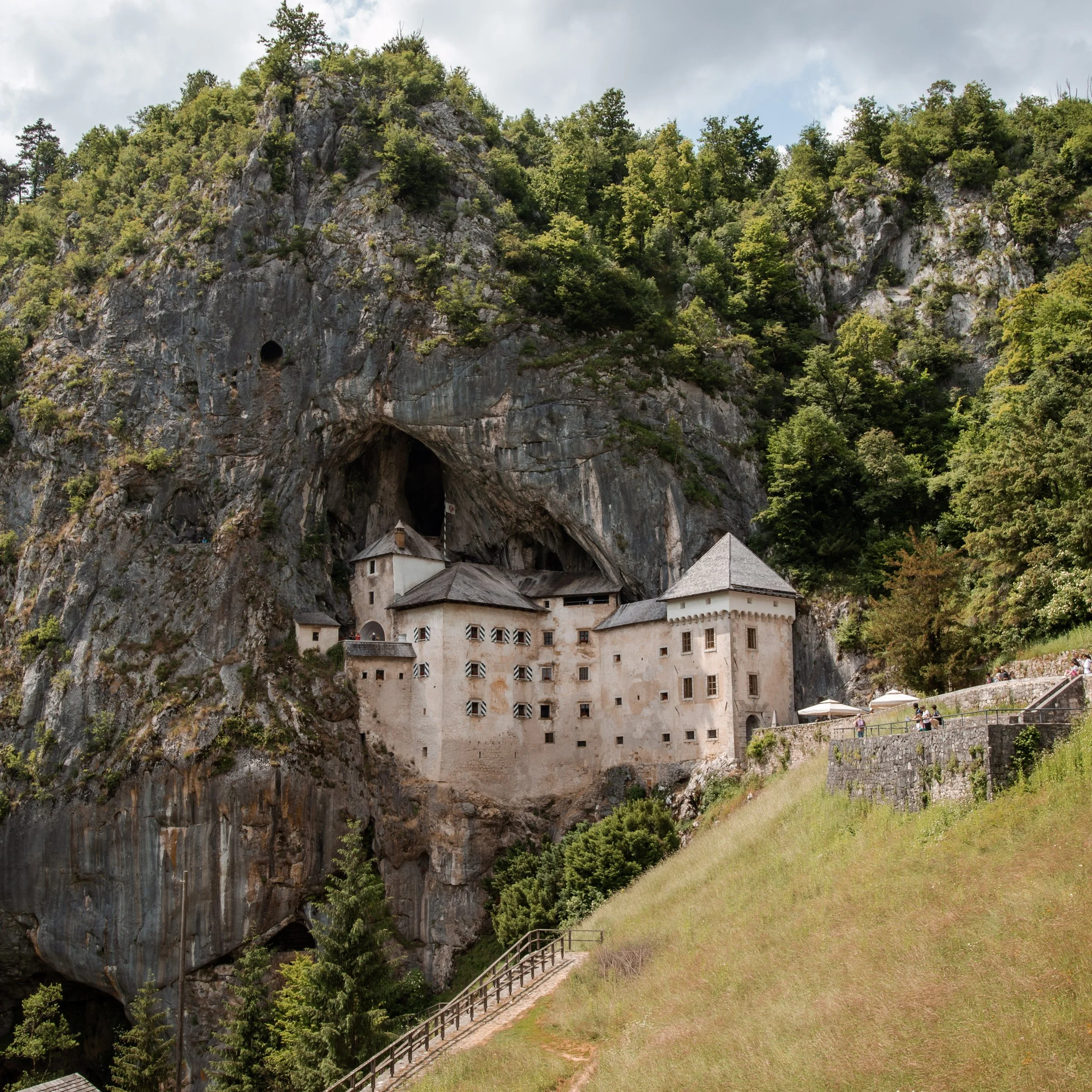
The coast and the karst
From Piran inland to Lipica and Predjama Castle, the road climbs from the Adriatic onto the karst plateau of stone walls and oak woods.
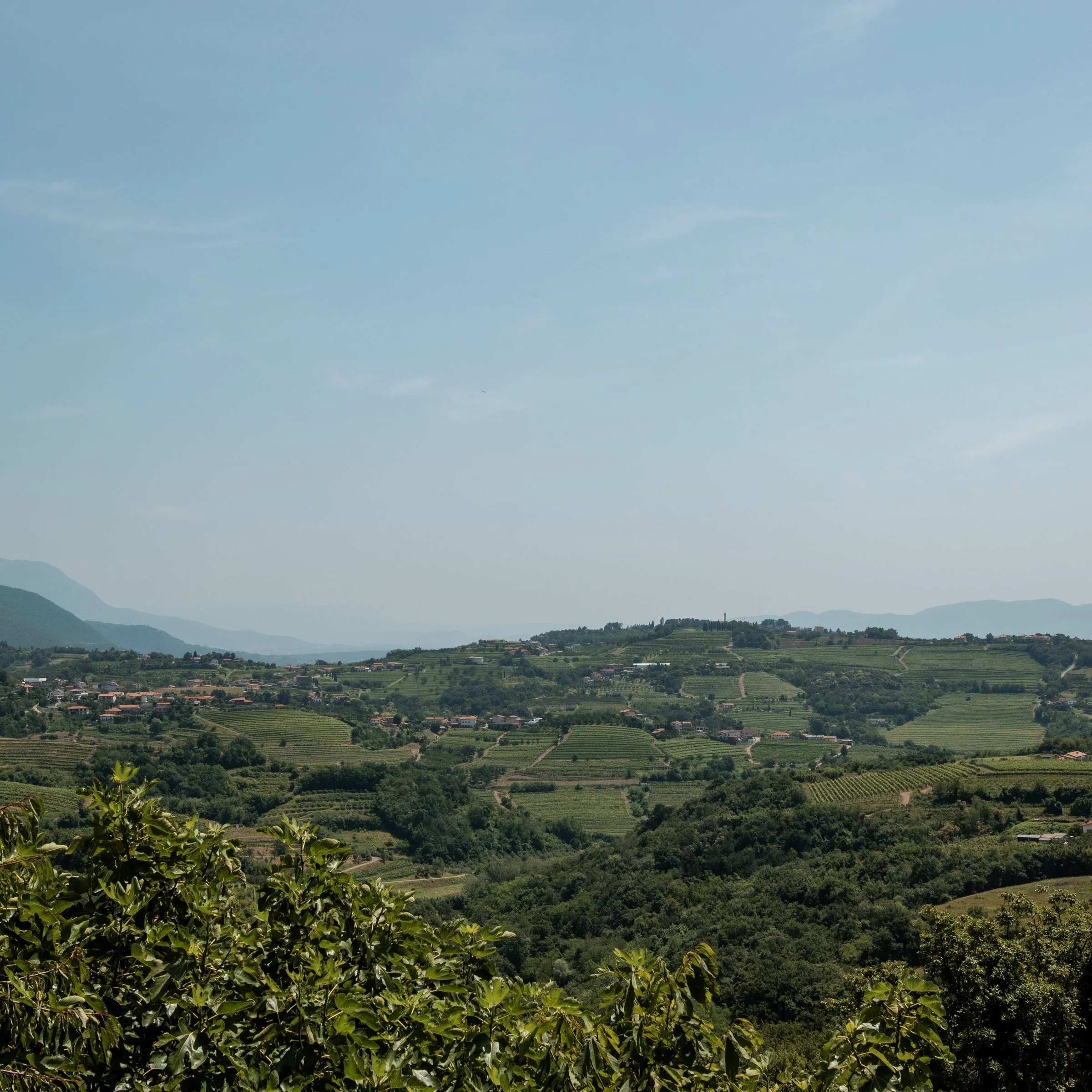
The Brda wine roads
Narrow roads along the ridges of Goriška Brda, between vineyards, cherry orchards and hilltop villages like Šmartno.
All five are stops on our 7-day Slovenia road trip.
Mountain roads
The Vršič Pass, the highest road pass in Slovenia, has 50 hairpin bends and is closed in winter. Since 2026 its traffic is managed with barriers at both ends, and a free shuttle runs over it in summer. Read my guide to driving the Vršič Pass before you go. On all mountain roads, use a low gear going down, and watch for cyclists.
Prices as of November 2026. Check before you go.
How much is the vignette in Slovenia?
For a car in 2026: €16 for 7 days, €32 for a month and €117.50 for a year. It is digital and linked to your number plate.
Where do you buy the Slovenian vignette?
On the official DARS website, evinjeta.dars.si, or at petrol stations near the border. Buy it before you join the motorway.
Can I drive a rental car from Italy to Slovenia?
Usually yes, but check the rental company's cross-border policy and any fee before booking. Cars rented in Italy do not include the Slovenian vignette.
What are the speed limits in Slovenia?
For cars: 50 km/h in towns, 90 km/h on other roads, 110 km/h on expressways and 130 km/h on motorways.
Do you need headlights on during the day in Slovenia?
Yes. Dipped headlights or daytime running lights must be on at all times.
Do you need winter tyres in Slovenia?
Yes, from 15 November to 15 March, and whenever there is snow or ice.
Is driving in Slovenia difficult?
No. Roads are good and distances short. Mountain passes like Vršič need care, and town centres can be narrow, but it is an easy country to drive.