Pamukkale Travel Guide: How to Visit the Travertines and Hierapolis
How to visit Pamukkale, Turkey's white cotton castle: which gate to use, walking up the travertines barefoot, the Roman city of Hierapolis and its theatre, the Antique Pool, opening hours, how long you need and where we stayed, with a map.
Best weather in TurkeyMay to Sep
4 facts checkedPrices, hours and booking rules, last verified Checked
| Fact | What we found | Checked |
|---|---|---|
| UNESCO | Hierapolis-Pamukkale has been a World Heritage Site since 1988whc.unesco.org ↗ | |
| Opening hours | 06:30 to 23:00 from April to the end of September, 08:00 to 18:00 the rest of the year. Ticket offices close earlierkvmgm.ktb.gov.tr ↗ | |
| Shoes off | To protect the terraces, visitors walk on the travertines barefoot. Carry a bag for your shoes | |
| Antique Pool | Swimming in the Antique Pool among fallen Roman columns costs extra on top of the site ticket |
We re-check every fact in our guides on a schedule and show the date here. Spotted something that changed? Tell us.
Some links in this guide are affiliate links. They cost you nothing extra and help keep the blog free.
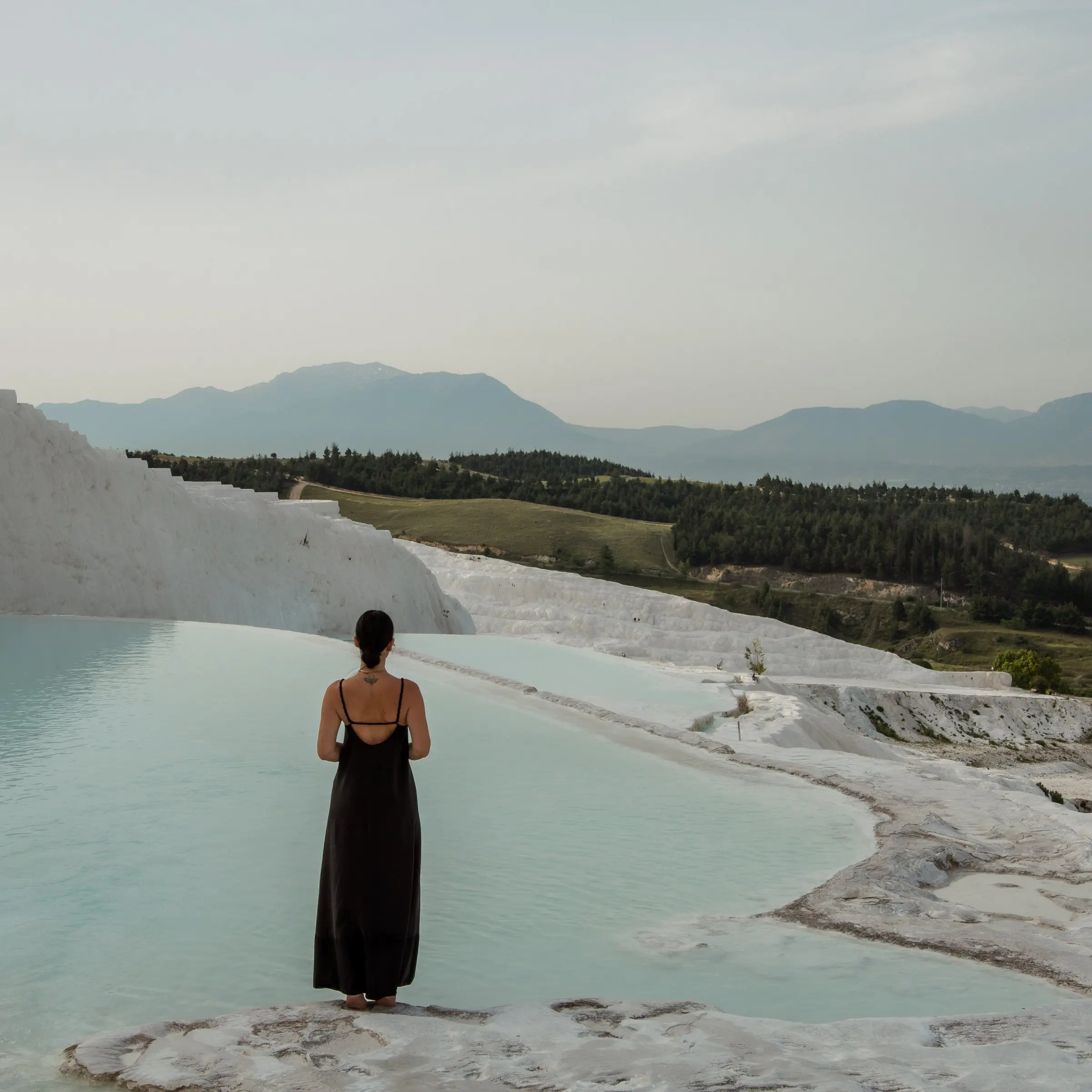
From the road, Pamukkale looks like a snowfield in the middle of a warm green valley. Up close, it is even stranger. Warm water runs over white rock under your bare feet, pools glow pale blue in their stone basins, and on top of the hill sit the ruins of a whole Roman city.
We stopped in Pamukkale at the beginning of May 2025, on the drive from Antalya to the Turquoise Coast, and stayed a night in the village at the foot of the terraces. It is one of those places that needs a bit of planning to get right: which gate to use, when to go, what to bring and how long to stay. This guide answers all of it.
Pamukkale on one map
Tap a place to see where it is.
What is Pamukkale?
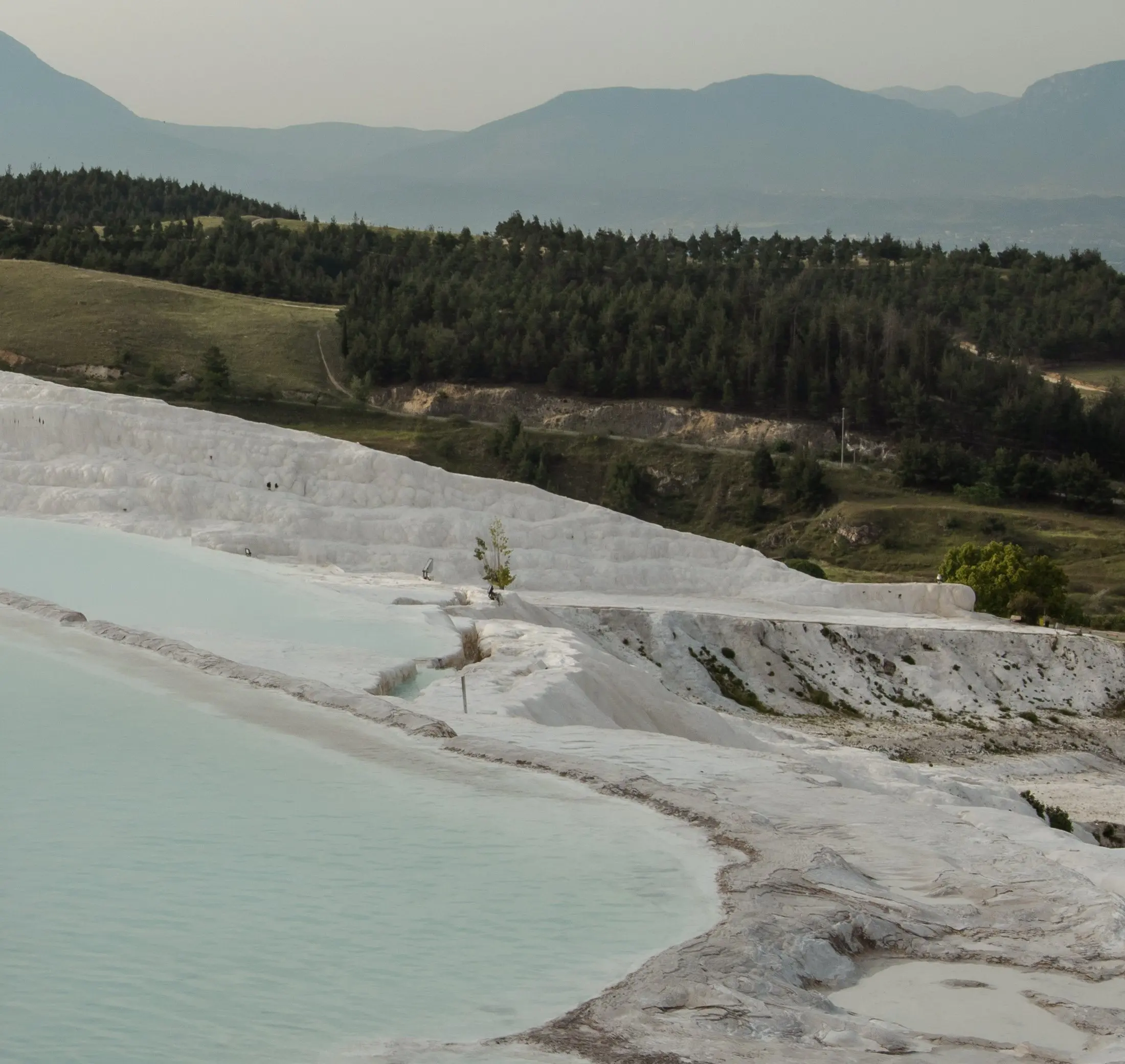
Pamukkale means “cotton castle” in Turkish. Hot springs rich in calcium flow down the hillside, and as the water cools, the calcium settles as a white mineral called travertine. Over thousands of years, it has built up into terraces, ledges and frozen-looking waterfalls, with shallow pools on every level.
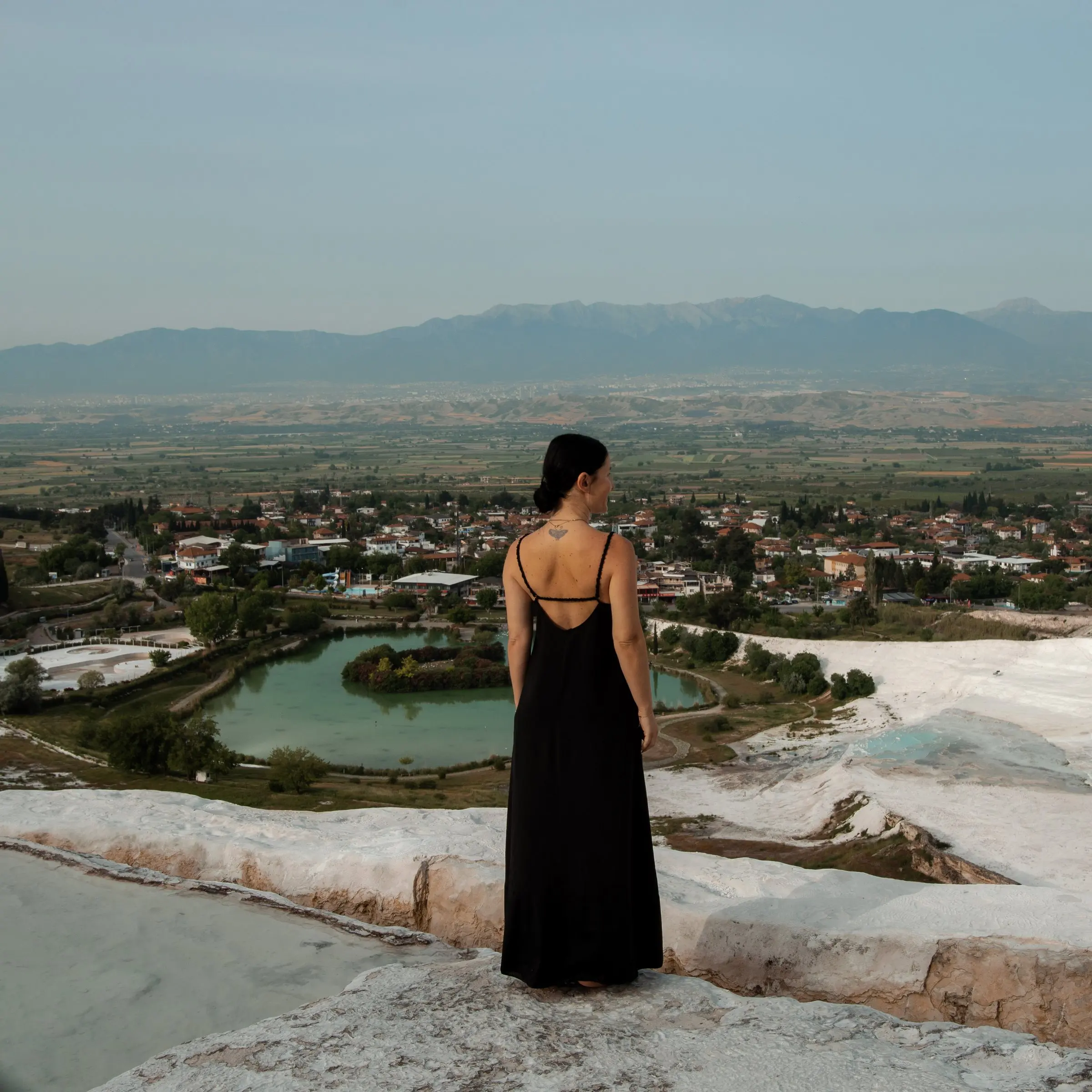
On top of the terraces lie the ruins of Hierapolis, a spa city founded in the 2nd century BC that grew into a thriving Roman town, all because of the same warm water. The travertines and the ancient city together, Hierapolis-Pamukkale, have been a UNESCO World Heritage Site since 1988.
How a visit to Pamukkale works
The travertines and Hierapolis are one site with one ticket. There are three entrances, and choosing the right one shapes your whole visit:
- The town gate (bottom). In Pamukkale village, at the foot of the terraces. You take your shoes off here and walk up the travertines barefoot. This is the classic way, and the best one.
- The south gate (top). Up on the hill, closest to the Antique Pool and the top of the terraces. Handy if you only want to see the travertines from above.
- The north gate (top). At the far end of Hierapolis, by the necropolis. Tour buses usually drop people here.
If you stay in the village, start at the bottom, walk up the terraces, explore Hierapolis at the top, then walk back down, ideally at sunset.
Opening hours. According to Turkey’s Ministry of Culture, the site opens early and closes late in the warmer months (06:30 to 23:00 from April to the end of September) and keeps shorter hours in winter (08:00 to 18:00). Ticket offices close earlier than the site, and hours can change, so check the official Turkish museums website before you go.
Walk up the travertines barefoot
This is the moment everyone comes for. To protect the terraces, shoes are not allowed on the travertines, so you carry them and walk barefoot up the marked path, with warm water running over your feet.
The walk up from the town gate takes about 20 to 30 minutes at a slow pace, longer if you stop for photos, which you will. The surface is textured rather than slippery in most places, but it can feel rough on the soles, so take it slowly. Along the way, the terraces form shallow pools you can step into and sit by.
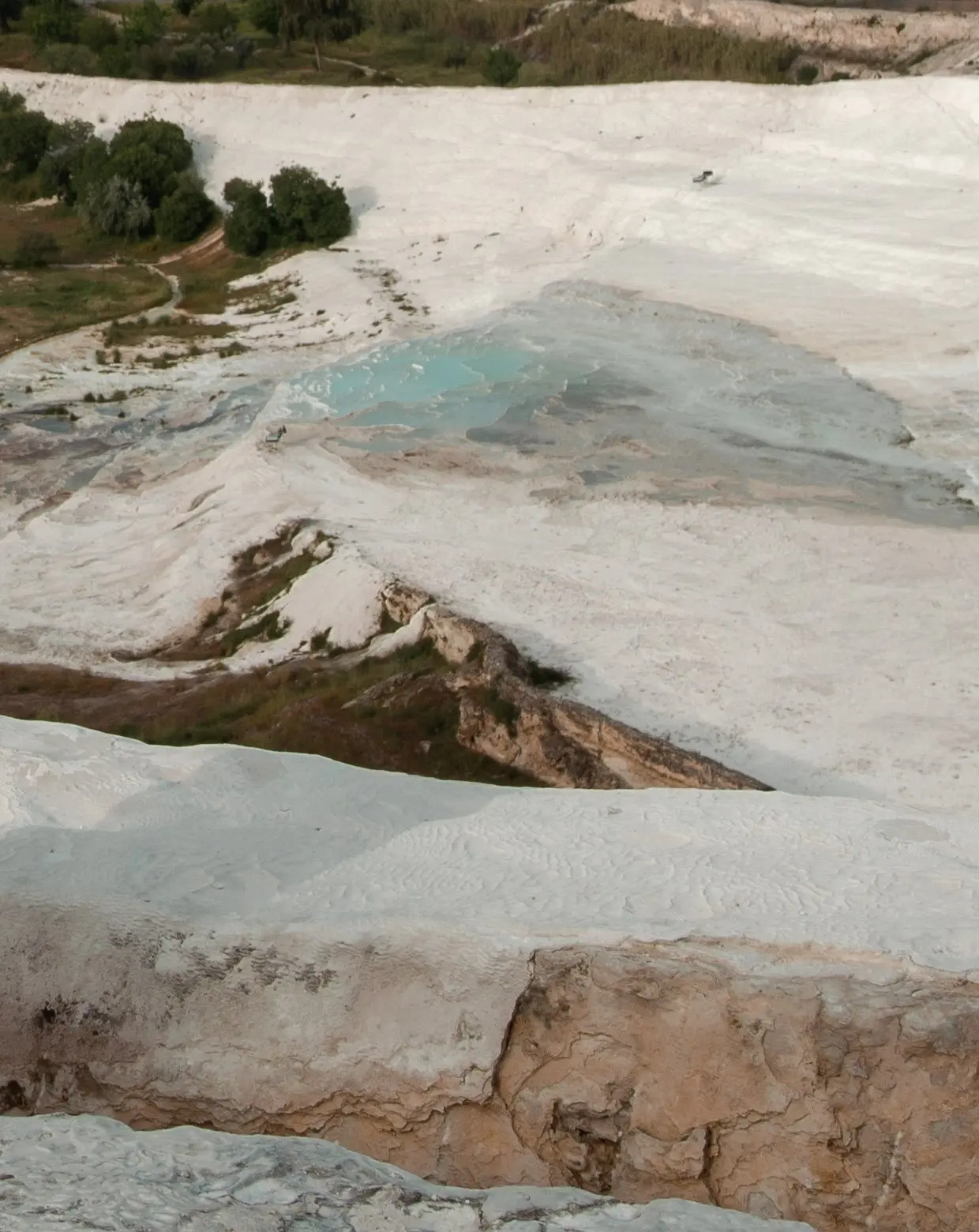
Only part of the terraces is open to walk on. The rest is protected so the travertines can recover and stay white, and that is a good thing.
Explore Hierapolis
At the top of the terraces, the ruins of Hierapolis spread across the hill, and they are far bigger than most people expect. Highlights:
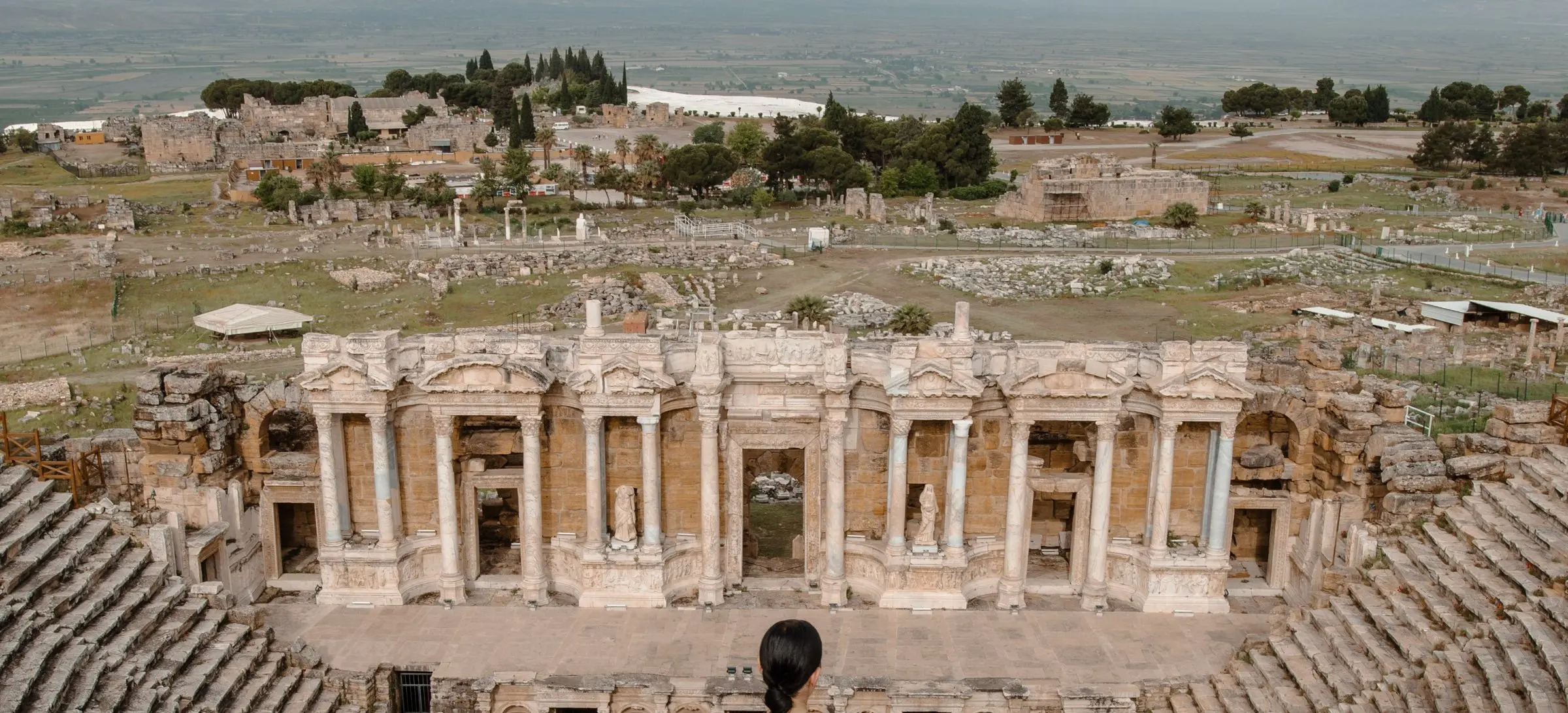
- The theatre. A huge, beautifully preserved Roman theatre cut into the hillside, with views over the valley. It is a climb, but it is the highlight of the ancient city.
- The necropolis. One of the largest ancient cemeteries in Turkey, with hundreds of tombs and sarcophagi lining the road to the north gate.
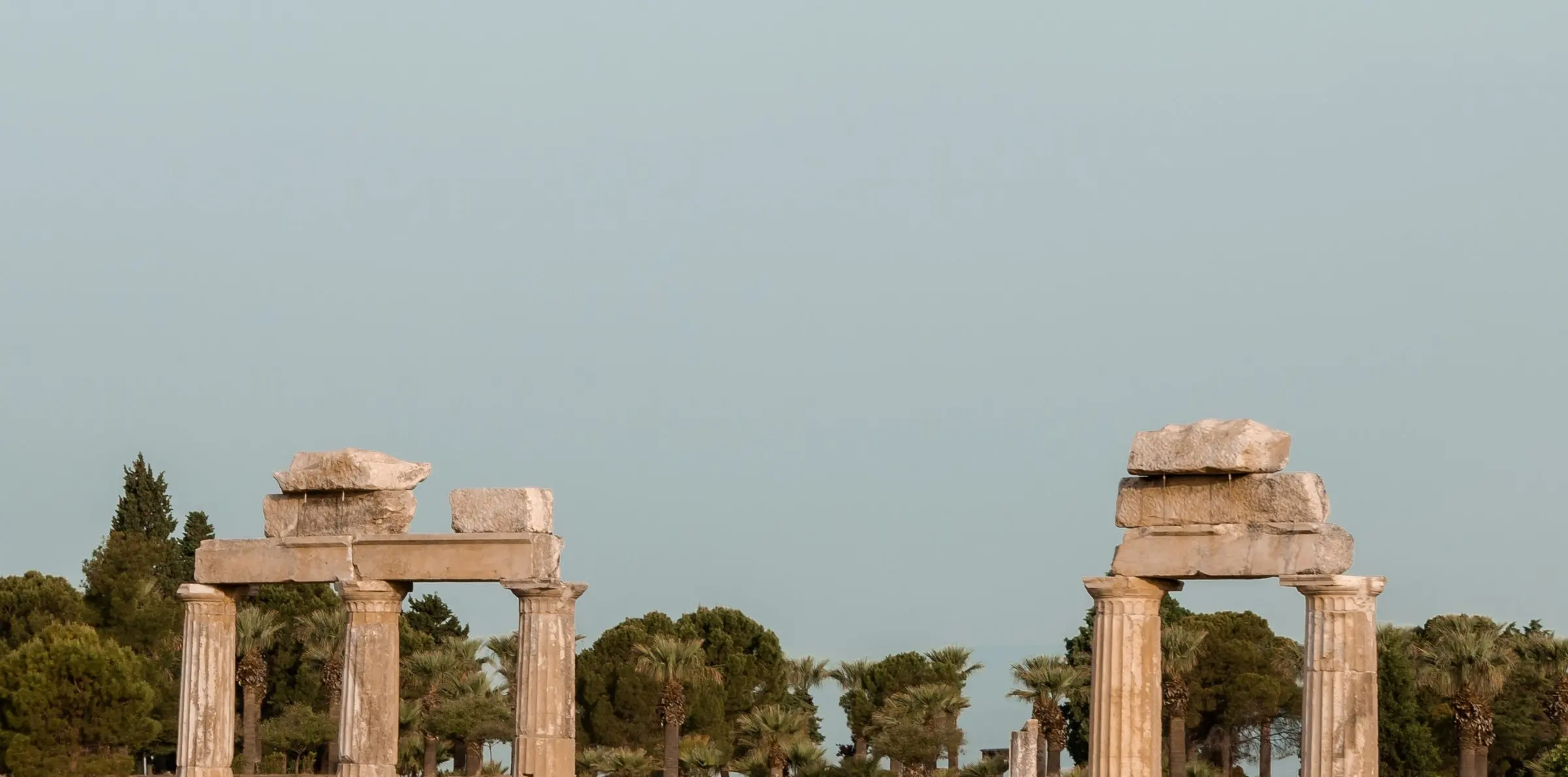
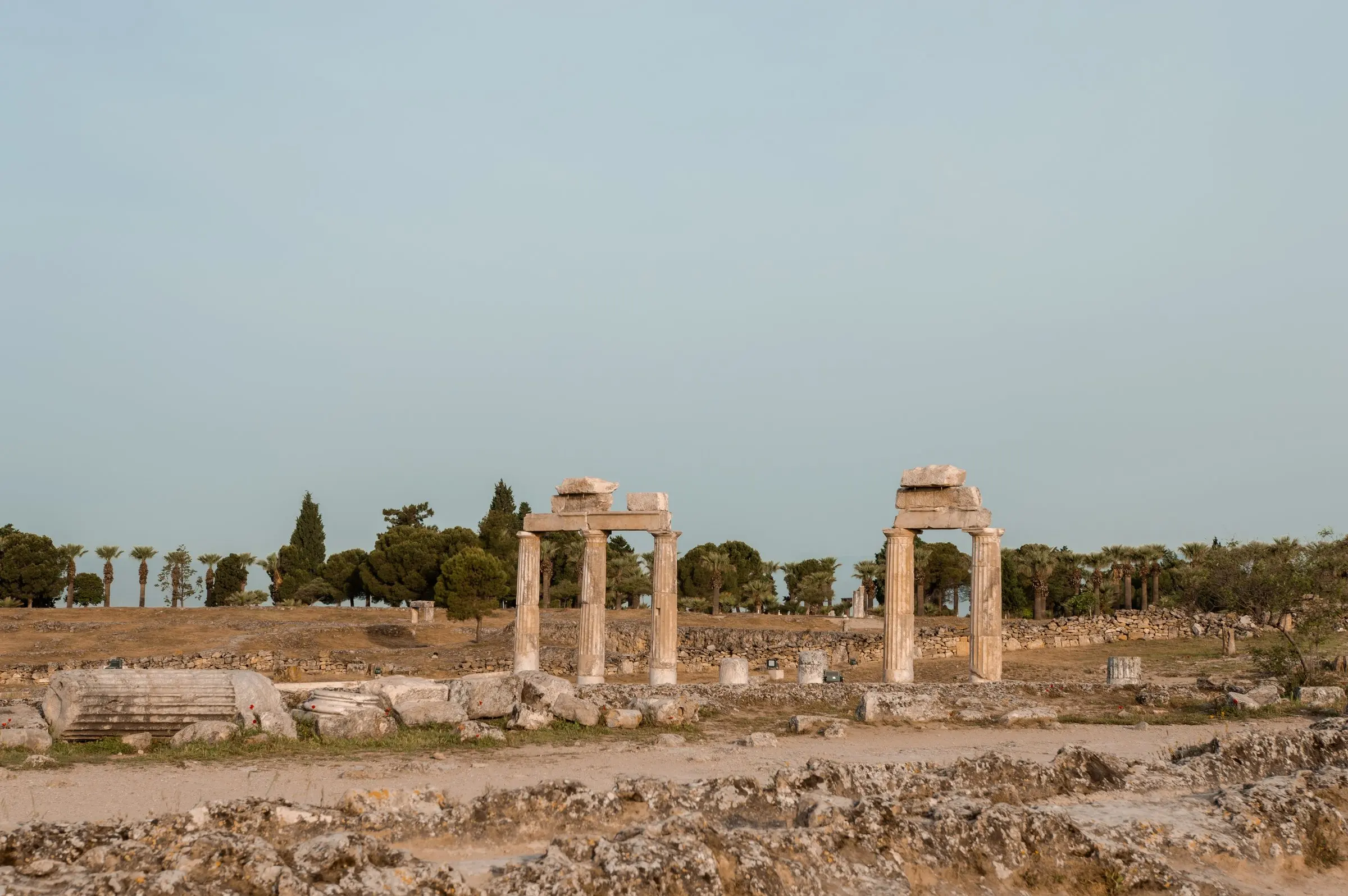
- The Frontinus Gate and street. The grand entrance to the Roman city, with a long colonnaded street running through it.
- The Plutonium. A sacred cave that ancient people believed led to the underworld, because of the deadly gas rising from it.
- The Martyrium of St Philip. Up on the hill, a shrine built where the apostle Philip is said to have been martyred.
- The Hierapolis Archaeology Museum. In the old Roman baths, with finds from the site.
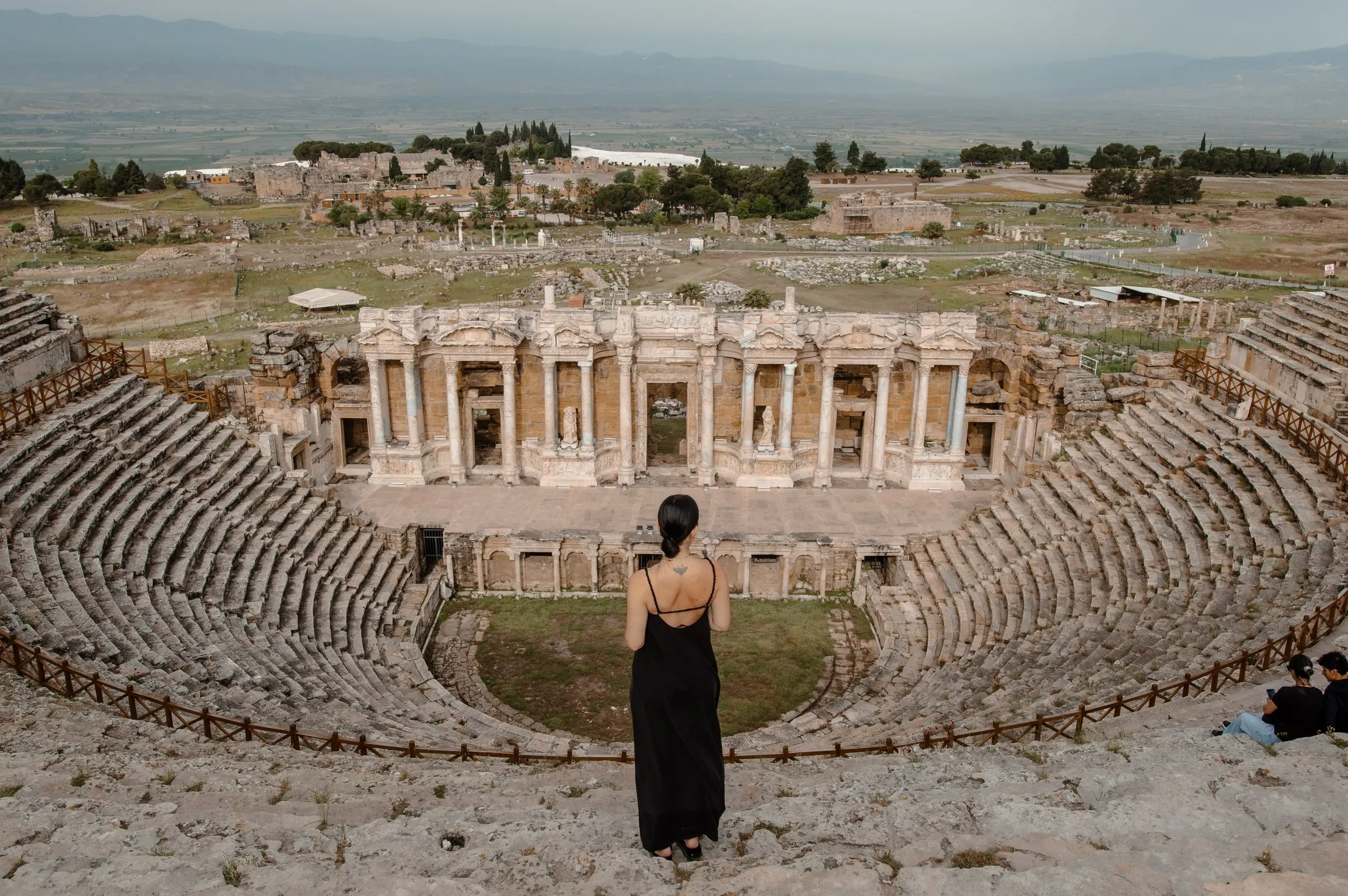
The site is big and exposed, with little shade. Bring water and a hat, and wear proper shoes for the ruins (you can put them back on at the top). Electric carts run between the main areas if you don’t want to walk it all.
Swim in the Antique Pool (Cleopatra’s Pool)
The Antique Pool, often called Cleopatra’s Pool, is a thermal pool where you swim in warm, fizzy mineral water among fallen Roman columns, which tumbled into it during an earthquake. It costs extra on top of the site ticket, and there are changing rooms and lockers.
It gets busiest in the middle of the day, when the tour buses arrive. Early or late is calmer.
How long do you need at Pamukkale?
- Two to three hours for the travertines and a quick look at the theatre.
- Half a day for the travertines and the main sights of Hierapolis.
- A full day if you want to add the Antique Pool, the museum and the necropolis without rushing.
The best plan, in my opinion, is to stay one night in the village. Walk the terraces late in the afternoon when the light turns golden and the day-trippers leave, or first thing in the morning before they arrive.
Where to stay in Pamukkale
Staying in Pamukkale village lets you visit at the best times of day, and almost everything is walkable. We stayed at Venus Suite Hotel, a short walk from the town gate at the bottom of the terraces.
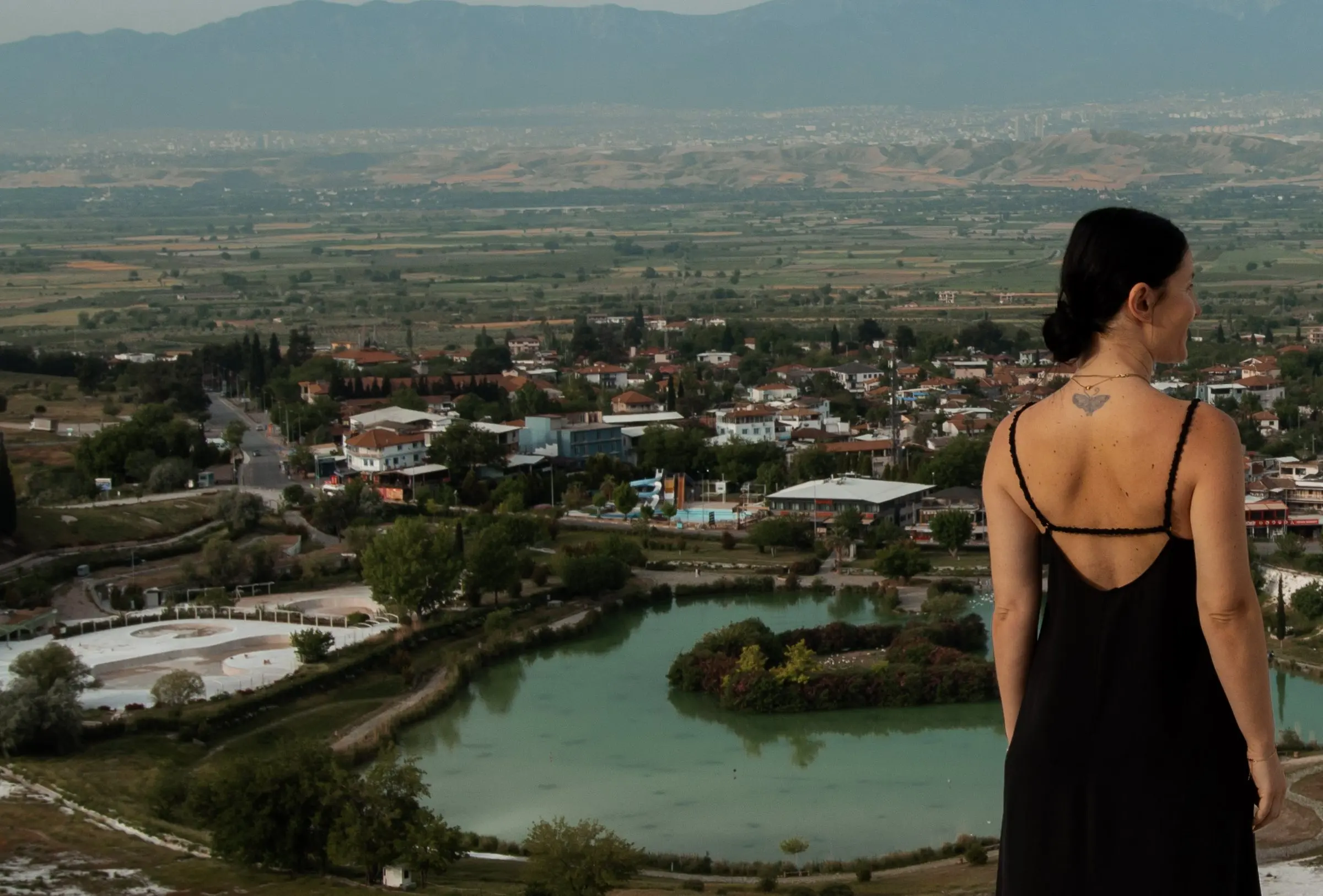
The village is small and simple, with family-run guesthouses, small hotels and a few restaurants. If you want more choice, Denizli, the nearest city, is about 20 km away.
Where to eat in Pamukkale
We ate at Onur Restaurant in the village. Most places to eat are along the main street near the bottom of the terraces, so it is easy to find dinner after your visit.
How to get to Pamukkale
- By car. We drove from Antalya, about 240 km and three and a half to four hours, then continued to Kalkan on the coast, which is a similar drive. Pamukkale fits perfectly as an overnight stop between the two.
- By bus. Long-distance buses run to Denizli, and local minibuses go from Denizli bus station to Pamukkale village.
- By plane. Denizli Çardak Airport has flights from Istanbul, with shuttles into the city.
- On a day trip. Tours run from Antalya and the coastal resorts. It is possible, but it makes for a very long day with many hours on a coach.
When to visit Pamukkale
Spring and autumn are the most comfortable seasons. Summer is very hot, and the white rock throws the heat and light back at you, so go early or late in the day. In any season, avoid the middle of the day if you can: it is the hottest, brightest and busiest time.
What to bring to Pamukkale
- A bag for your shoes
- Sunglasses and sun cream
- Water and a hat
- Swimwear, if you plan to swim in the Antique Pool
- A small towel for your feet before you put your shoes back on
Is Pamukkale worth it?
Yes, especially if you stay the night. The travertines really are unlike anything else, and Hierapolis alone would be worth a stop. The only way to be disappointed is to arrive at noon on a day trip, rush the terraces in the glare and leave. Give it time and pick your hour.
Do you have to take your shoes off at Pamukkale?
Yes. Shoes are not allowed on the travertine terraces, so you walk barefoot. Bring a bag to carry them.
Can you swim at Pamukkale?
You can paddle in the shallow pools on the terraces, and swim in the Antique Pool at the top for an extra fee.
What are the Pamukkale opening hours?
From April to the end of September the site is open from 06:30 to 23:00, and the rest of the year from 08:00 to 18:00. Ticket offices close earlier, so check the official Turkish museums website before you visit.
How long do you need at Pamukkale?
Half a day covers the terraces and the main sights of Hierapolis. A full day lets you add the Antique Pool, the museum and the necropolis without rushing.
Is Pamukkale worth a day trip from Antalya?
It is possible but a long day, with several hours of driving each way. Staying a night in Pamukkale village is far more relaxed.