
Perched majestically on a hilltop, Ostuni, Italy, appears as a dazzling beacon of white against a backdrop of sun-drenched olive groves and the sparkling blue of the Adriatic Sea. It’s a place that feels both ancient and alive, a true jewel of Southern Italy.
When we were planning our trip to Puglia, we found plenty of information about the famous towns, but the truly useful tips—the ones about where to park, what to eat, and how to avoid the crowds—were scattered and hard to find. That’s why we’ve created this ultimate guide to Ostuni, Italy. I’ve pulled together all the essential information, to help you plan a trip that is as seamless as it is magical.
If you’re planning a trip that includes nearby jewels like the ancient cave city of Matera or the charming coastal gem of Monopoli, you’ll be happy to know that Ostuni makes the perfect home base. It’s a great central point to explore the best of Puglia’s diverse landscapes and stunning towns, all while returning to the peaceful atmosphere of the “White City” at the end of the day
Why Ostuni is Called the “White City”
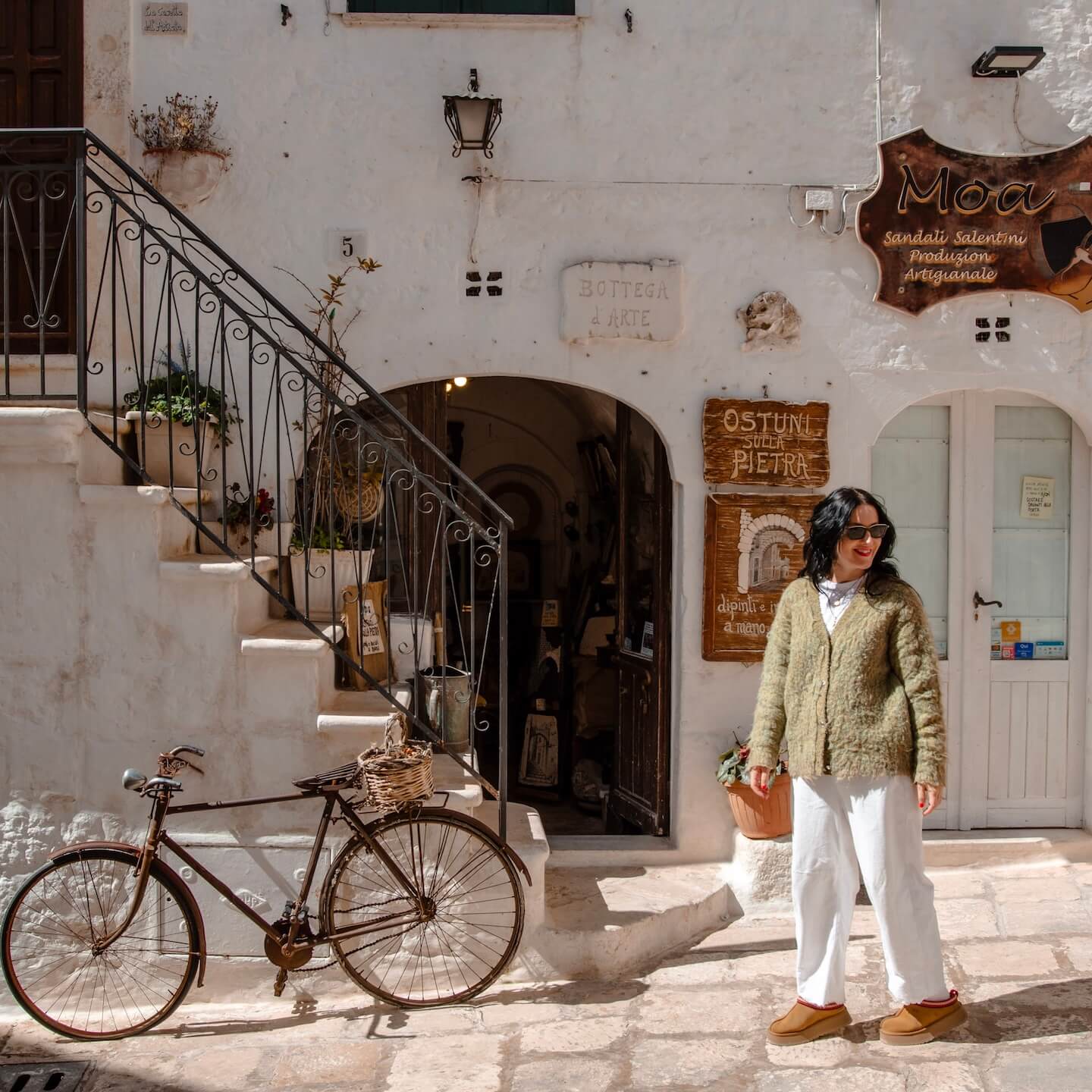
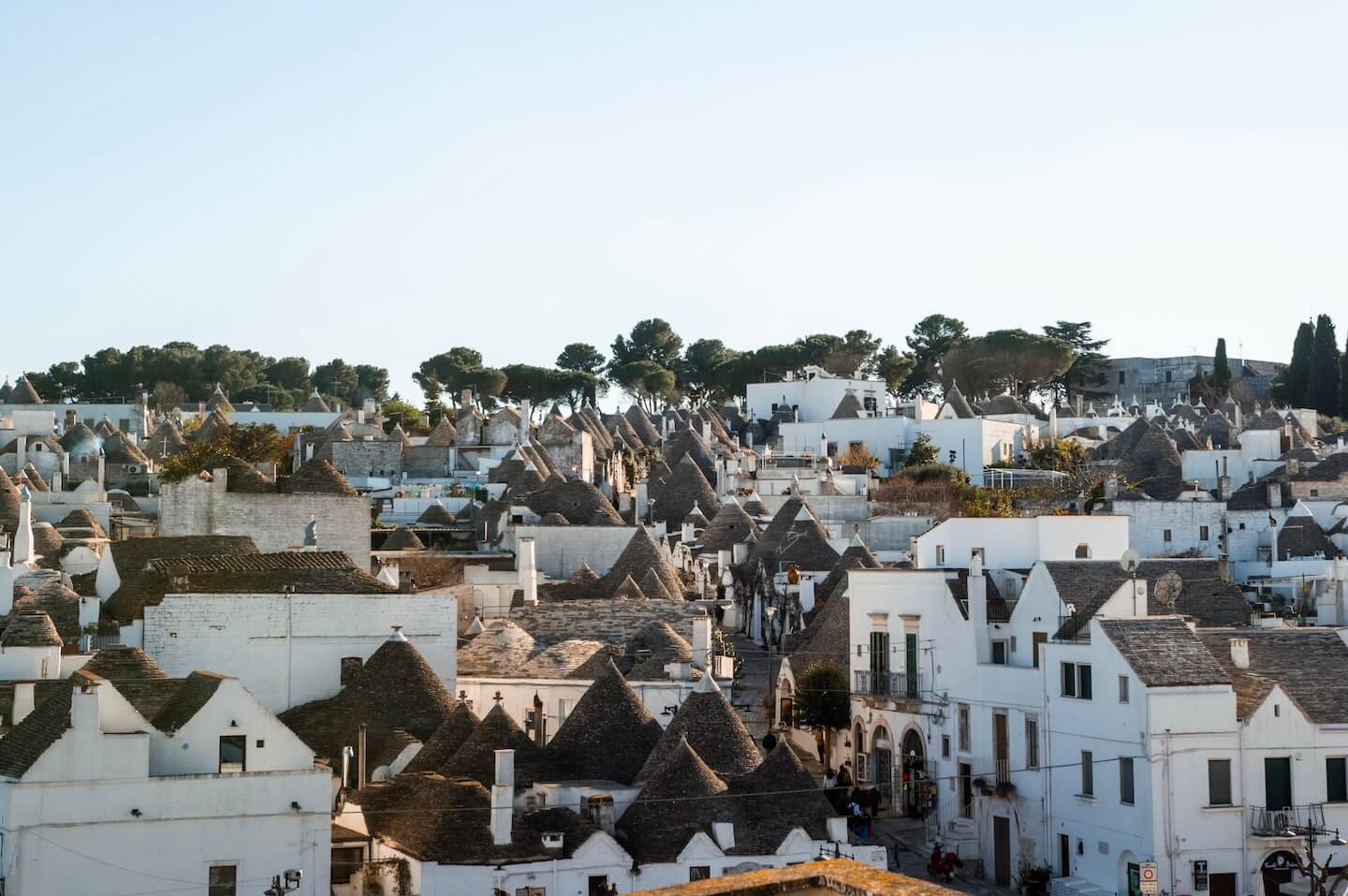
The first thing you’ll notice about Ostuni, Italy, is its striking color. Every building in the old town is painted with a brilliant white lime wash, a tradition that dates back centuries. The reason for this wasn’t just aesthetic; it was practical. The lime wash was used as a natural disinfectant to combat the plague in the 17th century. It also helped to keep the houses cool during the blistering Puglian summers. The town’s original name, Astu Néon (meaning “New Town” in Greek), was given by its ancient inhabitants, but it’s the modern nickname, “La Città Bianca,” that truly captures its essence.
Today, this tradition is strictly preserved.
Getting to Ostuni
Getting to Ostuni, Italy, is easy. The two closest airports are Bari (BRI) and Brindisi (BDS), with Brindisi being the more convenient option at just a 30-40 minute drive away.
- By Car: Renting a car is our top recommendation for exploring not just Ostuni, but the entire Puglia region. It gives you the freedom to discover the countryside and all the beautiful beaches at your own pace. Just be prepared for a bit of a challenge when you get to Ostuni itself. The old town is a Limited Traffic Zone, so you’ll need to park outside the walls. There are plenty of paid parking lots, such as the one on Viale Oronzo Quaranta or Piazzale Indipendenza. For a stress-free experience, consider arriving in the late afternoon to secure a spot before the evening rush. If you’re lucky, like we were, you’ll be able to find a free parking spot on the side streets as you enter the town. It’s a bit further away from the centre, but it’ll give the chance to see more on foot.
- By Train: Ostuni has a train station that connects to major cities like Bari and Brindisi. The station is about 2 kilometers outside the old town, so you’ll need to take a local bus or a short taxi ride to get to the historic center. This is a great option if you prefer not to drive.
What to See and Do in Ostuni, Italy
The best part about Ostuni, Italy, is that you don’t need a rigid plan.
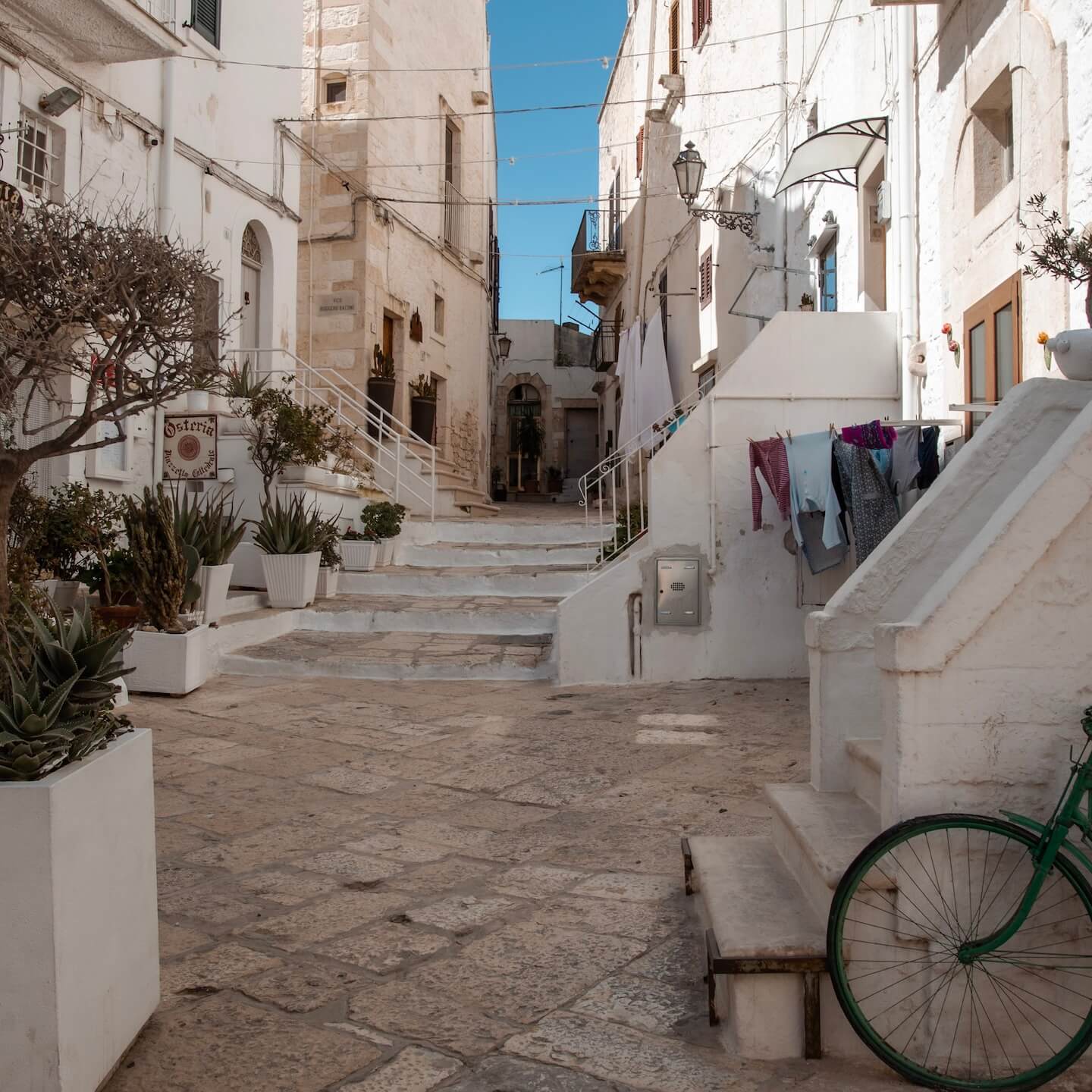
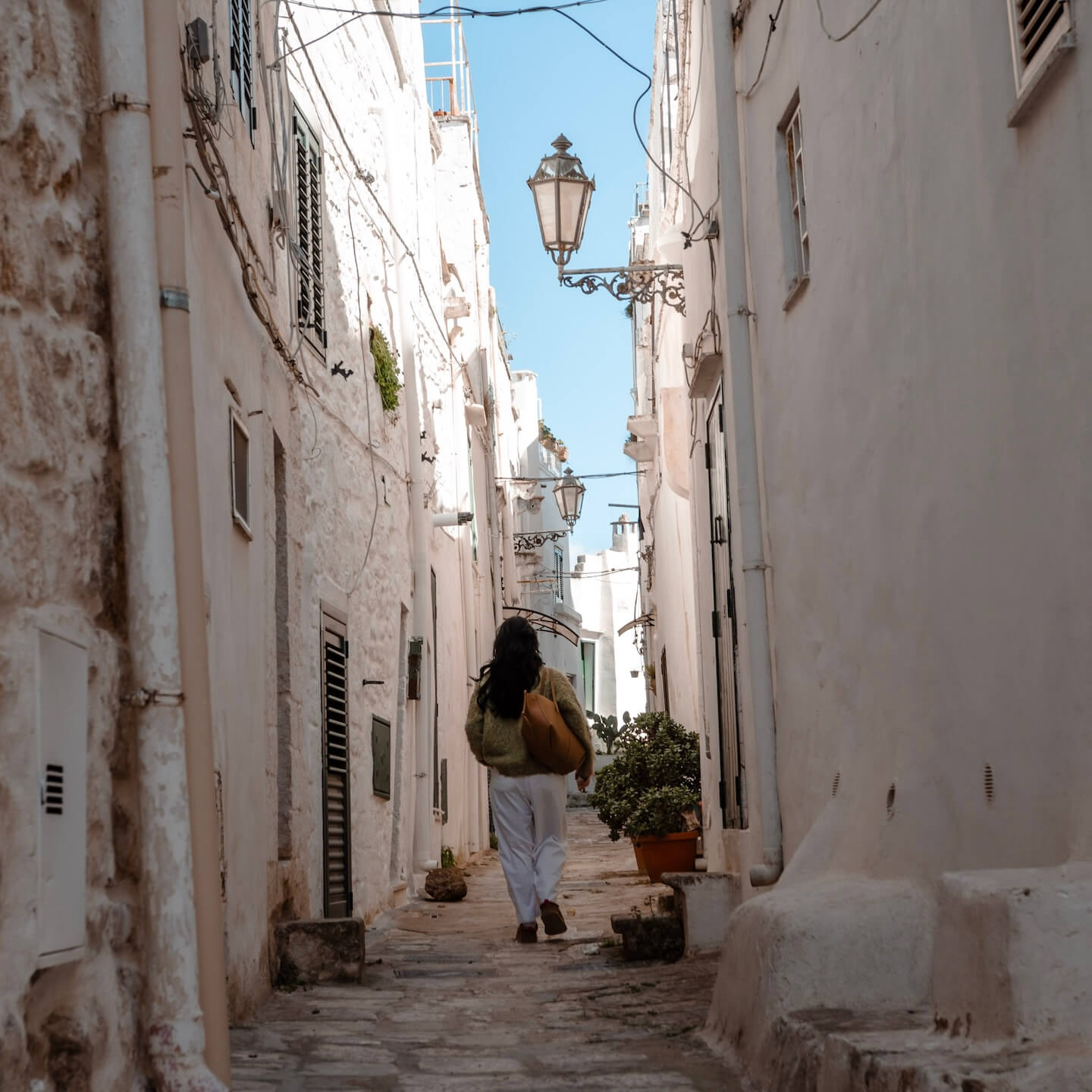
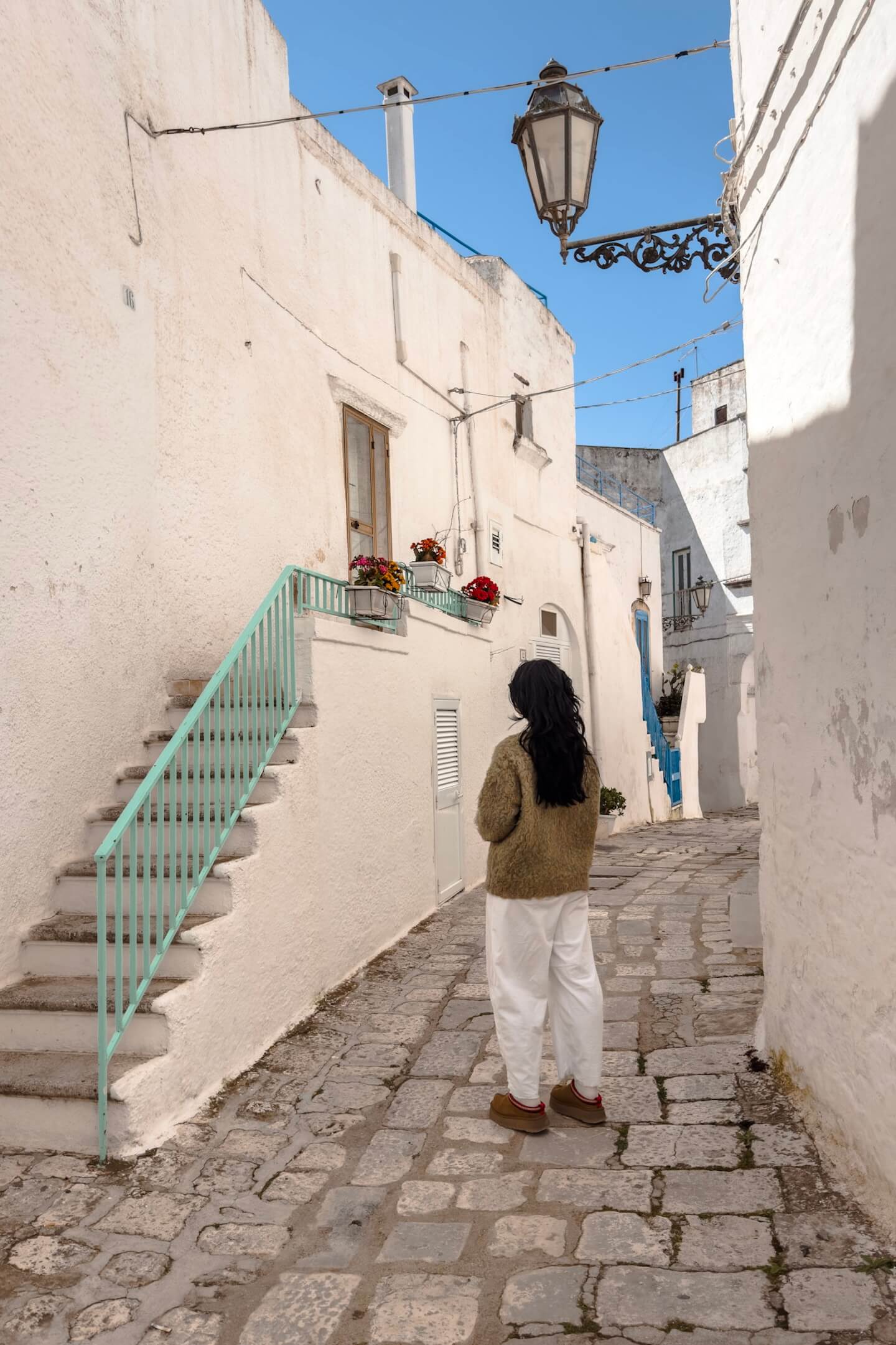
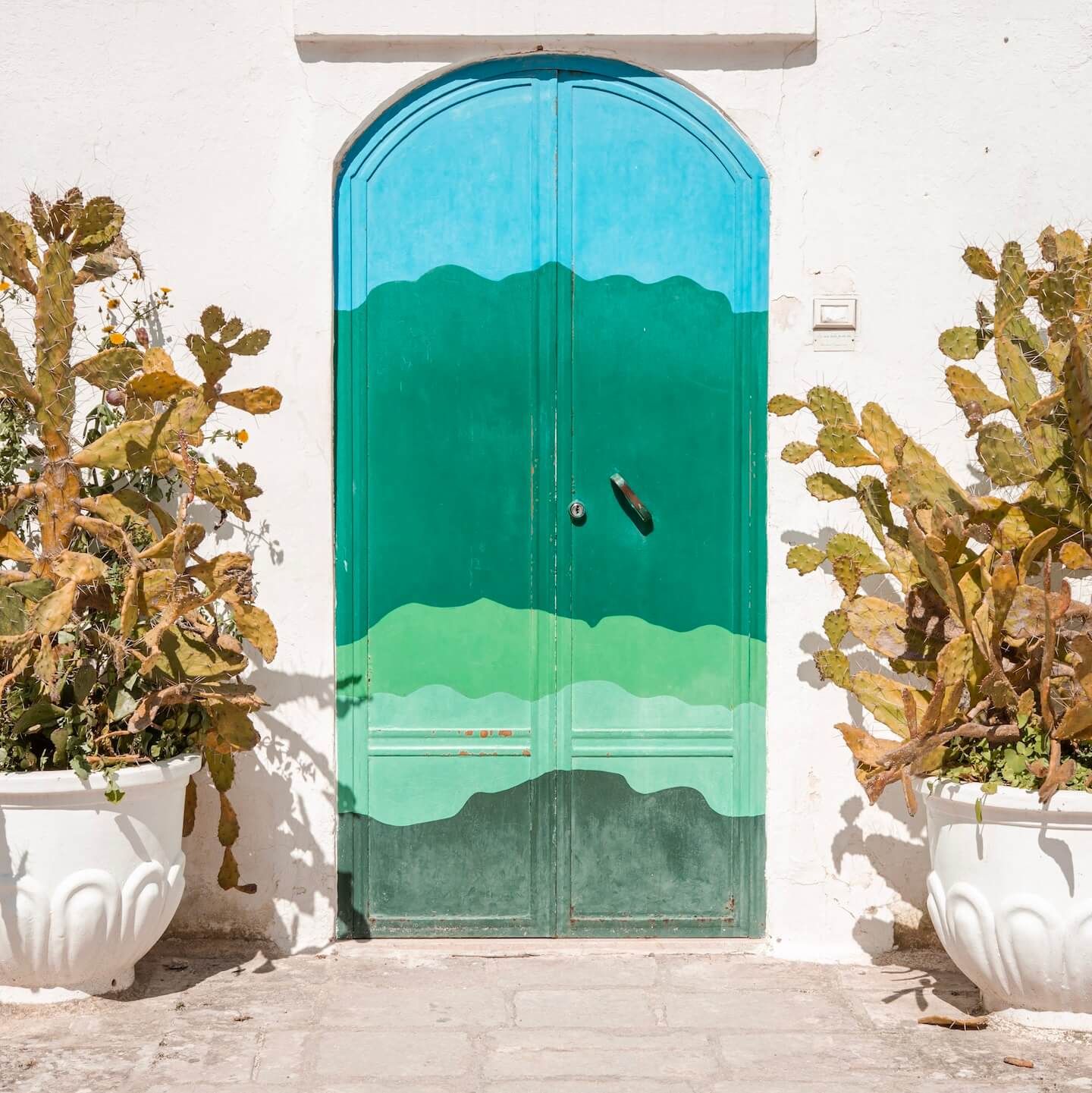
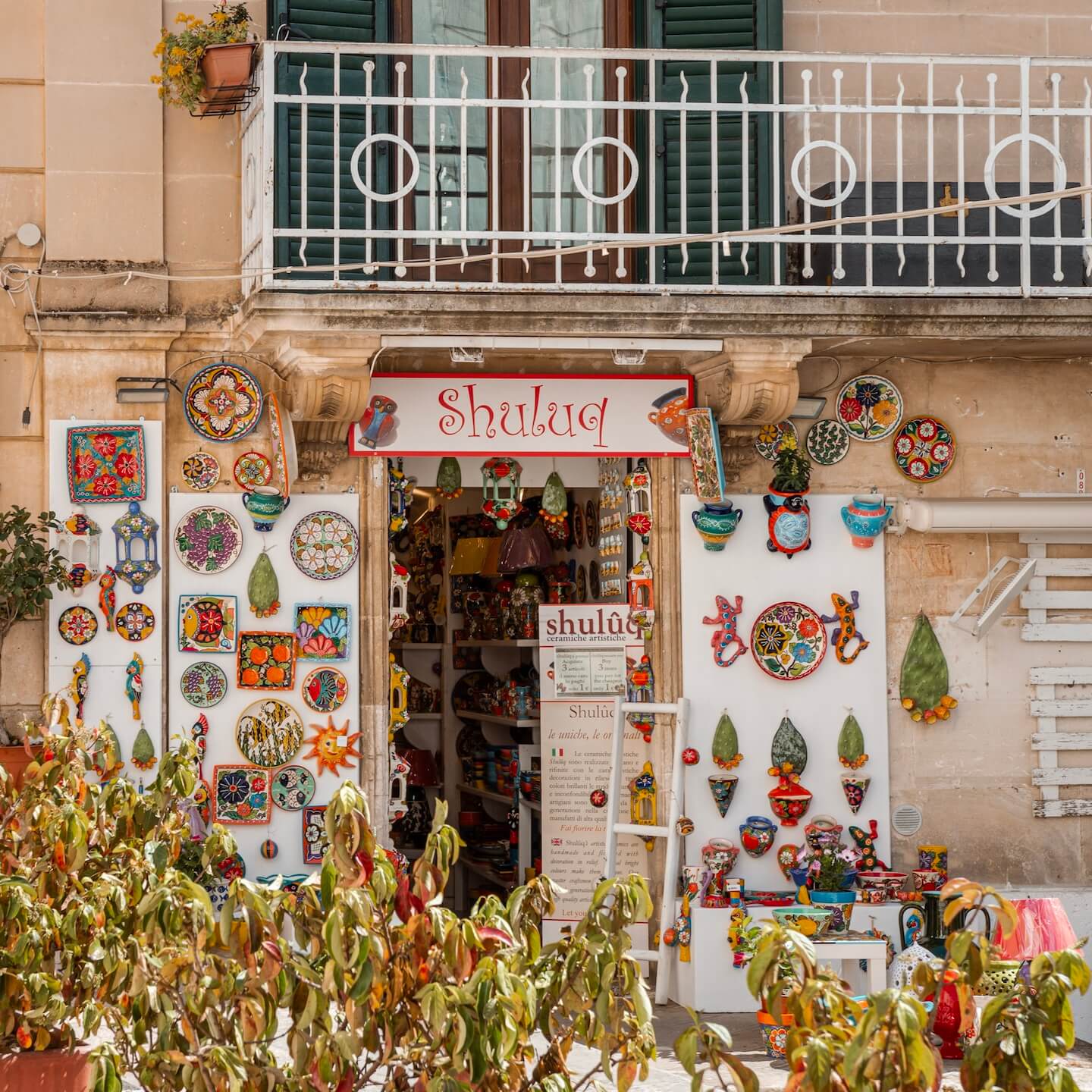
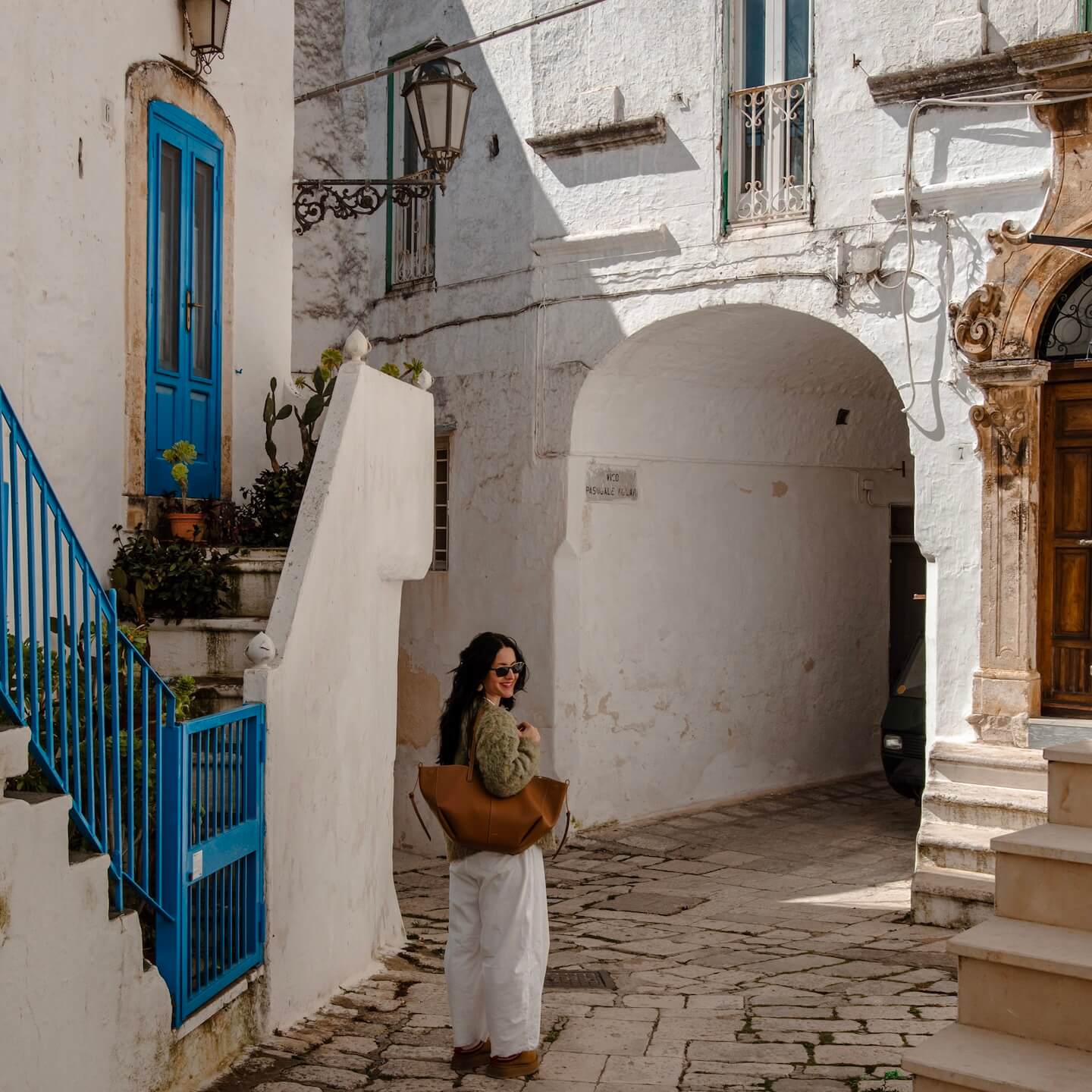
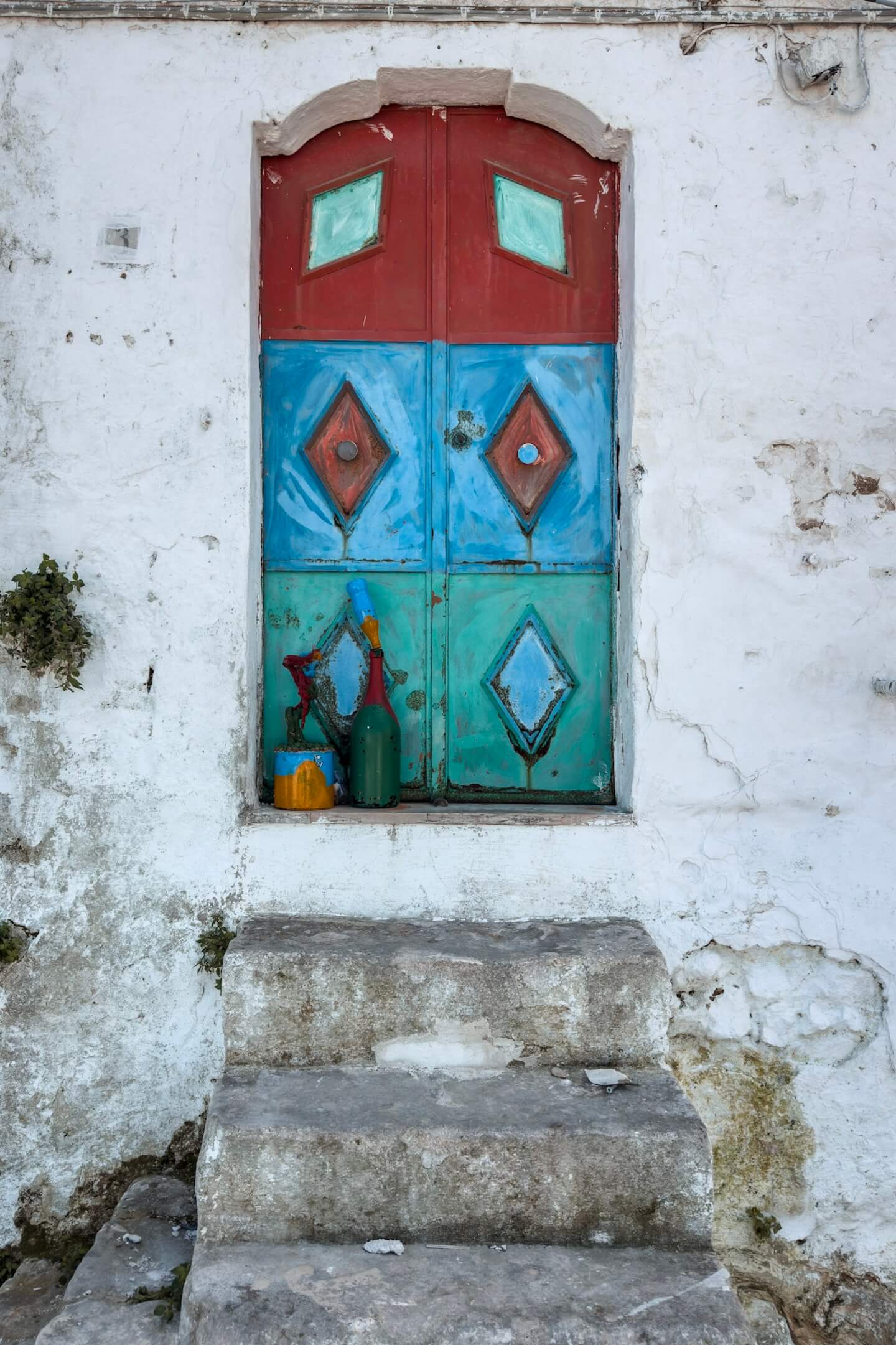
- Wander the Centro Storico: This is the absolute first thing you must do. The narrow, winding streets are a maze of stone archways, hidden staircases, and vibrant blue or green doors that pop against the white walls. We spent a few hours just walking, discovering tiny artisan shops, family-run restaurants, and picturesque balconies overflowing with colorful flowers. Every corner is a photo opportunity!
- Piazza della Libertà: Located at the foot of the hill, this is the main square and the bustling heart of the modern city. It’s the perfect place to start your exploration. Grab a coffee or a glass of local wine at one of the cafes and simply watch life unfold. Don’t miss the Column of Sant’Oronzo, a baroque monument dedicated to the city’s patron saint, who is believed to have protected Ostuni from the plague.

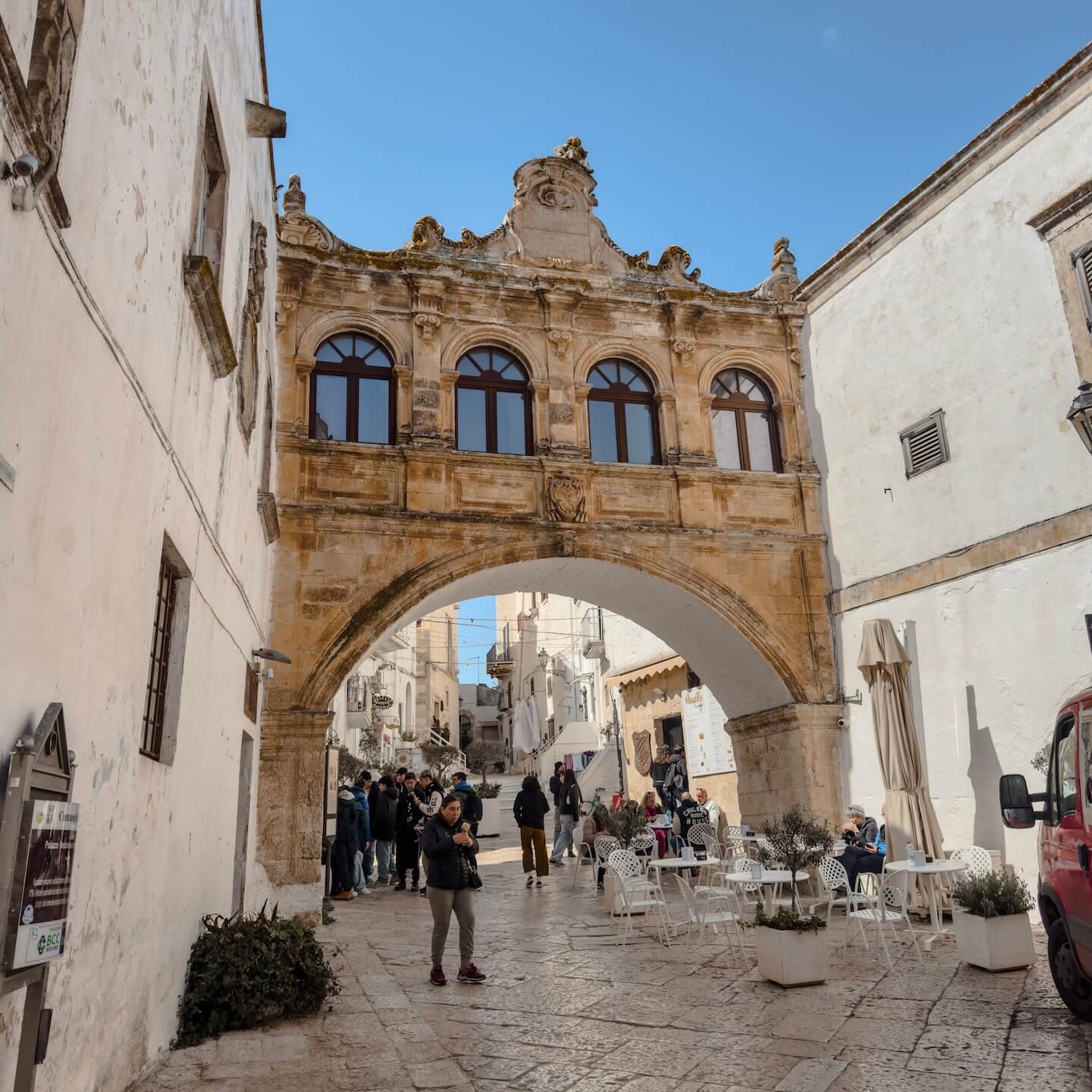
- Ostuni Cathedral: The highest point in the city, the 15th-century Cathedral is a magnificent example of Gothic architecture. Its beautiful rose window is a work of art, with 24 intricate columns representing the hours of the day. The piazza in front of the cathedral is also home to the Bishop’s Palace and the Seminary Palace, connected by the picturesque Arco Scoppa, a stunning stone archway that frames a perfect view.
- Go on a Tuk-Tuk Tour: For a fun and unique way to see the city, consider hopping on one of the three-wheeled Ape Calessino tuk-tuks. They can navigate the tight, hilly streets that cars can’t, and the drivers often double as enthusiastic local guides, sharing stories and history as they take you on a scenic tour.
Beaches Near Ostuni
We can’t talk about Ostuni, Italy, without mentioning its incredible coastline. Just a short drive from the city are some of Puglia’s most beautiful beaches. The area is known as the “Marina di Ostuni,” and it offers a mix of sandy stretches and rocky coves.
- Pilone Beach: This is one of the most popular and easily accessible beaches. With its long stretch of soft, golden sand and calm, shallow water, it’s a perfect spot for families.
- Torre Pozzella: If you’re looking for something a bit more rugged and natural, Torre Pozzella is a must-see. It’s a series of small, rocky coves nestled among the Mediterranean scrub, creating a serene and unspoiled environment. The clear water here is ideal for snorkeling.
- Torre Guaceto Nature Reserve: For an unforgettable day trip, head to this protected marine and nature reserve. The reserve offers fine white sand, turquoise water, and a pristine environment. You can only get to the main beach on a shuttle bus, which helps to preserve its natural beauty. It’s a fantastic spot for a quiet swim or a leisurely walk.
What to Eat in Ostuni, Italy
Puglia is often called the “breadbasket of Italy” for a reason, and the food in Ostuni, Italy, is a testament to its rich agricultural heritage.
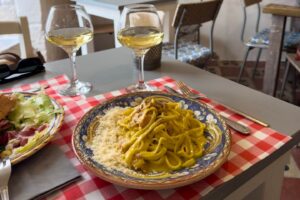
- Orecchiette with Cime di Rapa: You simply cannot leave Puglia without trying orecchiette (“little ears”) pasta. The most classic dish is Orecchiette alle Cime di Rapa, a savory combination of pasta with turnip greens, garlic, and a hint of anchovy. Yum!
- Fave e Cicorie: This traditional “peasant dish” is a creamy puree of fava beans served with steamed wild chicory. It’s simple, rustic, and bursting with authentic Puglian flavors. It’s a hearty dish we’d recommend trying for lunch.
- Panzerotti: Think of a small calzone, but deep-fried to perfection. These crispy half-moons are typically filled with gooey mozzarella and tomato sauce and are the ultimate street food snack.
- Olive Oil: The countryside around Ostuni is an endless expanse of ancient olive trees. The region’s olive oil is world-renowned. Take a tour of a local masseria (a fortified farmhouse) to see the production process and do a tasting.
- Gelato and Aperitivo: After a long day of exploring, the best way to unwind is with an afternoon aperitivo in Piazza della Libertà or a scoop of homemade gelato from one of the artisanal shops. We highly recommend finding a gelateria that offers a pistachio flavor made from local nuts. It’s pure heaven!
Best time to visit Ostuni, Italy
The best time to visit Ostuni, Italy, is during the shoulder seasons. The weather is beautiful, but the intense summer crowds are gone. The city is much more relaxed during this time. If you can only go in the summer, try to visit the old town in the early morning or late afternoon to avoid the heat and the peak crowds.
RELEVANT READING
Parking in Ostuni, Italy
As mentioned, parking can be a bit of a puzzle. A lesser-known tip is to look for parking spots on Via Giulio Recupero, a residential area just a few minutes’ walk from the main square that often has free spaces. The weekly market is on Wednesday mornings at the large lot on Viale Putignano, so it’s best to avoid that area then.

Final Thoughts about Ostuni, Italy
We hope this guide helps you feel confident and excited about your trip to Ostuni, Italy. It is a city that truly lives up to its name and promises a unique and unforgettable experience!
Ready to kick off your trip planning? Check out these handy travel resources: